Mysore Itinerary: 2 Days, 3 Days and a One-Day Trip Plan
Published 17 August 2026Mysore is the rare Indian heritage city you can actually see properly in a weekend. The sights are close together, the streets are laid out on a grid, the traffic is civil by Indian standards, and the single best thing in town - the palace - is right in the middle of it. This Mysore itinerary gives you two well-paced days covering Chamundi Hill at first light, Amba Vilas Palace, the art gallery at Jaganmohan, St Philomena's, and the lit-up palace after dark, then a full day out west to Tipu Sultan's island capital at Srirangapatna, the birds and crocodiles at Ranganathittu, and the terraced Brindavan Gardens below the KRS dam. An optional third day gives you a choice between Hoysala stone carving at Somnathpur, a forest safari at Bandipur or Nagarhole, or a slower day in the city itself. It comes with realistic timings, where to base yourself, what is currently closed, and how to time the palace illumination, which is the one thing most visitors get wrong. For the weather and festival side of your planning, pair it with our guide to the best time to visit Mysore, and for a wider view of the city see our Mysore city guide.
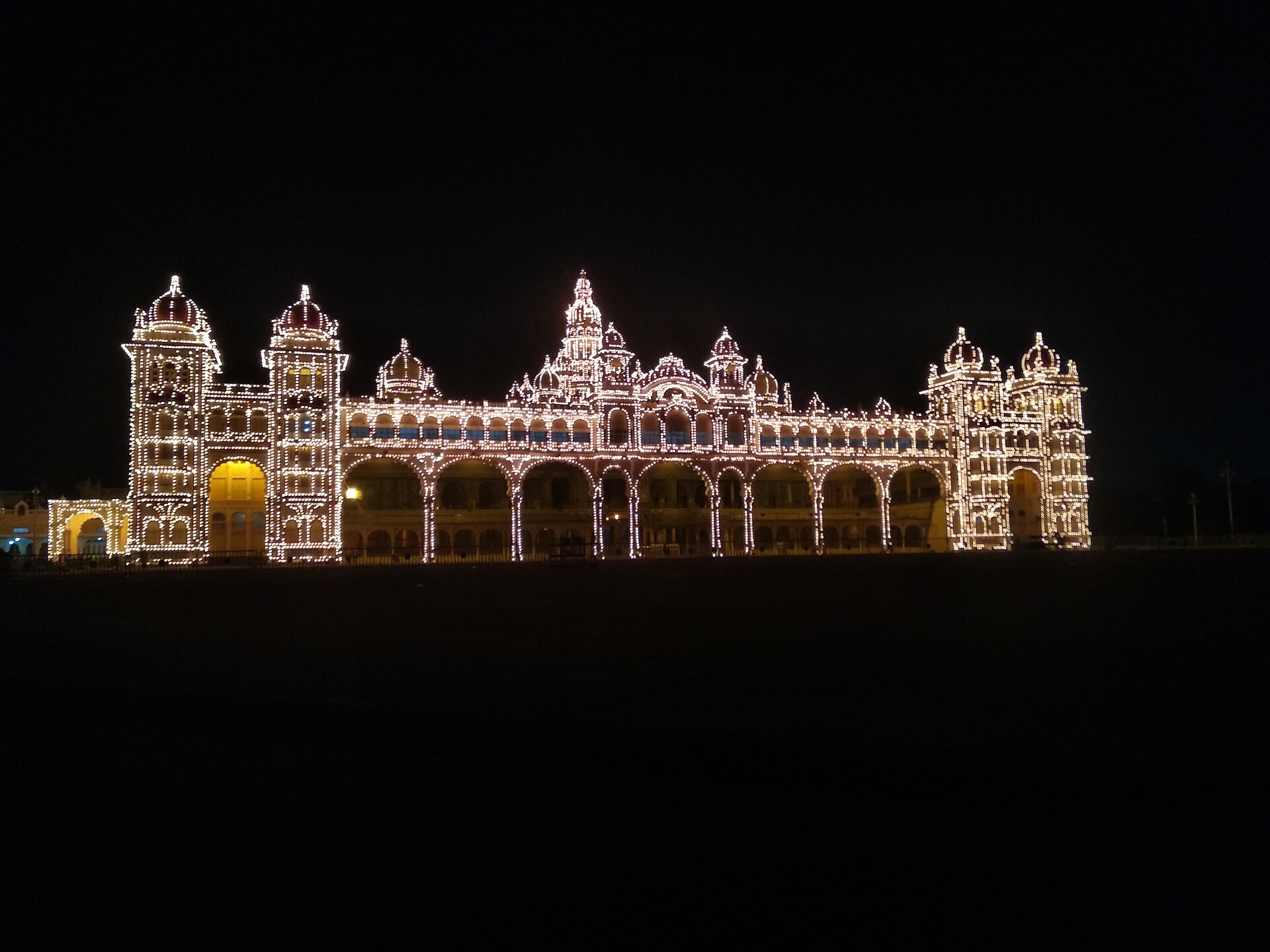
Mysore itinerary at a glance
- Day 1: the city core - Chamundi Hill at first light, then Amba Vilas Palace, the Jaganmohan art gallery, the market streets, and St Philomena's, finishing with the palace lit up after dark
- Day 2: the Kaveri day out - Srirangapatna's fort, temple, and Tipu Sultan sites, boating among the birds at Ranganathittu, then Brindavan Gardens and the musical fountain below the KRS dam
- Day 3 (optional): Hoysala carving at Somnathpur with the sand-buried temples at Talakadu, a forest safari at Bandipur or Nagarhole, or a slower city day around the zoo, Karanji Lake, and the silk and sandalwood workshops
- Where to base yourself: the palace and Sayyaji Rao Road area for a first trip, Yadavagiri or Gokulam for something quieter
- Best way to get around: autos for the compact city core, a hired car with driver for Day 2 and Day 3
- Ideal season: November to February for dry, comfortable sightseeing weather
| Day | Morning | Afternoon | Evening |
|---|---|---|---|
| Day 1 | Chamundi Hill early, then Amba Vilas Palace when it opens | Jaganmohan art gallery, the market streets, St Philomena's | The palace illuminated, then dinner in town |
| Day 2 | Srirangapatna's fort, temple, and Tipu Sultan sites | Ranganathittu boating, then Brindavan Gardens | The musical fountain, then the drive back |
| Day 3 (optional) | Somnathpur and Talakadu, a safari at Bandipur or Nagarhole, or a slow city morning | Continue the excursion, or the zoo and Karanji Lake | Departure |
Before you go: how to plan your days
Mysore's sights fall into three loose rings. The city core - the palace, Jaganmohan, the market streets, the zoo, Karanji Lake, and St Philomena's - is compact and mostly walkable or a short auto ride apart, with Chamundi Hill a 20 to 30 minute drive south-east. The near ring, all of it north-west along the Kaveri, holds Srirangapatna, Ranganathittu, and Brindavan Gardens, and makes one natural day out. The far ring - Somnathpur, Talakadu, Shivanasamudra, and the Bandipur and Nagarhole forests - needs a car and an early start. A few calls to make before you arrive:
- Best base for this itinerary: for a first trip, stay near the palace, around Sayyaji Rao Road or Nazarbad, which puts Day 1 within walking or short-auto distance and leaves you nearby for the evening illumination. Yadavagiri and the Vivekananda Road area are quieter and greener, and Gokulam, the yoga district on the north-west side, suits longer stays. Book well ahead for Dasara and the Christmas-to-New-Year stretch, when the city fills and rates climb sharply.
- Time your evening around the palace lighting: this is the single most important piece of Mysore planning. On Sundays and public holidays the palace is generally illuminated free of charge for about an hour in the early evening. On other evenings the lights come on only at the end of the ticketed sound-and-light show, and only for a short stretch. If you have one evening in Mysore and any flexibility at all, make it a Sunday. Confirm the current schedule locally, as timings shift around festivals.
- Dasara changes everything: Mysuru Dasara runs from 11 October to 21 October in 2026, with the Jumbo Savari elephant procession on Vijayadashami, 21 October. The palace is lit nightly through the festival and the city is at its most spectacular - and also its most crowded and expensive, with hotels selling out months ahead and roads around the palace closed on procession days. Plan for it deliberately or avoid the window entirely.
- Devaraja Market is closed: the 1886 market building has been shut on structural safety grounds for several years. The Supreme Court ordered its restoration rather than demolition in May 2026, and the city has now begun the restoration process, with consultants being procured to prepare a detailed conservation and restoration plan, but as of August 2026 the building has not reopened. Traders have been accommodated in the surrounding streets, so the produce, flower, and spice trade around Sayyaji Rao Road and Dhanvantri Road is still very much alive - it just no longer happens inside the famous arcade. Check the current position before you build an afternoon around it.
- Chamundi Hill traffic rules change with the calendar: private vehicles are barred from the hill road on high-demand days, including Ashada Fridays, Dasara, and other major temple occasions, when free KSRTC buses shuttle visitors up from the foothill at Lalitha Mahal grounds. A permanent ban on private vehicles with a shuttle system has been approved in principle but is not yet in force. Ask your driver or hotel about the current arrangement the day before you go.
- Book the big-ticket things ahead: Ranganathittu boat rides, forest-department safaris at Bandipur and Nagarhole, and hotel rooms over Dasara all sell out. Safari slots in particular run in fixed morning and afternoon windows with limited vehicles, so do not turn up hoping.
- Closing days to know: the zoo is closed on Tuesdays, and several museums and monuments have their own weekly closure, so check before you build a day around one. The palace itself is open every day.
- Getting to Mysore: Bengaluru is the practical gateway, about 140 km away on the Bengaluru-Mysuru Expressway, which realistically takes two to three hours by road depending on where in Bengaluru you start. The train is often the better option - fast services from Bengaluru take around two hours and drop you in the middle of town. Mysuru has a small airport at Mandakalli, about 10 km south, but services are limited, so most visitors fly into Bengaluru.
- If you are continuing to Ooty or Wayanad: the road runs through the Bandipur reserve, where a night traffic ban applies on the highway between about 9 pm and 6 am. Plan to clear the forest stretch in daylight. Our Ooty itinerary covers the onward leg.
- Timing the seasons: November to February is the dry, comfortable stretch and the best window for this itinerary. April and May are warm but gentler than most of inland India and much cheaper. October is the wettest month of the year and also the festival peak. See our full guide to the best time to visit Mysore for the month-by-month breakdown.
Day 1: Chamundi Hill, the palace, and the lit-up city
Day one is the reason people come. It is arranged around two fixed points: the hill, which is best at first light before the haze and the crowds, and the palace, which does not open until mid-morning. Everything else fills the gap between them, and the evening belongs to the lights.
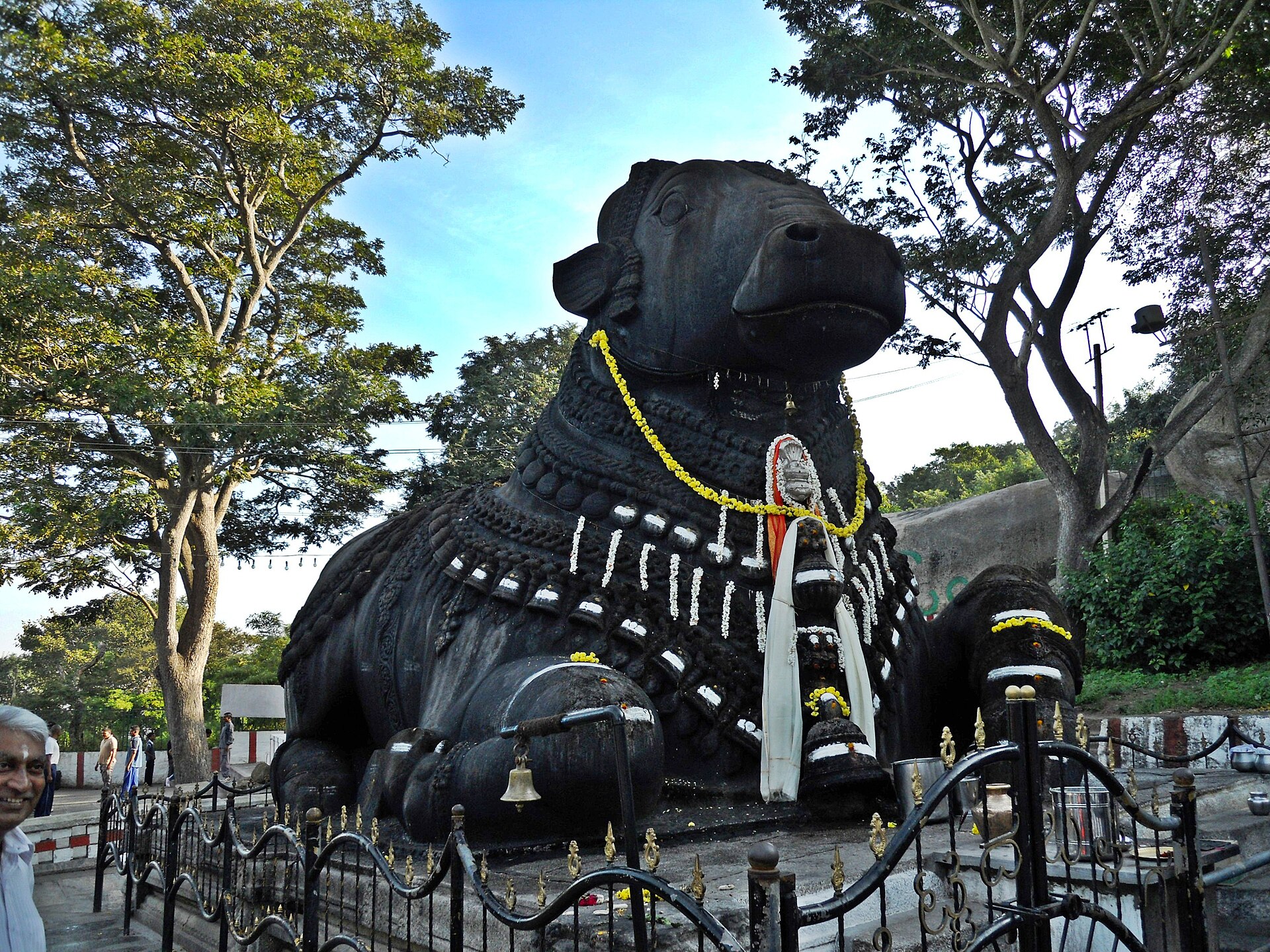
Early morning: Chamundi Hill
Start on Chamundi Hill, the ridge that rises about 13 km south-east of the city and gives Mysore its horizon. The Sri Chamundeshwari Temple at the top is a Shakti Peetha dedicated to the goddess who, in the founding legend, killed the buffalo demon Mahishasura and gave the city its name - a large, brightly painted statue of Mahishasura stands near the summit. Go early: the queue at the temple lengthens through the morning, the views over the city and out toward the Kaveri plain are clearest before the day hazes over, and the hill road gets congested.
Two ways up. Most visitors drive or take a taxi, roughly 20 to 30 minutes from the centre, but check first whether private vehicles are permitted on the day you go, since the hill is closed to them on major temple days with free shuttle buses running from the foothill instead. The alternative is the stone stairway of around a thousand steps, cut in 1659, which climbs from the base of the hill and takes most people an hour or more. Whichever you choose, stop at the Nandi - a black granite bull about five metres high, carved from a single block and also dating to 1659, sitting partway up the steps. If you drive, it is a short detour off the road down; if you climb, you cannot miss it. It is the single best carving on the hill and many visitors skip it entirely.
Come back down for breakfast in town. Mysore takes its breakfast seriously, and a plate of idli or a masala dosa is the correct start to a day here, followed by Mysore pak if you still have room.
Mid-morning: Amba Vilas Palace
Be at the palace gates for opening, which is generally 10 am, and give it two hours. Amba Vilas - the Mysore Palace to almost everyone - is the city's defining sight, and the current building is younger than most people assume. The old wooden palace burned down in 1897 during a royal wedding, and the British architect Henry Irwin designed the replacement, completed in 1912 in the Indo-Saracenic manner: grey granite, domes of pink marble, arcades, and a 44-metre tower.
Inside, the sequence people remember is the Kalyana Mantapa, the octagonal wedding hall under a stained-glass dome of peacocks made in Glasgow; the Durbar Hall, open on one side to the parade ground with a painted ceiling and rows of carved pillars; and the Ambavilasa, the private audience hall, worked in ivory, rosewood, and inlaid stone. The corridor paintings of the Dasara procession, some of them by artists of the Mysore school, are worth slowing down for.
Practical notes that catch people out. You leave your shoes at the counter before entering, so socks are welcome on hot stone. Photography inside the palace is not permitted, though you can shoot freely in the grounds. Entry is ticketed, with substantially higher published rates for foreign visitors and lower rates for children. The official timings page has recently listed ₹150 for Indian adults and ₹1,000 for foreign adults, but the palace's own online booking page has shown a different figure, so check the official site for the current price rather than budgeting from a number you read elsewhere. The ticket does not cover the sound-and-light show in the evening, which is sold separately. There are temples inside the palace complex that predate the current building and are still in worship, and the grounds are large enough to be worth a circuit before you leave.
Early afternoon: Jaganmohan Palace and the market streets
Lunch near the palace, then walk about ten minutes to the Jaganmohan Palace, built in 1861 and used by the royal family while Amba Vilas was being rebuilt. It now houses the Sri Jayachamarajendra Art Gallery, whose collection includes a significant group of Raja Ravi Varma paintings alongside Mysore-school work, musical instruments, and royal memorabilia. The building is a handsome piece of traditional Mysore architecture in its own right, and the gallery is a quiet, dimly lit hour that most tour itineraries skip.
From there, walk the market streets. The Devaraja Market building itself is closed and awaiting restoration, but the trade around Sayyaji Rao Road and Dhanvantri Road continues in the surrounding lanes, and this is still where Mysore smells like Mysore: jasmine and marigold garlands, banana leaves, heaps of kumkum powder, and stalls of incense and sandalwood soap. It is also the natural place to shop. Mysore silk and sandalwood are the two things to buy here, and the government emporium and the Government Silk Weaving Factory outlet are the low-risk options if you are unsure about quality.
Late afternoon: St Philomena's Church
Head north-east to St Philomena's, which is not subtle and does not intend to be. The present neo-Gothic cathedral was begun in 1933 under Maharaja Krishnaraja Wadiyar IV and completed in 1941, replacing an earlier church of 1843 on the same site, and it was modelled loosely on Cologne Cathedral. The twin spires rise about 53 metres, there is a crypt below the main altar holding a relic of Saint Philomena, and the stained glass is worth the trip on a bright afternoon. It is one of the largest churches in India and photographs best in the late light.
If you have energy left and are travelling with children, the zoo and Karanji Lake sit close together on the east side of the centre and could take a late afternoon instead - but the zoo needs half a day to do properly and is better placed on Day 3.
Evening: the palace after dark
Work backwards from the lights. On Sundays and public holidays the palace is lit up free of charge for roughly an hour in the early evening, and it is genuinely one of the great sights in India: something close to a hundred thousand bulbs tracing every dome, arch, and cornice at once. Get there early, because the lawns fill.
On non-holiday Monday-to-Saturday evenings, the illumination normally forms the finale of the ticketed sound-and-light programme, a 45-minute show narrating four centuries of Mysore history with roughly a quarter of an hour of lighting at the end. Show times and language vary by day - most begin around 7 pm, with a later Kannada show on Saturday - so check the official palace schedule before you go. Tickets have recently been sold at the Varaha Gate counter on the south side from about 6:30 pm at modest rates. The show is pleasant rather than essential; the illumination at the end is the part you came for. During Dasara the palace is lit every night of the festival.
Afterwards, dinner. Mysore's eating is unpretentious and very good - old-school vegetarian meals halls, the city's signature Mysore pak, and filter coffee that justifies the trip on its own.
Suggested timings (confirm current opening hours):
- 6:30 am - leave for Chamundi Hill
- 7:15 am - Chamundeshwari Temple and the summit views, stopping at the Nandi on the way down
- 9:00 am - breakfast back in town
- 10:00 am - Amba Vilas Palace at opening
- 12:30 pm - lunch near the palace
- 2:00 pm - Jaganmohan Palace and the art gallery
- 3:15 pm - the market streets and shopping
- 4:45 pm - St Philomena's Church
- 6:30 pm - back at the palace for the illumination or the sound-and-light show
- 8:00 pm onward - dinner in town
If the day runs late: the palace and Chamundi Hill are the two non-negotiables, and the evening illumination is worth rearranging the rest of the day around. Treat Jaganmohan as the first thing to drop, and St Philomena's as the second.
Day 2: Srirangapatna, Ranganathittu, and Brindavan Gardens
Day two is a single loop north-west along the Kaveri, and all three stops sit within about 25 km of the city and a few kilometres of each other. Hire a car with a driver for the day - the sites are spread out, the last one finishes after dark, and you do not want to be negotiating an auto home from a dam at 8 pm. The order below is deliberate: history while it is cool, birds around midday, gardens for the evening.
Morning: Srirangapatna
Srirangapatna is a river island about 16 km north of Mysore and was the capital of Hyder Ali and his son Tipu Sultan, the ruler the British called the Tiger of Mysore. The town fell to a British-led assault in 1799, in which Tipu was killed, and the day here is essentially a walk through what survived.
Start at the Ranganathaswamy Temple, one of the great Vaishnavite temples of the Kaveri and the reason the island has its name - the core of it is far older than the fort around it, with Hoysala and Vijayanagara work layered together. Then take in the fort walls and the Water Gate, where a marked spot indicates where Tipu's body was found after the siege, and Colonel Bailey's Dungeon, where British prisoners were held.
Two more sites are worth the entry. The Daria Daulat Bagh, Tipu's summer palace of 1784, is a teak building set in formal gardens whose walls are covered in murals - including a large painting of Hyder Ali's victory over the British at Pollilur - and it now functions as a small museum. The Gumbaz, a domed mausoleum a short drive on, holds the tombs of Tipu, Hyder Ali, and Tipu's mother, set in a quiet garden of cypress. Give the island two and a half to three hours in total.
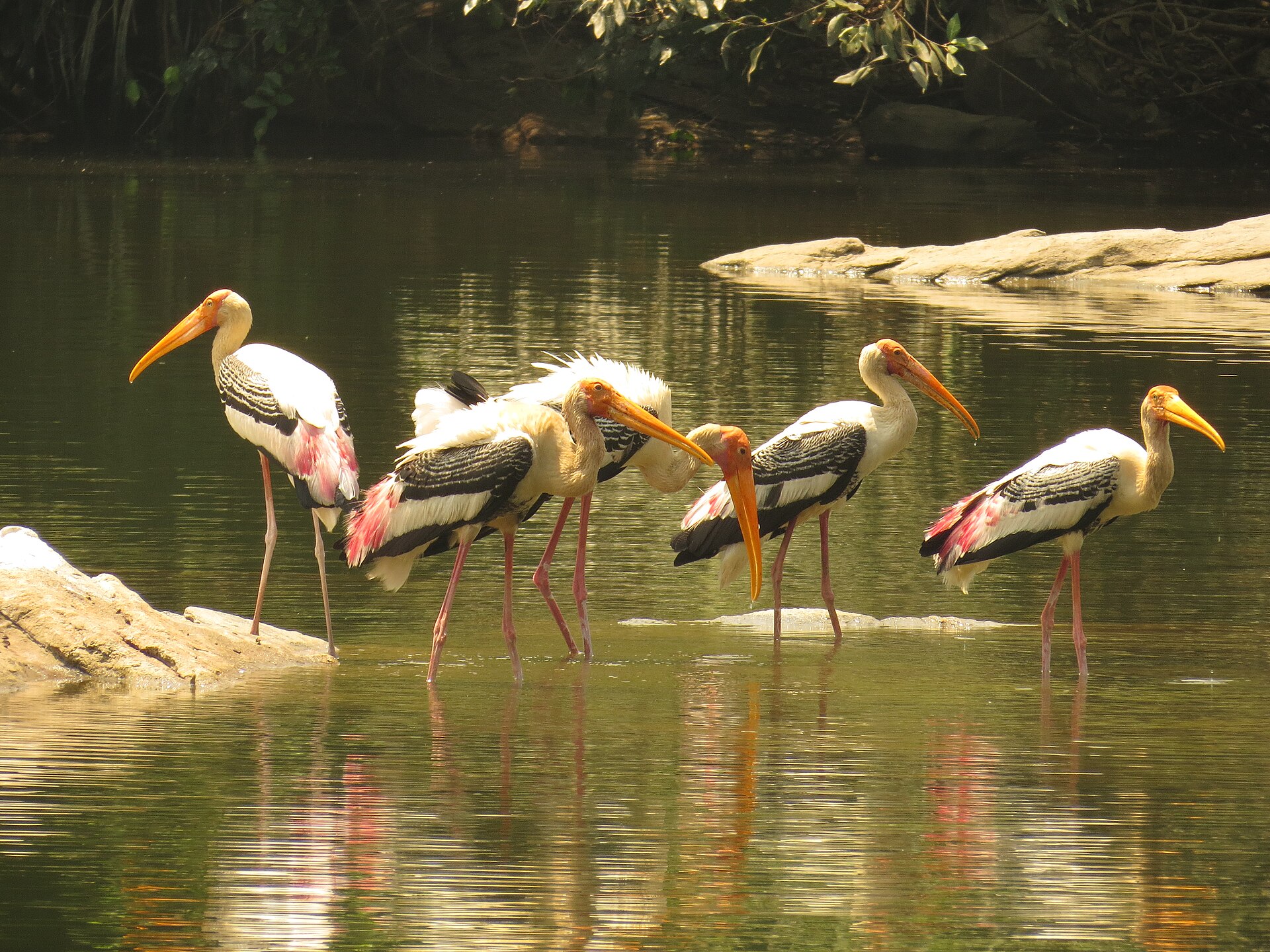
Late morning: Ranganathittu Bird Sanctuary
Three kilometres from Srirangapatna, Ranganathittu is a cluster of small islands in the Kaveri and the best wildlife hour anywhere near Mysore. The draw is a boat ride: forest-department boats take you close in to the nesting islands, where painted storks, spot-billed pelicans, open-billed storks, night herons, and river terns crowd the branches, and mugger crocodiles lie on the rocks at the waterline, sometimes very close indeed.
Timing matters. Aim to be on the water by noon, both for the light and to stay ahead of the afternoon. Boating schedules can change with staffing, river conditions, and season, so check the current slots when you book - advance online booking is available and worth using. The nesting season runs broadly from June into November and is when the islands are noisiest and most crowded with birds; the winter months are quieter but more comfortable and still rewarding. Weekends bring long queues for the boats. Entry and boating are charged separately, recently at around ₹80 and ₹120 respectively for Indian adults with higher rates for foreign visitors, and river levels can suspend boating altogether after heavy rain, so confirm before you drive out.
Afternoon and evening: KRS dam and Brindavan Gardens
Continue north-west to the Krishnarajasagara dam, built across the Kaveri in the 1920s under the Wadiyar rulers and the engineer Sir M. Visvesvaraya, and to the Brindavan Gardens laid out below it between 1927 and 1932. The gardens are formal and terraced in the Mughal manner - clipped hedges, water channels, fountains, and long symmetrical vistas stepping down from the dam wall - and they are best in the last hour of daylight, when the heat has gone and the lights start coming on.
The set piece is the musical fountain, which runs in the evening and is the reason most visitors come at this hour. Karnataka Tourism currently lists the fountain window as 6:30 pm to 7:30 pm on weekdays and 6:30 pm to 8 pm at weekends and on holidays, with the gardens themselves open from 6:30 am to 8 pm; confirm before visiting. It is popular, unashamedly kitsch, and crowded on Saturdays and Sundays - and the drive back into Mysore afterwards is the one bit of real traffic in this itinerary, so allow around an hour.
Suggested timings (confirm current opening hours and show times):
- 8:30 am - leave Mysore for Srirangapatna
- 9:00 am - Ranganathaswamy Temple and the fort
- 10:30 am - Daria Daulat Bagh, then the Gumbaz
- 11:45 am - drive to Ranganathittu
- 12:00 pm - boat ride and the sanctuary walk
- 1:30 pm - lunch near Srirangapatna
- 3:00 pm - drive to the KRS dam and Brindavan Gardens
- 4:00 pm - the gardens and the dam view in the cooler light
- 6:30 pm - the musical fountain
- 8:00 pm - drive back to Mysore
The family variant: if you are travelling with young children, swap the Srirangapatna morning for the Mysore Zoo, which is one of the oldest and best-regarded in India, and keep Ranganathittu and Brindavan Gardens for the afternoon and evening. The zoo is closed on Tuesdays.
If you are short on time: Ranganathittu and Srirangapatna sit close enough together to make a comfortable half day on their own, and Brindavan Gardens is the easiest of the three to drop - it is a pleasant evening rather than an essential sight.
Day 3 (optional): Hoysala stone, forest, or a slower city
If you have a third day, you have a genuine choice rather than a default. Options A and B need an early start and a car with a driver; option C needs neither.
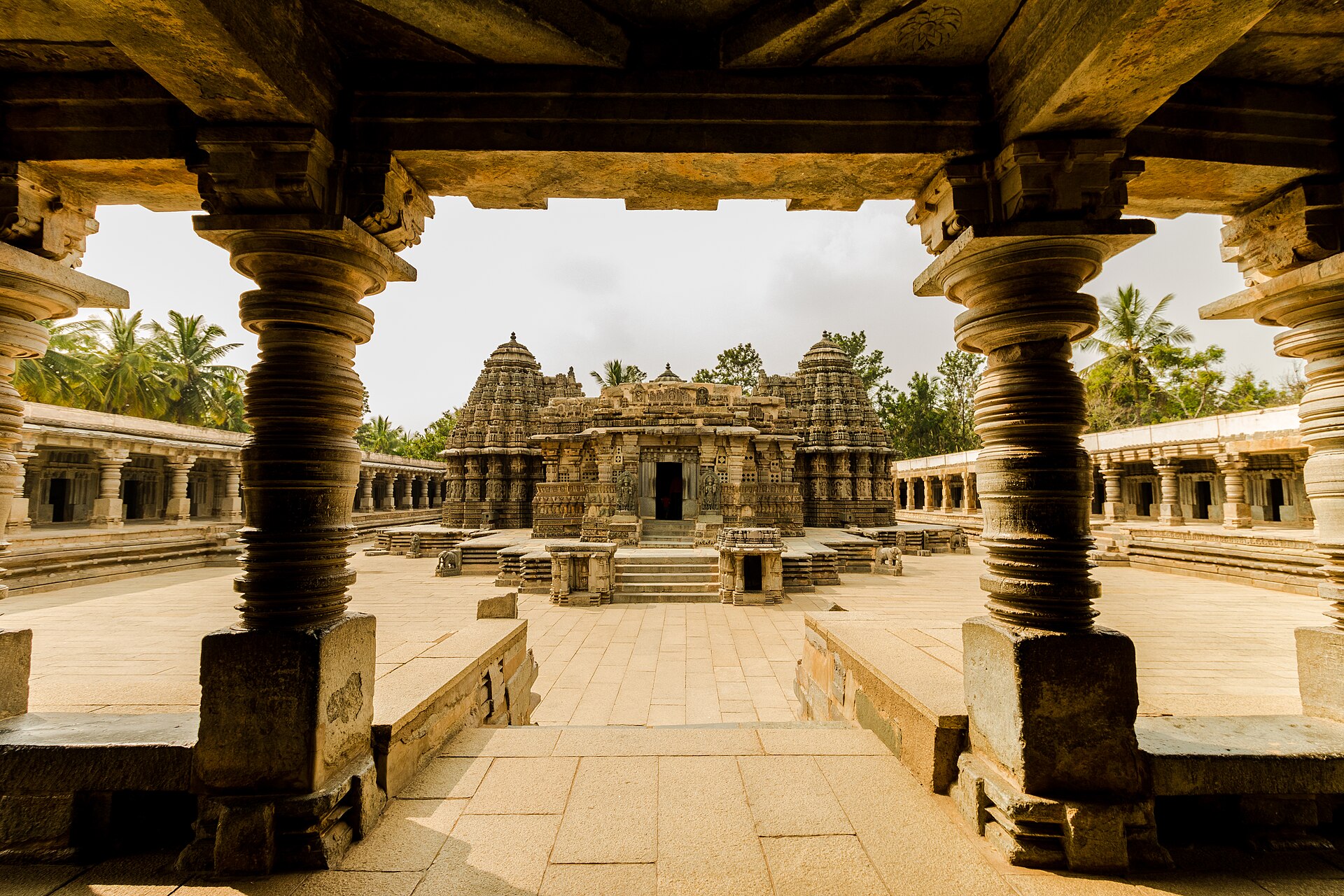
Option A: Somnathpur and Talakadu
The best half-day out of Mysore for anyone who likes buildings. The Keshava Temple at Somnathpur, about 35 km east, was completed in 1268 under the Hoysalas and is a trikuta - a three-shrined temple on a star-shaped plan, standing in a walled courtyard, covered from plinth to tower in bands of carved stone: elephants, horsemen, scenes from the epics, and friezes so fine they look turned rather than cut. In September 2023 it was inscribed on the UNESCO World Heritage list with Belur and Halebidu as part of the Sacred Ensembles of the Hoysalas. It is no longer a working temple, which means you can take your time inside without disturbing anyone.
Pair it with Talakadu, roughly 24 km further on, where a bend of the Kaveri has buried a group of old temples under drifting sand - a strange, half-excavated landscape that is unlike anywhere else in Karnataka, and the subject of a well-known curse legend involving the Wadiyar dynasty. Between them the two sites make a comfortable full day at an unhurried pace.
If you are here in the weeks after the monsoon, roughly August to October, consider swapping Talakadu for the Shivanasamudra falls about 65 km east, where the Kaveri splits into the Gaganachukki and Bharachukki cascades. They are magnificent when the river is full and underwhelming when it is not, so check current flow before committing the drive.
Option B: a safari at Bandipur or Nagarhole
Mysore is the most convenient city base for two of southern India's best tiger reserves. Bandipur is about 80 km south, roughly a two-hour drive, and Nagarhole about 90 km south-west; both are part of the Nilgiri Biosphere Reserve and hold elephants, gaur, dhole, sambar, leopards, and tigers. Forest-department safaris run in fixed morning and afternoon windows, broadly early morning and mid-to-late afternoon, in shared vehicles with limited seats, so book ahead rather than turning up.
Be realistic about the day. A morning safari means leaving Mysore in the dark, and a single afternoon safari makes for a long round trip with a lot of driving for one drive through the forest. If wildlife is a real priority, stay a night inside or beside the reserve and take both an afternoon and a morning safari - it gives you two safari windows instead of one, improves your chances, and removes the pre-dawn drive. Note also the night traffic ban on the highway through Bandipur, in force between about 9 pm and 6 am, which affects anyone driving on toward Ooty or Wayanad.
Option C: a slower Mysore
The case for staying put is stronger here than in most cities. Sri Chamarajendra Zoological Gardens, founded in 1892, is among the oldest zoos in India and has a genuinely good reputation for its enclosures and breeding programmes; give it a morning, and remember it closes on Tuesdays. Karanji Lake next door has a walk-through aviary, a butterfly park, and a boardwalk that is a pleasant, birdy hour. The Rail Museum near the railway station is small and charming, with royal saloon carriages among its exhibits.
Beyond that, Mysore rewards slow days. The Government Silk Weaving Factory runs visitor access to the looms where Mysore silk is woven, sandalwood oil and soap have been made here for a century, and Gokulam on the north-west side is one of the world's ashtanga yoga centres, with drop-in classes for visitors. Add the Lalitha Mahal, the white 1921 palace built for the Viceroy's visits and now a hotel, for lunch or a coffee with a view back at the hill.
If you only have one day in Mysore
Plenty of people come up from Bengaluru for the day. It works, but only if you accept that you are seeing the city core and nothing else. Take an early train or leave Bengaluru by 6 am, go straight to Chamundi Hill before the queues, be at the palace when it opens, spend the early afternoon at Jaganmohan and the market streets, and stay for the evening illumination - which means a Sunday if you can manage it - before travelling back. Skip Srirangapatna, Ranganathittu, and Brindavan Gardens entirely rather than trying to compress them; each of them deserves better than 40 minutes.
Where to stay in Mysore
Mysore's accommodation runs from ₹700 guesthouses to genuine palace hotels, and the city is small enough that no sensible choice leaves you stranded. Here is a quick orientation:
| Area | Vibe | Best for |
|---|---|---|
| Around the palace and Sayyaji Rao Road | Central and busy, walking distance to the main sights and the evening illumination | First-timers and short trips |
| Nazarbad and JLB Road | Central but a little calmer, close to the zoo and Karanji Lake | Families and mid-range stays |
| Yadavagiri and Vivekananda Road | Leafy, residential, quieter evenings | Couples and longer stays |
| Gokulam | Green north-west suburb, cafes and yoga schools | Yoga students and slow travellers |
| Lalitha Mahal and the hill side | Grand, spread out, views back toward the city | Heritage and splurge stays |
| Srirangapatna and the river | Rural riverside resorts outside the city | Travellers with a car who want quiet |
Getting around Mysore
- Autos: the default for the city core, cheap and everywhere. Meters exist but are often ignored, so agree the fare before you set off.
- Car with driver: the sensible choice for Day 2 and Day 3, hired by the day. Agree the route and price up front and confirm the driver waits at each stop, since the Kaveri loop has no easy way home if you get stranded.
- On foot: the stretch from the palace through the market streets to Jaganmohan is genuinely walkable, and the grid layout makes the centre easy to navigate. Pavements thin out beyond that.
- Cycling: Mysore is flat, and the city has long promoted itself as one of India's more cycle-friendly places. Several hotels and local operators rent bicycles, which suits an unhurried city day.
- City sightseeing buses: state-run and private hop-on tours cover the main sights, including a Chamundi Hill circuit, and are a reasonable budget option if you would rather not negotiate transport.
- Trains and buses out: Mysuru Junction has fast, frequent services to Bengaluru in around two hours and long-distance trains elsewhere. Buses run constantly to Bengaluru, Ooty, Coorg, and Wayanad from the central and suburban bus stands.
- Distances to plan for: Chamundi Hill is 20 to 30 minutes out, Srirangapatna about 30 minutes, Ranganathittu and Brindavan Gardens 40 to 50 minutes, Somnathpur about an hour, and Bandipur or Nagarhole roughly two hours each way.
What a 3-day, 2-night Mysore trip roughly costs
The estimates below assume a three-day, two-night trip in which Day 3 is the slower city option. Hired cars are the one cost that can move these numbers a long way, so they are broken out separately underneath rather than buried in an average. Mysore is one of the better-value heritage cities in India, so treat these as rough orientation figures rather than a quote, and expect them to rise sharply over Dasara and the Christmas-to-New-Year weeks.
| Style | Two nights, per person | Food and city transport | Tickets and activities | Approximate base total |
|---|---|---|---|---|
| Budget (hostel or basic guesthouse) | ₹800-2,000 | ₹1,200-2,500 | ₹600-1,400 | ₹2,600-6,000 |
| Mid-range (3-star or heritage hotel) | ₹2,500-5,500 | ₹2,000-4,000 | ₹1,200-3,000 | ₹5,700-12,500 |
| Premium (palace or luxury hotel) | ₹9,000+ | ₹5,000+ | ₹3,000+ | ₹17,000+ |
The stay column is per person for two adults sharing a room (a hostel bed for the budget row), so solo travellers usually pay more. Food and city transport covers three days of meals plus autos and short taxi hops around the city, including the run up Chamundi Hill. Tickets and activities covers the palace, the art gallery, the Srirangapatna monuments, Ranganathittu entry and boating, and Brindavan Gardens.
Add the excursion transport on top. Day 2 needs a car whichever way you cut it, and any Day 3 excursion needs another:
- Day 2, the Kaveri loop by hired sedan: from around ₹3,000 per car, so roughly ₹1,500 each for two sharing, less per head in a group
- Day 3 Option A, Somnathpur and Talakadu (more again if you extend to Shivanasamudra): from around ₹4,500 per car, so roughly ₹2,250 each for two sharing
- Day 3 Option B, a Bandipur or Nagarhole safari: the drive out plus forest-department safari charges per person, and a night's accommodation near the reserve if you take the advice above and do both an afternoon and a morning drive
- Day 3 Option C, the slower city day: nothing beyond the autos already in the table
So two travellers doing the full itinerary with Day 3 Option A should budget roughly ₹3,750 each for cars alone, on top of the base total. Rates vary by operator, vehicle, and season, and are usually quoted per car rather than per person, which makes this the one line that gets much cheaper with a larger group. The figures exclude travel to Mysore itself. Prices last reviewed: August 2026.
Frequently asked questions
How many days do you need in Mysore?
Two days covers Mysore properly: one for Chamundi Hill, Amba Vilas Palace, the art gallery, the market streets, and the evening illumination, and one for the Kaveri loop out to Srirangapatna, Ranganathittu, and Brindavan Gardens. A third day gives you a real choice - the Hoysala temple at Somnathpur with the sand-buried temples at Talakadu, a forest safari at Bandipur or Nagarhole, or a slower day around the zoo, Karanji Lake, and the silk and sandalwood workshops. One day is enough only for the city core.
What is the best day to see the Mysore Palace illumination?
Sunday. On Sundays and public holidays the palace is generally lit free of charge for about an hour in the early evening, and it is the single best sight in the city. On Monday to Saturday the lights come on only briefly at the end of the ticketed sound-and-light show. During Dasara the palace is illuminated every night of the festival. Timings shift, so confirm the current schedule when you arrive.
Is Devaraja Market open?
Not the historic building. The 1886 market has been closed on structural safety grounds for several years, and although the Supreme Court ordered its restoration rather than demolition in May 2026 and the city has since begun the restoration process by procuring consultants to draw up a detailed conservation plan, it had not reopened as of August 2026. The trade itself continues in the streets around Sayyaji Rao Road and Dhanvantri Road, so you can still walk through the flower, fruit, and spice stalls - just not under the old arcades.
Do you need a car in Mysore?
Not for Day 1, which works fine on autos and on foot with a taxi up Chamundi Hill. You do want a car with a driver for Day 2, because Srirangapatna, Ranganathittu, and Brindavan Gardens are spread along the Kaveri and the day ends after dark at a dam some way out of town. The same applies to any Day 3 excursion. Note that private vehicles are barred from Chamundi Hill on major temple days, when free shuttle buses run from the foothill instead.
Can you visit Mysore as a day trip from Bengaluru?
Yes, and many people do - it is about 140 km by expressway or roughly two hours by fast train. A day trip realistically covers Chamundi Hill, the palace, and one or two city sights, and works best on a Sunday so you can stay for the illumination before travelling back. If you want Srirangapatna, Ranganathittu, or the gardens as well, stay a night; compressing them into a day trip does none of them justice.
When is Mysuru Dasara, and is it worth planning around?
In 2026 Dasara runs from 11 October to 21 October, with the Jumbo Savari elephant procession on Vijayadashami, 21 October. It is Karnataka's state festival and Mysore's defining event, with the palace lit nightly and the city in full spectacle. It is also the busiest and most expensive window of the year, in what is historically Mysore's wettest month, with hotels booked out months ahead and roads closed around the palace on procession days. Come for the festival deliberately, or avoid the dates entirely.
What is the best time to visit Mysore?
November to February brings dry, comfortable weather in the high twenties by day, which suits the long sightseeing days this itinerary asks for. February is the best balance of good weather against crowds and prices. April and May are warm but far gentler than most of inland India and are the best value of the year. October is the wettest month and the festival peak. Our full guide to the best time to visit Mysore has the month-by-month detail.
The TravelNerdz take
Mysore is a city that punishes late starts and rewards a plan. Get to Chamundi Hill before the queues and the haze, stop at the Nandi on the way down, then be at the palace gates when they open and give it the full two hours rather than the 45 minutes most tours allow. Build the rest of the day around the evening: if you can be here on a Sunday, you get the illumination free and in full, and it is worth rearranging a trip for. Give Day 2 to the Kaveri - Srirangapatna in the cool of the morning, Ranganathittu around midday, and Brindavan Gardens for the last of the light - and treat Day 3 as a real choice rather than a filler, with Somnathpur the pick for anyone who likes buildings and an overnight at Bandipur the pick for anyone who wants wildlife. Accept that Devaraja Market is a building site for now, do not try to fold Mysore into a day trip if you can help it, and come between November and February. Do that, and two or three days here is one of the easiest, best-value heritage trips in India.
Image credits
- Night illumination of Mysore Palace (hero) by Rohit14400, via Wikimedia Commons, CC BY-SA 4.0
- Nandi at Chamundi Hills by Krishna M, via Wikimedia Commons, CC BY-SA 3.0
- Painted storks at Ranganathittu Bird Sanctuary by Samarth V Dangre, via Wikimedia Commons, CC BY-SA 4.0
- Chennakesava Temple, Somanathapura by Jmadhu, via Wikimedia Commons, CC BY-SA 4.0