3-Day Shimla Itinerary: Ridge, Jakhoo, Kufri, Chail
Published 25 August 2026Shimla is one of the easiest hill stations in India to plan badly. The town itself is compact, walkable, and full of nineteenth-century architecture that rewards a slow day on foot - and yet most visitors spend their whole trip stuck in a car on the Kufri road. This 3-day Shimla itinerary is built the other way round. Day 1 stays entirely on foot in the colonial core: the Ridge, Christ Church, Jakhoo Hill, the Viceregal Lodge, and the Mall after dark. Day 2 is the one day out, with three honest options rather than one default. Day 3 offers a choice between the quieter Shimla most people never see and a ride on the UNESCO-listed Kalka-Shimla toy train. It comes with realistic timings, where to base yourself, what parking actually costs you in time, and a frank assessment of Kufri. For the weather and snow side of your planning, pair it with our guide to the best time to visit Shimla, and for a wider view of the town see our Shimla city guide.
Shimla itinerary at a glance
- Best base: the Mall Road and Ridge area for a walking-first trip, Chhota Shimla or the Kachi Ghati side for quieter stays with parking
- Best season: March to June for the widest range of open roads and services, October for clear skies and thin crowds, January to February for the best odds of snow
- Transport needed: nothing on Day 1, which is entirely walkable; a hired car with driver for Day 2, and for Day 3 if you take the sightseeing option
| Day | Morning | Afternoon | Evening |
|---|---|---|---|
| Day 1 | Christ Church, the Ridge, Scandal Point, then Jakhoo Hill | Viceregal Lodge, then the Himachal State Museum | Mall Road, Lakkar Bazaar, and dinner |
| Day 2A - Kufri and Chail | Green Valley viewpoint, then Kufri | Chail Palace and the cricket ground | Return to Shimla |
| Day 2B - Naldehra and Tattapani | Mashobra and Craignano, then Naldehra | Down to Tattapani on the Sutlej | Return to Shimla |
| Day 2C - Narkanda and Hatu Peak | Drive out through the apple belt to Narkanda | Hatu Peak and the road back | Return to Shimla, late |
| Day 3 | Annandale and the Army Heritage Museum, or the toy train down | Summer Hill and Tara Devi; add Chadwick Falls July to September if you have a full day | Departure |
Before you go: how to plan your days
Shimla splits neatly into three bands, and the itinerary follows them. The core is the ridge-top strip running from the Viceregal Lodge in the west, through Chaura Maidan and the Mall, over the Ridge, and up to Jakhoo Hill - all of it walkable and almost all of it closed to traffic. The near band is everything within an hour's drive: Kufri, Mashobra, Naldehra, Tara Devi, Annandale. The far band is the full-day runs to Chail, Tattapani, and Narkanda. A few calls to make before you arrive:
- Best base for this itinerary: stay within walking distance of the Ridge if you possibly can, because the single biggest time cost in Shimla is getting into the pedestrian zone from wherever you parked. The Mall Road and Ridge area puts everything on Day 1 outside your door. Chhota Shimla, Sanjauli, and the Kachi Ghati side are cheaper and easier for drivers but add a drive or a long walk to every evening. Book well ahead for May and June and for Christmas to New Year, when the town fills and prices climb sharply.
- Shimla is vertical, and the map lies: distances on the Ridge look tiny and are, but almost everything off it involves a stiff climb or descent. Jakhoo is a short walk from Christ Church and also a relentless climb of half an hour to an hour depending on your pace. Budget energy, not just kilometres, and bring shoes with grip.
- Vehicles cannot reach the Mall or the Ridge: the core is a pedestrian zone, and the roads leading up from Cart Road are sealed to general traffic. Cars park below, on Cart Road or in the multi-storey complex at the Lift, and you walk or ride up. In peak season, parking below the pedestrian core can take substantial time, which is the practical reason staying within walking distance of the Ridge is worth paying for.
- Use the Lift: the passenger lift run by Himachal Pradesh Tourism connects Cart Road to the Mall in about 90 seconds and saves you a punishing climb. Recent fares have been around ₹20 for adults, and it runs from early morning to late evening. Confirm the current fare and hours locally, but treat it as the default way up and down.
- Day 2 is the decision day: Kufri and Chail is the standard choice and the one every taxi driver will offer. It is not automatically the best one. Read the three options below before you book a car, and pick the day that suits what you actually want - snow and a short hop, a quiet drive through orchards to hot water and a river, or a long run to a high peak and the apple belt.
- Monkeys are a genuine nuisance: the troops on Jakhoo Hill and around the Ridge are notorious for snatching glasses, phones, water bottles, and food from open bags. Take your glasses off before you approach the Jakhoo temple, keep food out of sight, close your bag, and do not carry anything loose in your hands. Sticks are handed out near the temple path for a reason.
- Check the roads and the weather before any day out: hill weather here turns fast, and the monsoon brings real landslide risk on the routes into and out of Shimla. Watch the IMD Shimla bulletin for forecasts and warnings, and Shimla district notices for road and traffic orders, particularly in July and August and after heavy snow.
- Driving in: vehicles registered outside Himachal Pradesh are liable for state tax on entry, which the HP Transport Department handles online as a separate service, and there are highway tolls on the road up from Chandigarh. These are two different charges, not one, and neither should change your plans - but budget for them alongside parking, which in Shimla is a daily cost rather than an afterthought.
- Getting to Shimla: Chandigarh is the practical airport at roughly 113 km, and Kalka is the broad-gauge railhead at about 90 km by road. Shimla has its own small airport at Jubbarhatti with limited and weather-dependent services, so do not build a tight itinerary around it. The toy train from Kalka is the memorable way in, and is covered under Day 3.
- Timing the seasons: March to June is the main fair-weather season, with everything open and May and June the busiest and priciest weeks of the year. October is the sweet spot for clear views and thin crowds. January and February give the best odds of snow, though Shimla town can stay clear while Kufri and Narkanda hold it. July to August is cheap and green but carries a real risk of landslides and road closures, which is a poor fit for a fixed three-day plan. Our guide to the best time to visit Shimla has the month-by-month detail.
Day 1: the Ridge, Jakhoo, and the colonial core
Day one needs no car, no permit, and no early alarm dependent on a mountain road. It is the day Shimla is actually good at: a walk through the best-preserved hill-station architecture in India, a climb to the town's high point, and an evening on a traffic-free Mall. Everything below sits within about 4 km end to end.
Morning: Christ Church, the Ridge, and Scandal Point
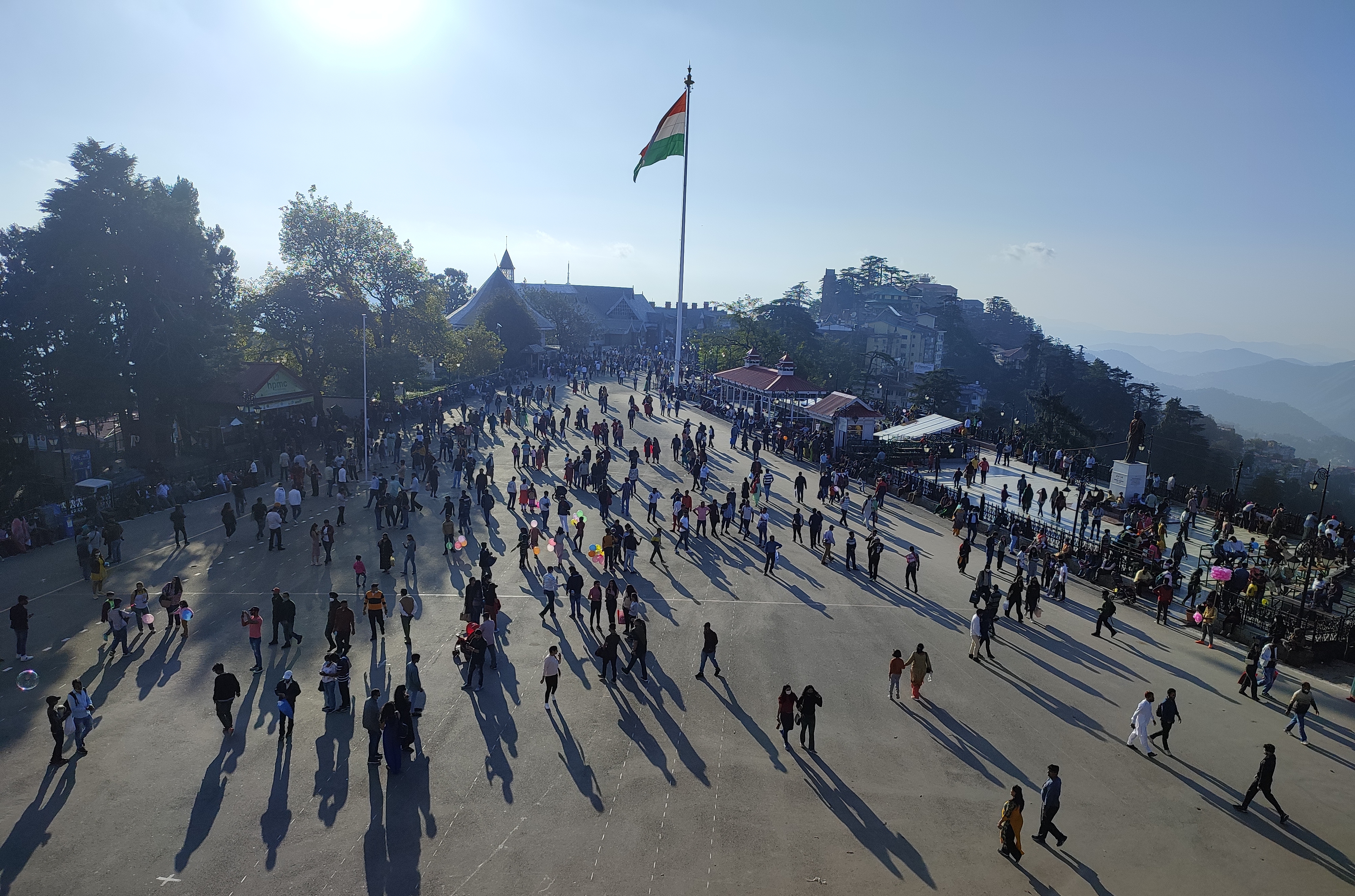
Start on the Ridge, the broad open space that functions as Shimla's town square - it is level, traffic-free, and sits directly on top of the town's main water reservoir. At its eastern end stands Christ Church, designed by Colonel J. T. Boileau and consecrated in 1857, making it the second-oldest church in north India after St John's in Meerut. It is a neo-Gothic building in yellow ochre with a clock tower, and the single most photographed thing in Shimla; the chancel window was designed by Lockwood Kipling, Rudyard's father, and the organ installed in 1899 is still among the largest in the subcontinent. Go early: the light is better, and by mid-morning the Ridge is full.
Walk west along the Ridge to Scandal Point, the junction where the Ridge meets the Mall and the town's meeting place for a century and a half. The name comes from a well-worn local legend about an elopement involving the Maharaja of Patiala; the story is almost certainly embroidered, but the spot is still where everyone arranges to meet. Just below is the Gaiety Theatre, an 1887 Victorian playhouse restored in the late 2000s and now part of the Gaiety Heritage Cultural Complex, and the timber-framed Town Hall opposite. Look up as you walk - the Municipal Corporation building, the old Bank buildings, and the Gorton Castle and Railway Board buildings further west are all part of the same layer of history.
Late morning: Jakhoo Hill and the Hanuman temple
From the small lane between Christ Church and the State Library, a marked path climbs to Jakhoo Temple on the town's highest point, roughly 2.5 km from the Ridge and about 2,455 m up. It is a steep, continuous ascent. Fit walkers may do it in around 30 minutes, but allow 45 minutes to an hour if you want to take it comfortably, and longer again if you are not used to the altitude.
The temple is dedicated to Hanuman and is one of the oldest sites in Shimla, but what draws most visitors now is the 108-foot Hanuman statue installed in 2010, which is visible from most of the town and stands taller than Christ the Redeemer in Rio. The views back over Shimla and out to the ranges are the best in town on a clear morning.
If the climb does not appeal, the Jakhoo ropeway runs from near the Ridge to the temple in about five minutes. Published rates are ₹467 return for adults and ₹381 for children aged 3 to 12, plus 5% GST, with one-way tickets at ₹252 and ₹200 and under-threes free. It runs from 9:30 am until sunset, so the closing time moves through the year. Fares change - check the operator's rates page before you count on it. A sensible compromise is to walk up and ride down, or the reverse if you are short on energy.
This is where the monkey warning matters most. Take off your glasses before the final approach, put your phone away, and carry nothing loose. The monkeys here are practised and fast.
Afternoon: the Viceregal Lodge and the Himachal State Museum
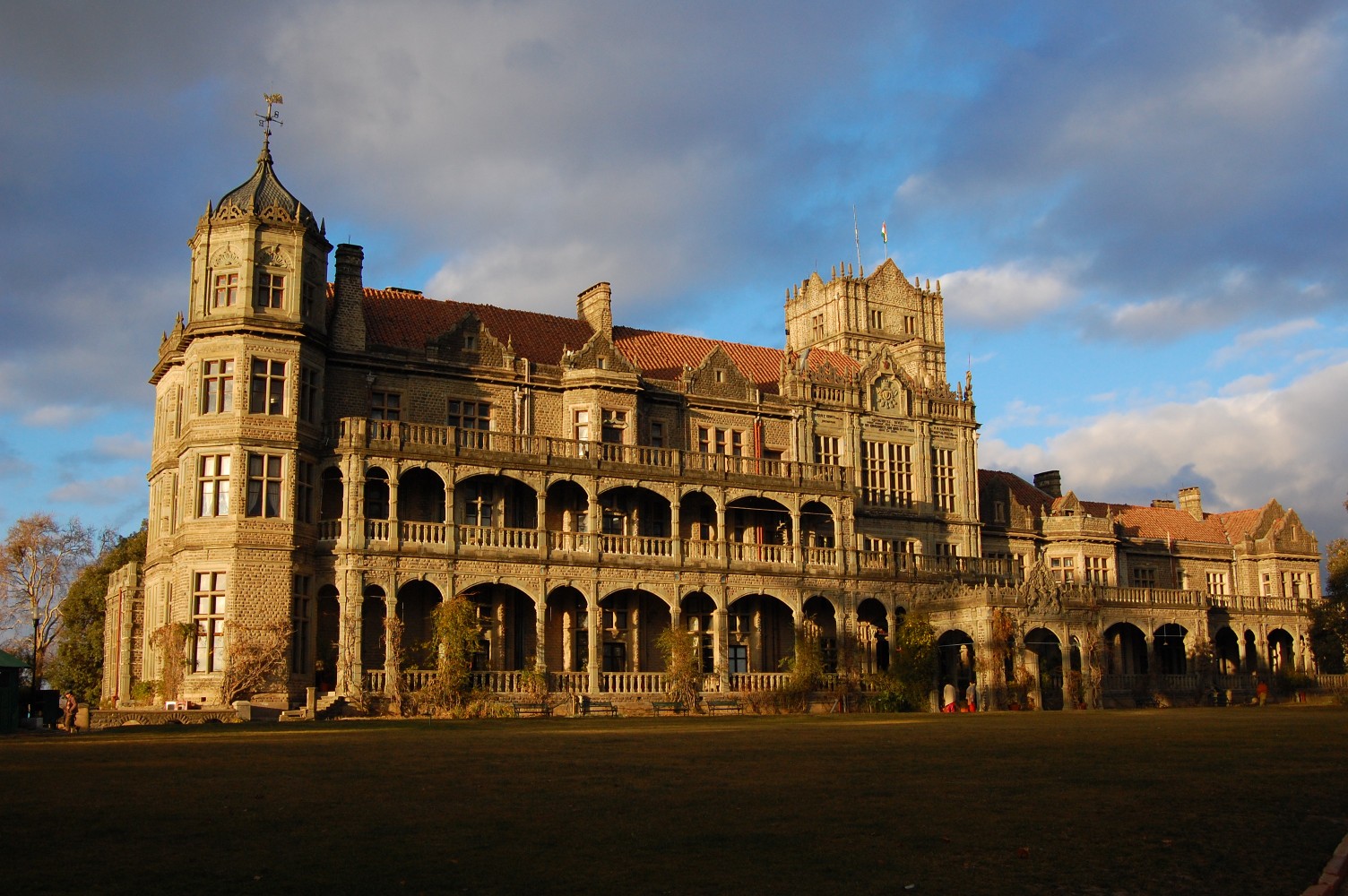
Walk west through the Mall and Chaura Maidan to Observatory Hill for the Viceregal Lodge, or take a taxi round to the nearest vehicle-accessible approach - remember that no taxi can drive the Mall itself. The Lodge was built between 1880 and 1888 to Henry Irwin's design and occupied by Lord Dufferin as the summer seat of the British Indian government. It is a vast grey-blue stone pile in the Jacobethan manner, with Burma teak and local cedar and walnut inside, and it has a genuine claim on modern Indian history: the 1945 Simla Conference convened here by Lord Wavell, and some of the discussions that led to partition, took place in these rooms. It now houses the Indian Institute of Advanced Study, and is also known as Rashtrapati Niwas.
Practical notes matter here, and the institute publishes them itself. Visitors are admitted from 9:30 am to 5:00 pm, and it is closed on Mondays and national holidays. The interior is seen only on a guided tour, not as a free wander: tours run in slots through the day, last about 30 minutes, are capped at 60 people, and are given in Hindi and English, with the first usually around 10:30 am and the last at 4:30 pm. There is a break over lunch. Entry rates set in March 2026 were ₹200 for Indian nationals, ₹1,000 for foreign nationals, and ₹50 for children aged 6 to 12 and for students up to graduation, with under-fives free. Photography inside is restricted, and rates change - confirm on the IIAS visitor page before you go. Even if you skip the interior tour, the grounds and the gardens are worth the walk.
Drop back down to Chaura Maidan for the Himachal State Museum, housed in a Victorian mansion and holding the state's collection of Pahari miniature paintings, temple sculpture, wood carving, coins, and textiles. It is also closed on Mondays and on public holidays, with hours around 10 am to 5 pm. It is a small, well-kept museum and it does more than anything else in town to explain the Himachal that exists beyond the hill-station veneer.
Evening: Mall Road and Lakkar Bazaar
Finish where Shimla is at its best: the Mall in the evening, when the whole town comes out to walk. It runs traffic-free below the Ridge, lined with shops, bakeries, and cafes, several of which have been there for generations. Lakkar Bazaar, running down from the eastern end of the Ridge, is the wood-crafts market - walking sticks, bowls, toys, and souvenirs - and is the place to pick up Himachali shawls, caps, and woollens alongside the Mall shops.
Suggested timings (confirm current opening hours):
- 8:30 am - Christ Church and the Ridge before the crowds
- 9:30 am - Scandal Point, the Gaiety Theatre, and the Mall's heritage buildings
- 10:30 am - Jakhoo Temple. Two hours covers it comfortably if you take the ropeway at least one way; if you are walking both directions, start at 10:00 am
- 12:30 pm - lunch on the Mall
- 2:00 pm - Viceregal Lodge
- 3:45 pm - Himachal State Museum
- 5:30 pm onward - Mall Road, Lakkar Bazaar, shopping, and dinner
If the day runs late: keep Christ Church, Jakhoo, and the Mall, and treat the museum as optional. If you arrive on the toy train or the overnight bus, this is the day that absorbs a slow start without damage.
Day 2: Kufri, Chail, or the quieter alternatives
Day two is the day out, and it is where most Shimla itineraries go wrong by defaulting to the first thing offered. There are three genuinely different days available, and the right one depends on the season and what you want from it. Settle it the evening before, once you have seen the forecast.
First, an honest word about Kufri
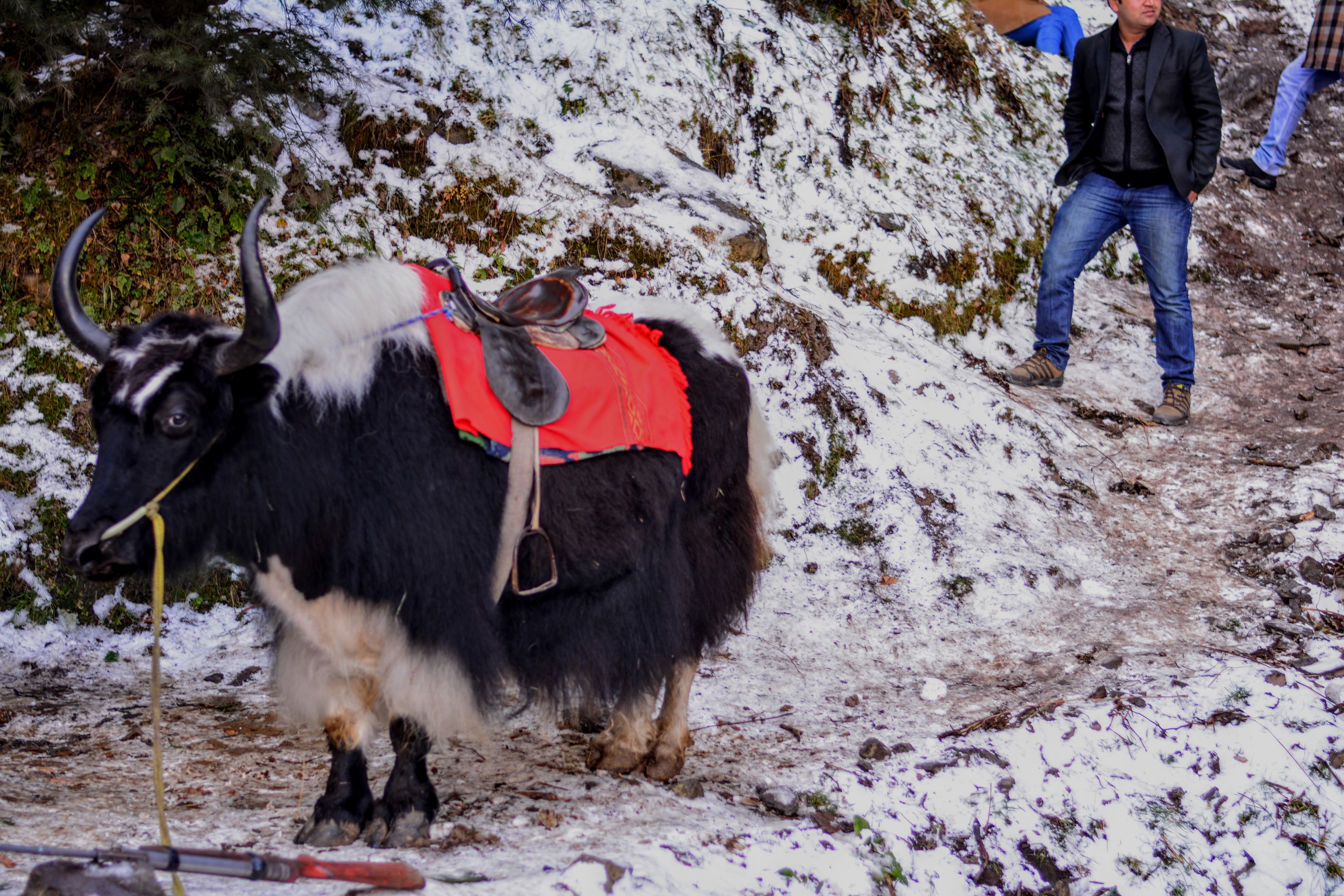
Kufri sits about 16 km east of Shimla on the Hindustan-Tibet road, at roughly 2,500 m, and it is the single most-visited day trip from town. It is also the most complained-about. Vehicles stop at the roadside and the last stretch up to Mahasu Peak is done on horseback, on a mule, or on foot along a steep track that is frequently muddy, churned up, and unpleasant with animal waste. Horse and yak operators are aggressive and quote wildly inflated opening prices - four-figure quotes per person are routine - and in season the road up from Shimla jams badly.
None of that means you should skip it. Kufri has the best snow access near Shimla in January and February, it holds a genuinely good view towards the greater Himalaya on a clear day, and the Himalayan Nature Park just below the village is a worthwhile stop for Himalayan wildlife including musk deer, snow leopard, and Himalayan monal, though it is closed on Tuesdays. What it means is that you should go with your expectations calibrated: settle the price for any ride before you get on, ignore the touts promising three-hour village-and-orchard circuits, and treat Kufri as a two-hour stop rather than a destination. Two hours means picking one thing - the ride up to Mahasu Peak or the Nature Park, not both. Trying to fit in both is how Kufri quietly eats the day it was never worth. The activity park at Kufri Fun World is a separate paid attraction and is aimed squarely at families with young children.
On the way, stop at the Green Valley viewpoint on the Shimla-Kufri road, where the hillside drops away into dense deodar forest - it takes ten minutes and is one of the better roadside views in the district.
Option A: Kufri and Chail
The standard Day 2, and a good one if you pair Kufri with Chail rather than stretching Kufri to fill a day. Chail lies roughly 45 km from Shimla via Kufri, through forest most of the way, and it is everything Kufri is not: quiet, green, and barely developed.
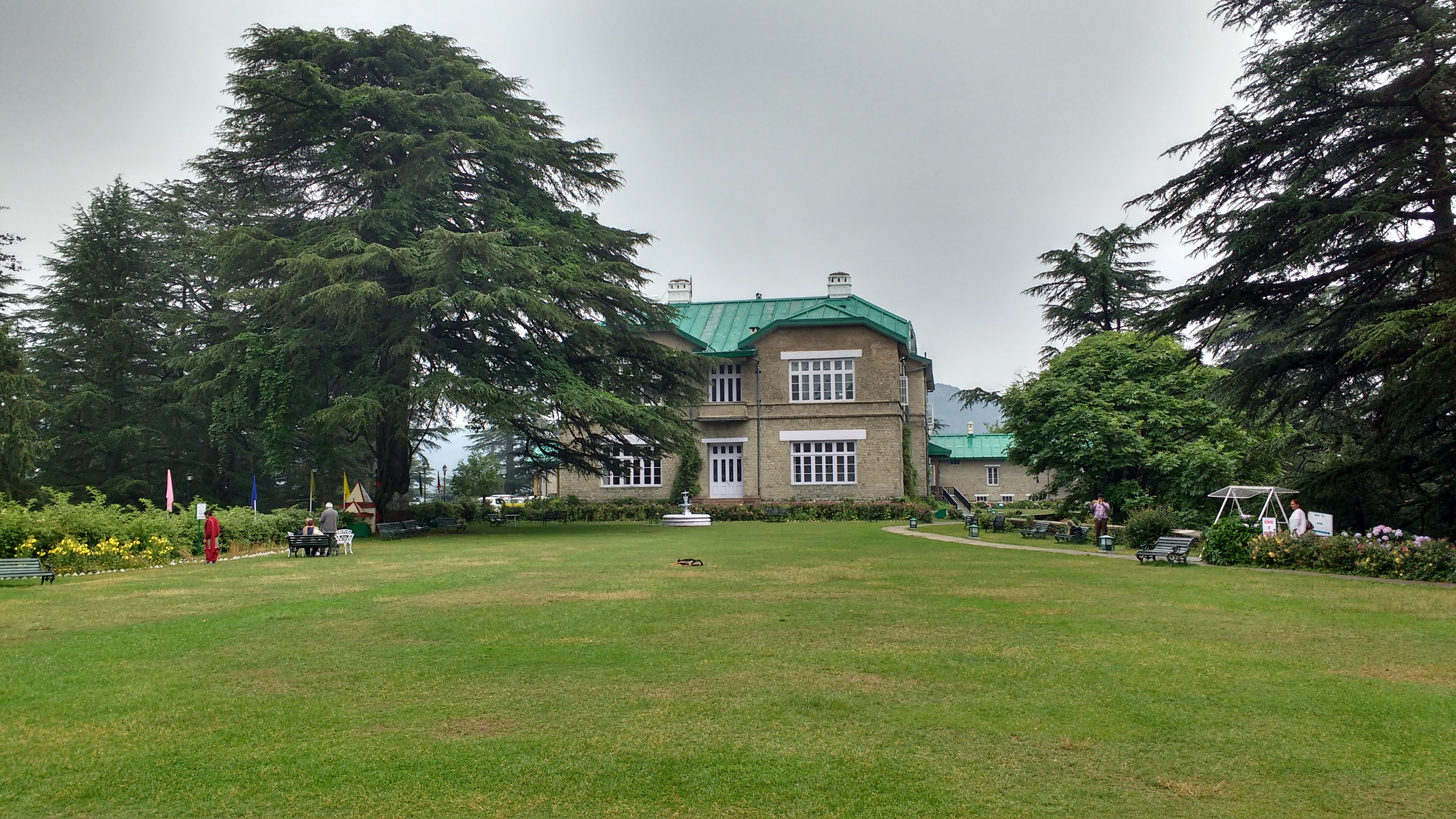
Chail was developed as a summer retreat by Maharaja Rajinder Singh of Patiala, who built a palace here over 1891 and 1892. The reason usually given is that he had been barred from Shimla by the British and set out to build a rival hill station in response; the versions of that story contradict each other on the details, so enjoy it as local legend rather than settled history. The history of the building itself is surprisingly muddled, and worth knowing before you stand on the lawn wondering what you are looking at. Himachal Tourism describes The Palace as dating to 1891, while other historical accounts hold that the original was replaced after independence by Rajgarh Palace, completed in 1951 on the same hill. What is not in dispute is that the royal estate goes back to the Maharaja of Patiala's development of Chail in the 1890s, and that it has been run by Himachal Tourism since the 1970s.
The other draw is the Chail cricket ground, built in 1893 at about 2,444 m and one of the highest in the world - begun under Rajinder Singh and finished under his son Bhupinder Singh. Be clear about what you can actually do there: it now sits inside the Rashtriya Military School and is maintained by the Army, so entry onto the playing surface is restricted and visitors generally see it from the perimeter. It is worth the stop, but do not plan a photo shoot on the pitch.
Chail Wildlife Sanctuary surrounds the town, with deodar and oak forest, goral, sambar, and good birding, and there is a short walk to the Kali ka Tibba temple on a ridge above the village with wide views. Coming back, you can either retrace the Kufri road or loop down via Kandaghat, which is longer in distance but often faster.
Suggested timings:
- 8:30 am - leave Shimla
- 9:00 am - Green Valley viewpoint
- 9:30 to 11:30 am - Kufri: pick one, either Mahasu Peak and the snow activities or the Himalayan Nature Park. Two hours does not stretch to both once you have parked, queued, and walked or ridden up
- 12:00 pm - drive on to Chail
- 1:00 pm - lunch in Chail
- 2:00 pm - Chail Palace grounds, the cricket ground, and Kali ka Tibba
- 4:30 pm - start back
- 6:00 pm - back in Shimla
Option B: Mashobra, Naldehra, and Tattapani
The quiet alternative, and the better day if you have seen enough crowds or are travelling out of the snow season. It runs north-west out of town and drops nearly 1,500 m by the end of it.
Mashobra, about 13 km out, is a village of apple orchards and deodar forest on the road to Naldehra, with the small terraced Craignano garden above it. The Presidential retreat here is not open to the public, so treat Mashobra as a stop for the setting rather than a sight. Naldehra, about 23 km from Shimla, has one of India's oldest golf courses, established as a nine-hole layout under Lord Curzon and later expanded to 18 holes, laid out along a natural ridge that Curzon is said to have chosen himself and named his daughter after. You do not need to play - the ridge is beautiful, the deodars are enormous, and the small Mahunag temple sits at the far end.
From there the road drops hard to Tattapani on the Sutlej, about 51 km from Shimla and only around 650 m above sea level, which makes it noticeably warmer than the town you left. Be clear about what Tattapani is now: the original hot sulphur springs on the riverbank were submerged when the Kol Dam reservoir filled, and the hot water available today comes from bore wells feeding pools at local hotels and public facilities rather than from the natural springs in their old form. It is still a pleasant soak and a striking change of climate, and the Sutlej here also runs commercial rafting when flows and conditions allow. There is a Shiva cave, Shiv Gufa, a short drive on. Confirm what is actually operating before you commit the afternoon to it.
Suggested timings:
- 9:00 am - leave Shimla
- 9:45 am - Mashobra and Craignano
- 11:00 am - Naldehra
- 12:30 pm - descend to Tattapani
- 1:30 pm - lunch, then hot water pools or rafting
- 4:00 pm - start the climb back
- 6:00 pm - back in Shimla
Option C: Narkanda and Hatu Peak
The long day, and the one that gets you highest. Narkanda sits about 60 km east of Shimla at roughly 2,700 m, in the heart of Himachal's apple belt, and it is the region's proper skiing base in winter - a better bet than Kufri if organised skiing is what you are after. Above it, a road climbs about 7 to 8 km to Hatu Peak at roughly 3,400 m, where an old wooden temple stands among the highest trees on the ridge and the view runs across the ranges.
This is a full day: expect roughly five to six hours of driving across the day in normal conditions, and considerably more in snow or holiday traffic. The Hatu Peak road is narrow and is often closed by winter snow, so confirm access before setting out rather than discovering it at the turning. Go in September or October for the apple harvest and the clearest air, or in deep winter if you want snow and are willing to accept that you may not get up the last stretch.
Suggested timings:
- 7:30 am - leave Shimla
- 10:00 am - Narkanda
- 10:45 am - Hatu Peak, road permitting
- 1:00 pm - lunch in Narkanda
- 2:00 pm - start back
- 5:00 pm - back in Shimla
If the road closes
It happens, most often in the monsoon and after heavy snow. Swap Day 2 and Day 3, do the walking day instead, and try again the next morning. Shimla is one of the few hill stations where a washed-out day out still leaves you with plenty to do on foot.
Day 3: the quieter Shimla, or the toy train
Day three splits by how you are leaving. If you are heading down to Kalka or Chandigarh, the toy train is the obvious way to spend it. If you are not taking the train, the quieter western and southern edges of Shimla make an excellent final day - either as a half-day before departure or a longer outing with Chadwick Falls in the monsoon.
Option A: the Kalka-Shimla toy train
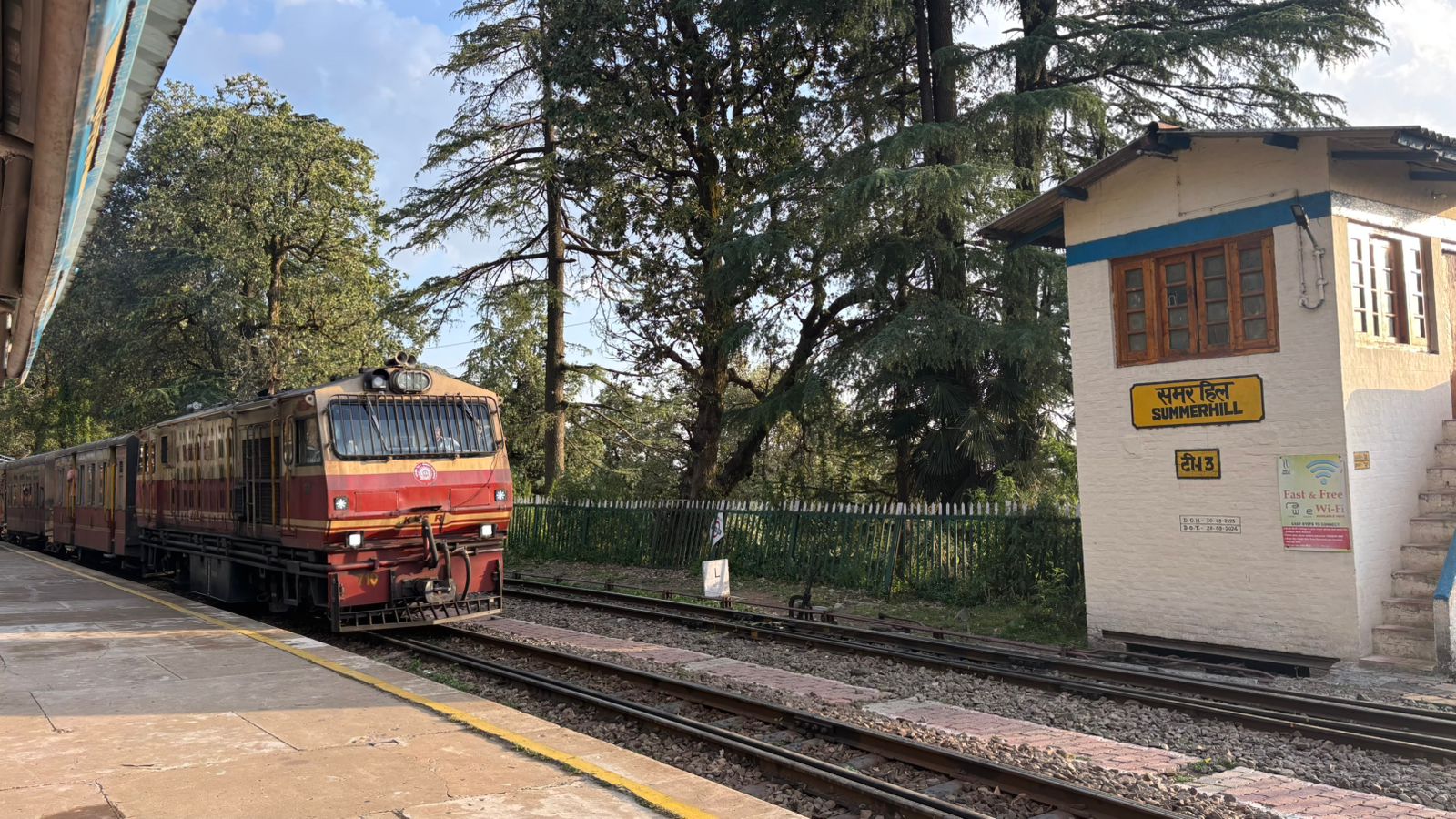
The Kalka-Shimla Railway is a 2 ft 6 in narrow-gauge line running 96.6 km from Kalka up to Shimla, opened in 1903 and inscribed on the UNESCO World Heritage list in 2008 as part of the Mountain Railways of India. It climbs about 1,420 m, from 656 m at Kalka to 2,075 m at Shimla, across close to a thousand bridges and viaducts and through more than a hundred tunnels, the longest of them at Barog. It is the single most enjoyable piece of transport in the region.
Practical notes:
- Journey time is roughly four and a half to six hours depending on the service. The Shivalik Deluxe Express is the fastest and most comfortable, with meals included; the Himalayan Queen and the ordinary passenger services are slower and cheaper. Fares range from around ₹65 in basic seating up to several hundred rupees in the premium and glass-roofed coaches.
- Book early. Reservations open 60 days ahead through IRCTC, and popular services in April to June and around holidays sell out within minutes of opening. If you are travelling in peak season, treat the train as something you book before you book the hotel.
- Rail motor cars and special services run seasonally in addition to the regular trains, so check what is scheduled for your dates rather than assuming a fixed timetable.
- If you cannot get a full Kalka run or do not have the time, ride a short section instead. Shimla to Summer Hill or Taradevi and back gives you the tunnels, the curves, and the deodar forest in a fraction of the time.
The one thing to plan for: the train is a one-way commitment. If your car and driver are in Shimla, you will need to sort out how they and your luggage get down.
Option B: Annandale, Summer Hill, Chadwick Falls, and Tara Devi
The version of Shimla that day-trippers never reach. How long it takes depends entirely on whether Chadwick Falls is in or out, so pick the shape that matches your departure:
- Half-day, and fine on a departure morning: Annandale and the Army Heritage Museum, then Summer Hill, then Tara Devi.
- Full day, and only worth it from July to September: the same run with the forest walk to Chadwick Falls added between Summer Hill and Tara Devi.
If you only have a departure morning, skip Chadwick Falls. The walk through the Glen turns this from an easy half-day into a much longer outing, and outside the monsoon there is often not much water at the end of it.
Annandale is a flat green shelf about 4 km below the Ridge, historically the town's racecourse and cricket ground and now managed by the Army, with a helipad and a golf course. The Army Heritage Museum here holds uniforms, weapons, regimental silver, and material on the Indian Army's Himalayan campaigns; it is generally free, opens around 10 am with a lunch break, and is closed on Mondays.
Summer Hill, on the western edge, is one of Shimla's seven hills and holds Himachal Pradesh University along with quiet, shaded walks under deodar and pine. It also has a station on the toy train line, which makes it an easy pairing with a short train ride. From here it is a walk of a couple of kilometres through the Glen forest to Chadwick Falls, which drops around 86 m into a wooded gorge. Be honest about the season: outside the monsoon and the weeks just after it, the falls can be reduced to a trickle, so treat it as a July-to-September attraction and skip it in the dry months.
Finish at Tara Devi, a temple on a wooded hilltop about 11 km south of town on the Kalka road, reached by a road most of the way and a short walk at the end. It is old, unfussy, and has one of the widest views around Shimla - a better final stop than another hour on the Mall.
Option C: if you want one more day out
If you have the flexibility and would rather spend Day 3 driving, take whichever of the Day 2 options you did not use. Kufri and Chail pairs naturally with a Naldehra day; Narkanda works better as a standalone.
If you only have 2 days in Shimla
Two days works, but it means dropping something deliberately rather than trying to compress everything:
- Day 1 as written, unchanged. This is the part of Shimla you came for, and rushing it is a mistake.
- Day 2: pick one of the three day-out options and commit to it. Do not attempt Kufri, Chail, and Naldehra in a single day - it is a well-meant plan that turns into eight hours in a car.
- Skip Day 3 entirely, or replace it with a short toy-train run from Shimla to Summer Hill and back on your departure morning if the timings suit.
Shimla also pairs well with Manali as a longer Himachal trip, with a driving day between the two. If that is your plan, see our 3-day Manali itinerary for the other half.
Where to stay in Shimla
The right area depends almost entirely on whether you are walking or driving:
| Area | Vibe | Best for |
|---|---|---|
| The Mall and the Ridge | Central, historic, everything on foot, no vehicle access | First-timers and anyone doing Day 1 properly |
| Lakkar Bazaar and Lower Bazaar | Busy, cheaper, right below the Ridge | Budget travellers who still want to walk everywhere |
| Chhota Shimla | Residential, quieter, easier road access | Families and travellers with a car |
| Chaura Maidan and Summer Hill | Leafy, spread out, near the Viceregal Lodge and the university | Longer stays, quiet, and better value |
| Sanjauli and Dhalli | Local, well-connected, furthest from the tourist core | Budget stays and drivers, if you do not mind commuting in |
| Kachi Ghati and Tutikandi | Roadside and practical, on the western approach by the bypass and ISBT | Drivers who want easy parking, and early bus departures |
| Mashobra and Naldehra | Orchards, forest, boutique resorts, 30 to 60 minutes out | Couples and slower trips with a car |
| Kufri and Chail | Resorts near the slopes and the forest | Snow trips and travellers who want to be out of town |
One thing to check before you book anywhere in the core: how far the hotel is from the nearest point a vehicle can reach, and whether porters are available. A "5-minute walk from the Mall" can mean five minutes of stairs with your bags.
Getting around Shimla
- On foot: the Mall, the Ridge, Lakkar Bazaar, and the walk to Jakhoo are all walkable, and walking is genuinely the fastest way to move within the core. The gradients are steep, but the main strip itself is level.
- The Lift: the Himachal Tourism passenger lift links Cart Road to the Mall in about 90 seconds. Use it rather than climbing, particularly with luggage.
- Taxis: local unions run on fixed point-to-point rates rather than meters, and no taxi can take you onto the Mall or the Ridge. Agree the rate before you get in.
- Car with driver: the sensible choice for Day 2 and for the Day 3 sightseeing option. Hire by the day, agree the route and price up front, and confirm the driver waits at each stop.
- Buses: HRTC's main intercity terminal is ISBT Tutikandi, which is where services to Chandigarh, Delhi, Manali, and up the valley towards Rampur and Narkanda run from. The Old Bus Stand, closer to central Shimla, handles selected local and regional services. Check which one your ticket departs from - turning up at the wrong stand is a common and avoidable mistake. Local buses are cheap and useful for Kufri and Mashobra if you are travelling on a budget.
- The toy train: useful for short hops between Shimla, Summer Hill, and Taradevi as well as the full run to Kalka.
- Distances to plan for: Annandale is about 4 km, Tara Devi around 11 km, Mashobra about 13 km, Kufri roughly 16 km, Naldehra about 23 km, Chail around 45 km via Kufri, Tattapani about 51 km, and Narkanda around 60 km. In these hills, journey times depend far more on traffic and road conditions than on distance, so add a generous buffer in season.
What a 3-day, 2-night Shimla trip roughly costs
The estimates below assume three days and two nights for two people travelling together and sharing a car with driver on Day 2 - the biggest single line item in a Shimla trip after the room. Shimla runs from backpacker hostels in Lower Bazaar to colonial-era heritage hotels on the Ridge, so treat these as rough orientation figures rather than a quote. Prices spike hard through May and June and over Christmas and New Year, so confirm close to your dates.
| Style | Two nights, per person | Food | Shared car, per person | Admissions and one activity | Approximate total |
|---|---|---|---|---|---|
| Budget (hostel or basic guesthouse) | ₹1,000-2,500 | ₹1,000-2,200 | ₹1,500-2,500 | ₹800-2,000 | ₹4,300-9,200 |
| Mid-range (3-star hotel or homestay) | ₹3,000-6,500 | ₹1,800-3,500 | ₹2,000-3,000 | ₹2,000-4,000 | ₹8,800-17,000 |
| Premium (heritage hotel or resort) | ₹8,000+ | ₹4,500+ | ₹3,000+ | ₹3,500+ | ₹19,000+ |
A few things these figures hide:
- Shimla is cheaper to get around than Manali because Day 1 needs no vehicle at all and Day 3 can be done on the train. Only Day 2 really costs you a car.
- Parking is a real daily cost if you drive your own vehicle, and so is the applicable state tax for out-of-state vehicles. Both are per vehicle rather than per traveller.
- Solo travellers pay substantially more unless they join a shared taxi or a group day trip, because the car column stops being shared.
- The admissions allowance covers the Viceregal Lodge, the museum, and one paid activity such as the Jakhoo ropeway. A pony ride at Kufri, a toy train ticket in a premium coach, skiing at Narkanda, or rafting at Tattapani will push you above the range.
- The stay column is per person for two adults sharing a room, and a hostel bed in the budget row. Figures exclude the journey to Shimla itself.
Prices last reviewed: August 2026.
Frequently asked questions
How many days do you need in Shimla?
Three days is the sweet spot: one on foot in the colonial core, one day out, and one for the toy train or the quieter edges of town. Two days covers the town and a single day trip if you are pressed. Four or five days lets you add Narkanda, a longer stay at Chail or Naldehra, or a slower pace with time to actually sit on the Ridge - which is, in fairness, what Shimla was built for.
Is Kufri worth visiting?
It depends on the season and your tolerance. In January and February it is the easiest snow access from Shimla and a reasonable half-day. Outside the snow months it is a crowded roadside stop with an unpleasant approach track and pushy ride operators, and the same time is better spent at Chail or Naldehra. If you do go, agree every price before you commit, keep it to about two hours by choosing either Mahasu Peak or the Nature Park rather than attempting both, and pair it with somewhere else.
Can you see snow in Shimla?
January and February give the best odds, though snow in the town itself varies a great deal year to year - central Shimla can stay clear while Kufri and Narkanda hold snow. Late December sometimes delivers, and the Christmas-to-New-Year week is the busiest and most expensive of the winter regardless of whether it snows. See our guide to the best time to visit Shimla for the month-by-month picture.
Is the Kalka-Shimla toy train worth it, and how do you book?
Yes, and it is the best single experience in the region. Book through IRCTC when reservations open 60 days ahead, because peak-season services sell out almost immediately. Allow four and a half to six hours depending on the train. If you cannot get a seat on a full Kalka run, ride a short section from Shimla to Summer Hill or Taradevi instead - you still get the tunnels, the curves, and the forest.
Do you need a car in Shimla?
Not for Day 1, and not for Day 3 if you take the toy train. You need one for Day 2, and a hired car with driver is the practical answer because no vehicle can enter the pedestrian core anyway. If you drive your own car, plan on parking below the Mall and walking or taking the Lift up - and factor in real time for finding a space in season.
Shimla or Manali - which should you choose?
Shimla is the better choice for heritage, walkability, and a trip that does not depend on a mountain road staying open; Manali is the better choice for high passes, snow at altitude, and adventure activities. Shimla suits families and first-time hill-station visitors; Manali suits travellers who want to get above the tree line. Many people do both, with a driving day between them - see our 3-day Manali itinerary if that is the plan.
Is Shimla walkable?
The core is, and unusually so for an Indian city - the Mall and the Ridge are closed to traffic and level. Everything off that strip involves climbing. If mobility is a concern, base yourself on the Ridge, use the Lift and the Jakhoo ropeway, and take taxis to the Viceregal Lodge and the museum rather than walking the length of the Mall each time.
The TravelNerdz take
Shimla is the rare Indian hill station where the best day costs you nothing but shoe leather. Give Day 1 entirely to the core and walk it - Christ Church, the Ridge, Jakhoo, the Viceregal Lodge, and the Mall after dark are the trip, and no amount of driving improves on them. Treat Day 2 as a genuine choice rather than a default: Kufri and Chail earns its place in the snow months if you keep Kufri short and give Chail the afternoon, but Naldehra and Tattapani is the better day for most of the year, and Narkanda is the one for a clear autumn. Book the toy train the moment reservations open, take your glasses off before you reach Jakhoo, and stay somewhere you can walk home to. Do that, and three days in Shimla is genuinely enough.
Image credits
- The Ridge, Shimla (hero) by Laluttam, via Wikimedia Commons, CC BY-SA 4.0
- Rashtrapati Niwas, Shimla, former Viceregal Lodge by ptwo, via Wikimedia Commons, CC BY 2.0
- Road to Kufri, Shimla by Rajudbg, via Wikimedia Commons, CC BY-SA 4.0
- The Palace at Chail near Shimla by Shubhankar Sakalkale, via Wikimedia Commons, CC BY-SA 4.0
- Train at Summer Hill railway station on the Kalka-Shimla Railway by Rajani Gairshail, via Wikimedia Commons, CC BY-SA 4.0