3-Day Manali Itinerary: Solang, Rohtang, Sissu and Naggar
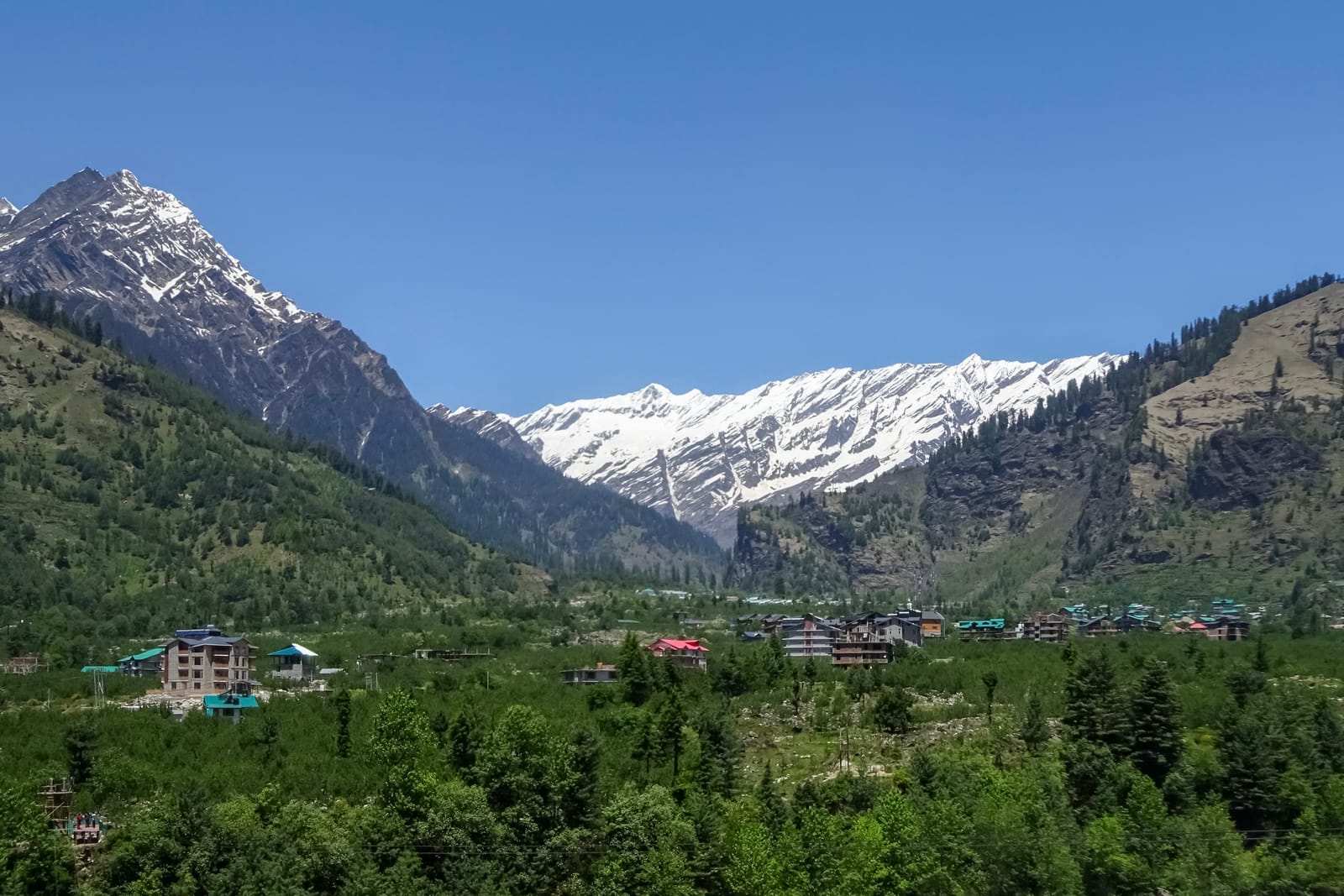
Published 5 August 2026Manali packs a lot into a small valley, and this 3-day Manali itinerary is built to get you the best of it without spending the whole trip in a car. Day 1 covers the town itself - the cedar-shaded Hadimba Devi Temple, Old Manali's lanes and cafes, and the hot springs at Vashisht. Day 2 follows one of two genuinely different routes: Rohtang first when access and permits allow, or Solang followed by the Atal Tunnel and Sissu. Day 3 heads down the Kullu valley to Naggar Castle, the Roerich estate, and the Jana waterfall. It comes with realistic timings, where to base yourself, and the permit and road checks that catch first-timers out. For the weather and snow side of your planning, pair it with our guide to the best time to visit Manali, and for a wider view of the town see our Manali city guide.
Manali itinerary at a glance
- Best base: Old Manali for cafes and character, Mall Road for convenience, or Vashisht and the Naggar road for quiet and valley views
- Best season: May to June for the widest range of accessible roads and activities, October for clear skies and thin crowds, January to February for snow
- Transport needed: a hired car with driver for Days 2 and 3; Day 1 works on foot and by auto
| Day | Morning | Afternoon | Evening |
|---|---|---|---|
| Day 1 | Hadimba Devi Temple, then the Tibetan monasteries and Van Vihar | Old Manali, the Manu Temple, and lunch in the lanes | Vashisht hot springs, then Mall Road and dinner |
| Day 2A - Rohtang route | Leave early for Rohtang Pass or the highest authorised point on the road | Descend for lunch, with Solang on the return if time allows | Return to Manali and dinner |
| Day 2B - Solang and Sissu | Solang Valley, then through the Atal Tunnel | Lunch and sightseeing at Sissu | Return to Manali and dinner |
| Day 3 | Naggar Castle and the Nicholas Roerich estate | Jana waterfall and a Himachali lunch above Naggar | Back in Manali, souvenirs and dinner |
Before you go: how to plan your days
Manali's sights fall into three bands, and the itinerary follows them. The town band - Hadimba, the monasteries, Old Manali, Mall Road, and Vashisht - sits within a few kilometres and needs no more than a day. The high band runs north up the Beas valley through Solang towards Rohtang and the Atal Tunnel, and it is highly weather-dependent. The valley band runs south towards Naggar, Kullu, and the Parvati valley and is generally accessible for more of the year, although monsoon and winter disruptions remain possible. A few calls to make before you arrive:
- Best base for this itinerary: Old Manali suits travellers who want cafes, riverside guesthouses, and a walkable evening scene, and it sits closest to the Manu Temple and the Hadimba woods. The Mall Road and Model Town area is the most convenient for taxis, shops, and bus connections. Vashisht, Prini, and the Naggar road offer quieter stays with better valley views and a short drive into town. Book well ahead for May and June and for the Christmas-to-New-Year window, when the valley fills and prices spike.
- Day 2 is the decision day: what you can actually do above Solang depends entirely on the season and the day's road status. Rohtang Pass typically opens from late spring or early summer into autumn and is shut by snow in winter. The Atal Tunnel is built for year-round connectivity to Lahaul and usually stays open through winter, but tourist traffic can be restricted during heavy snow, avalanche risk, black ice, or congestion. Decide the shape of Day 2 the evening before, not weeks out.
- Rohtang permits: a Rohtang day needs a permit booked through the official Rohtang permit portal. Daily vehicle numbers are capped under National Green Tribunal directions, the booking window only opens a couple of days ahead, and separate permit and congestion charges apply per vehicle. The administration may also designate a maintenance closure day or impose temporary traffic restrictions during the season, so check the date shown on the permit portal and the latest District Kullu orders before booking. Note too that the road up is sometimes opened only as far as a point below the pass itself, so "Rohtang is open" and "you can reach the top" are not always the same thing.
- Lahaul permits: using the Atal Tunnel does not require a Rohtang tourism permit, but vehicles entering Lahaul-Spiti currently need to be registered through the Himachal Pradesh e-Aagman portal. Depending on the destination and route, the system issues the relevant e-permit or e-ticket. Complete this before leaving Manali rather than waiting until the tunnel checkpoint.
- Check the roads before you commit: mountain roads here change by the day. Watch District Kullu notices for traffic and road orders, and the IMD Shimla bulletin for weather, before any high-country day. Access to Sissu and the Lahaul side can be suspended during severe weather or local religious observances, so check Lahaul-Spiti notices as well as the tunnel status before leaving Manali.
- Driving in: vehicles registered outside Himachal Pradesh pay an environmental fee at the barrier on the way into Manali, now payable by FASTag, and there is a separate highway toll on the Kullu-Manali road. Neither is a reason to change plans, but budget for them.
- Altitude and cold: Manali sits at roughly 2,050 m, Solang is higher, and Rohtang tops 3,978 m, so the temperature drop on Day 2 is steep. Carry warm layers, a windproof outer, and sunglasses whatever the month, and take the climb gently if you have come straight up from the plains. Snow gear can be rented near Solang.
- Winding roads and car sickness: the drive up from Chandigarh and the climbs above Solang are long stretches of hairpin bends. If anyone in your group is prone to travel sickness, plan for it and sit them in front.
- Timing the seasons: May to June usually offers the fullest version of this itinerary, with the widest range of accessible roads and activities, although the exact Rohtang opening date changes every year. April is excellent for Manali, Solang, and lower-valley sightseeing, but the pass may still be closed. July to mid-September is green and cheap but carries a real landslide and roadblock risk. October is the quiet sweet spot for clear views. January and February are the snow months, with Rohtang shut and Day 2 shifting to Solang and the accessible Lahaul side. See our full guide to the best time to visit Manali for the month-by-month breakdown.
Day 1: Manali town, Old Manali, and Vashisht
Day one stays low and close, which is exactly what you want on your first day at altitude. It is the most walkable day of the three, and nothing on it depends on a mountain road staying open.
Early morning: Hadimba Devi Temple
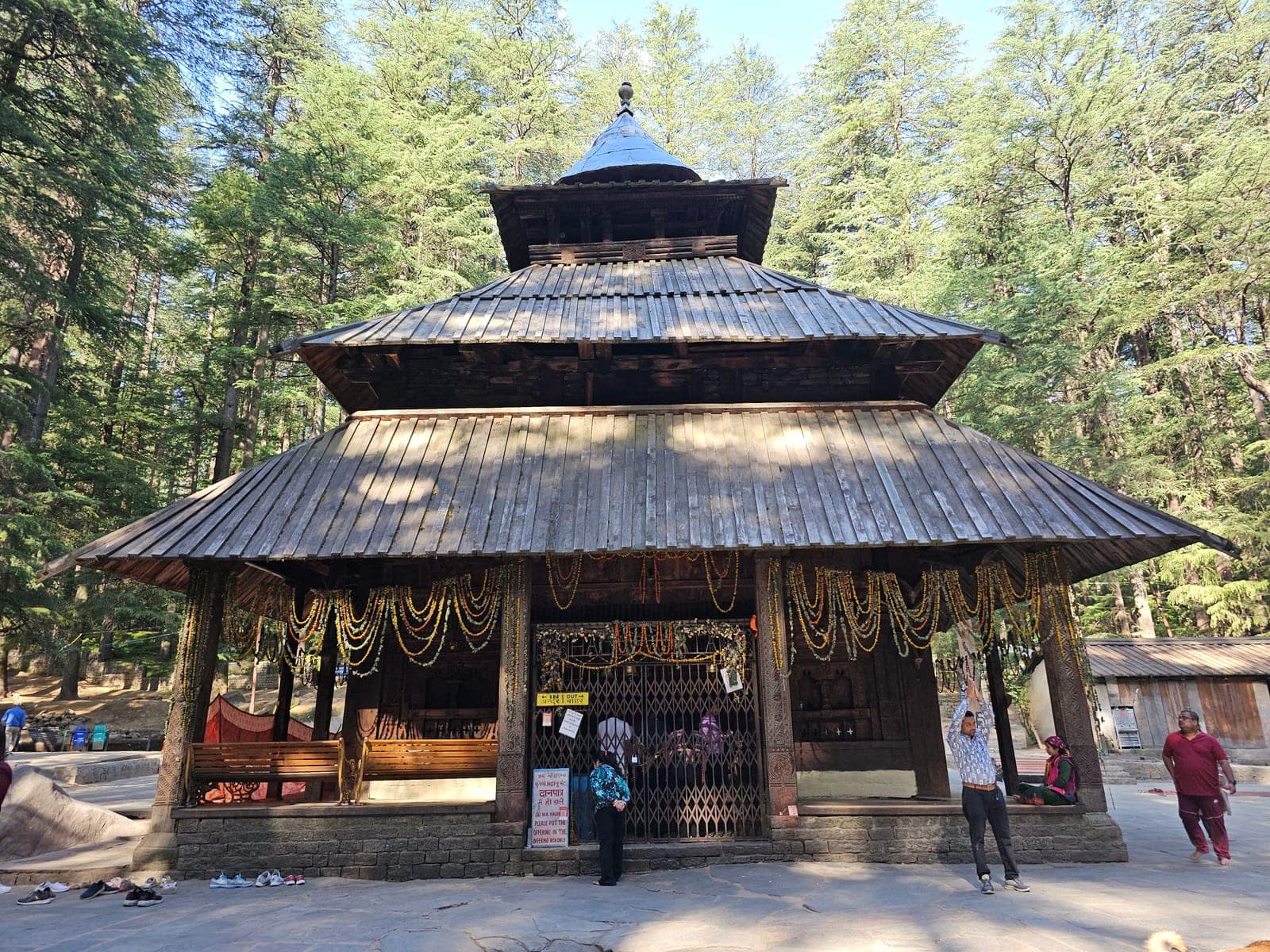
Start at the Hadimba Devi Temple in the Dhungri cedar forest, about a kilometre and a half above Mall Road. Built in 1553, it is a four-tiered pagoda of timber and stone with an intricately carved doorway, raised over a rock shrine and surrounded by tall deodars. Go early: it is one of Manali's busiest and most visited sights, the light through the cedars is best in the morning, and by mid-morning the forecourt fills with coach groups. The smaller Ghatotkacha shrine, dedicated to Hadimba's son, stands a short walk away beneath a huge cedar.
Morning: the Tibetan monasteries and Van Vihar
Come back down towards town for the Tibetan quarter, where the Gadhan Thekchhokling Gompa and the Himalayan Nyingmapa Gompa sit within walking distance of Mall Road, with prayer wheels, murals, and a small carpet-weaving workshop and handicraft shops attached. It is a quiet, quick stop that gives useful context for the Tibetan refugee community that settled here. Cross into Van Vihar, the small deodar park on the river side of Mall Road, for a short walk and a boating pond, then break for an early lunch.
Afternoon: Old Manali and the Manu Temple
Cross the Manalsu bridge into Old Manali, the original village above the modern town, where slate-roofed houses and old wooden granaries sit among apple orchards, and the main lane is lined with cafes, bakeries, and guesthouses. At the top of the village, the Manu Temple is dedicated to the sage Manu, the figure the town is named for, and is the only temple of its kind in India. It is a steady uphill walk from the bridge, so allow time and take it slowly. Old Manali is the best part of town simply to wander, and the cafes here are where most travellers end up spending an afternoon.
Late afternoon: Vashisht
Head 3 km north across the river to Vashisht, a stone-and-timber village that looks straight down the valley. The draw is the natural hot sulphur springs, with separate bathing tanks for men and women attached to the Vashisht temple, traditionally believed to have therapeutic properties. The public temple tanks are generally free or inexpensive to use, while enclosed bathing facilities may charge a nominal fee, so confirm the current arrangement locally. The temple itself is an old wooden shrine dedicated to the sage Vashisht, with the Rama temple next door. If you want a walk instead, the trail to Jogini Falls starts here and climbs through orchards and pine to the waterfall in about an hour each way.
Evening: Mall Road
Finish back on Mall Road, where the shops sell Kullu shawls and caps, Himachali woollens, apple products, and locally pressed juices. Manali's food scene is one of the better ones in the hills, with everything from Tibetan thukpa and momos to Himachali dham and Israeli and Italian food in the Old Manali cafes.
Suggested timings (confirm current opening hours):
- 8:30 am - Hadimba Devi Temple before the crowds
- 10:00 am - Tibetan monasteries and handicraft shops
- 11:15 am - Van Vihar
- 12:30 pm - lunch, then cross into Old Manali
- 2:00 pm - Old Manali lanes and the Manu Temple
- 4:00 pm - Vashisht hot springs
- 6:00 pm onward - Mall Road, shopping, and dinner
If the day runs late: keep Hadimba, Old Manali, and Vashisht, and treat Van Vihar and the monasteries as optional. If you arrive in Manali on the overnight bus, this is also the day to lose an hour to a nap without wrecking the itinerary.
Day 2: Solang, Rohtang or Sissu
Day two is the mountain day and the reason most people come. It follows one of two genuinely different routes, and they are not interchangeable. A Rohtang day starts at first light and drives straight up, treating Solang as an optional stop on the way back. A tunnel day gives Solang a proper morning before crossing to Lahaul. Settle which one you are doing the night before, based on the day's road status and whether you hold a permit.
First, about Solang Valley
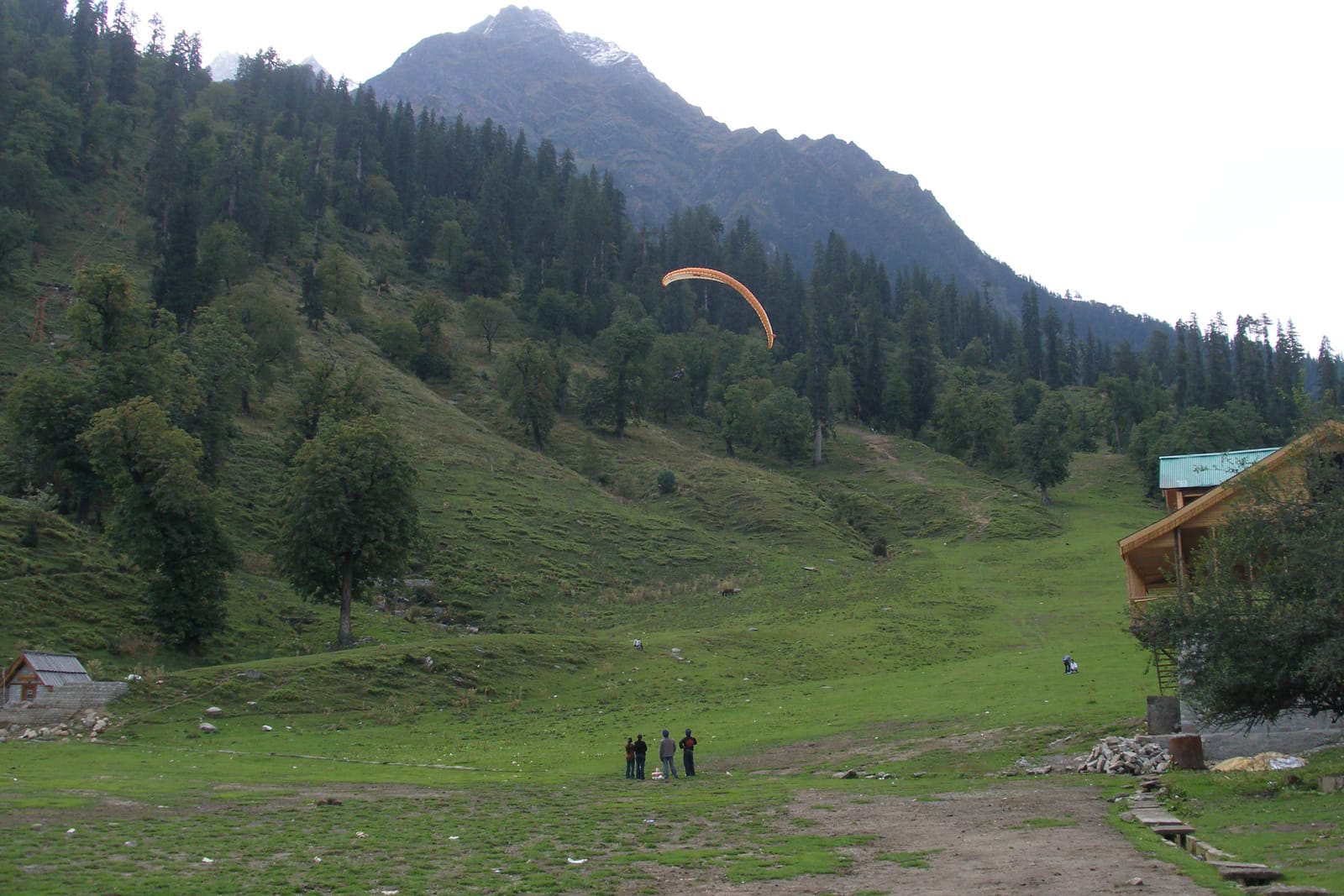
Solang Valley lies about 14 km north of Manali, a meadow ringed by snow peaks that functions as the valley's activity hub. In the warmer months it runs paragliding, zorbing, quad bikes, and a gondola ropeway up towards the Mount Phatru ridge for views over the Beas valley; in winter the same slopes turn to skiing, snowboarding, and snow tubing, and this is where most day-trippers come to find snow. Which activities are actually running varies by season, weather, and current regulation, so treat the list as a menu rather than a guarantee, and agree prices before you start. Where Solang sits in your day depends on which of the options below you are taking.
Option A: the Rohtang day
If the Rohtang route is open and you hold a permit, this is the classic Manali day out. The pass sits at about 3,978 m, roughly 51 km from town, on the old road over the Pir Panjal into Lahaul, and the drive up through Gulaba and Marhi is as much of the experience as the summit - a slow climb through switchbacks to a bare, wind-scoured saddle that usually holds snow well into summer. Bear in mind that tourist traffic is sometimes permitted only as far as an authorised point below the top, so plan for the highest point currently open to tourist vehicles rather than assuming the summit.
The mistake most first-timers make is treating this as a Solang day with Rohtang bolted on. It is not. Solang activities, the taxi queues on the approach road, and the slow climb above Marhi will eat the whole morning, and an afternoon arrival at the pass risks cloud, cold, and a rushed descent. Do Rohtang first and treat everything else as a bonus.
Suggested timings when the Rohtang route is open to you:
- 6:30 to 7:00 am - leave Manali and drive straight up, past Solang
- 9:30 to 11:30 am - Rohtang Pass or the highest point currently open to tourist vehicles
- Lunch on the way back down
- Solang on the return, only if traffic and energy allow
- Late afternoon - back in Manali
Option B: the Atal Tunnel and Sissu day
If Rohtang is closed, permits are gone, or you would rather not spend the day climbing, take the Atal Tunnel instead. At just over 9 km it runs beneath the Rohtang massif from a south portal near Dhundi to the Lahaul side, opened in 2020, and it cuts a journey that used to take hours down to about ten minutes. Emerging on the north side into the Chandra valley is a genuine change of world: drier, starker, and browner, with the river below and bare ridgelines above.
This is the version of Day 2 that gives Solang a proper morning first. Sort your e-Aagman vehicle registration before you set off. From the tunnel, most travellers carry on about 10 km to Sissu, a village beneath the Sissu waterfall with a small lake and views up to the peaks, and it makes a natural lunch and turnaround point. Parking is organised into a designated lot rather than along the highway, so follow the signs.
Suggested timings for a tunnel day:
- 7:30 am - leave Manali
- 8:15 to 10:15 am - Solang Valley
- 10:45 am - through the Atal Tunnel
- 12:30 pm - lunch and sightseeing at Sissu
- 3:00 pm - start back
- Late afternoon - back in Manali, and a soak at Vashisht if you have the energy
Option C: a snow point closer to town
In the deep winter months, when Rohtang is shut and the tunnel may be restricted, the practical answer is often simply Solang and the slopes around Gulaba on the Rohtang road, which hold snow and carry the usual sledging and snow-play setups. It is a shorter, easier day, and in a heavy snow year it delivers most of what people actually want from a Manali snow trip.
If the road closes
This happens, and it is worth having the answer ready. Swap Day 2 and Day 3, take the Naggar day instead, and try again the next morning.
Day 3: Naggar Castle, the Roerich estate, and Jana waterfall
Day three heads south and down, making it considerably less weather-sensitive than the high-country routes. It requires no Rohtang permit, although you should still confirm the Roerich estate's opening hours and check local road conditions after heavy rain or snowfall. Naggar is the pick: one of the valley's most rewarding half-days of cultural sightseeing, and a good deal less generic than another run up the Beas.
Morning: Naggar Castle
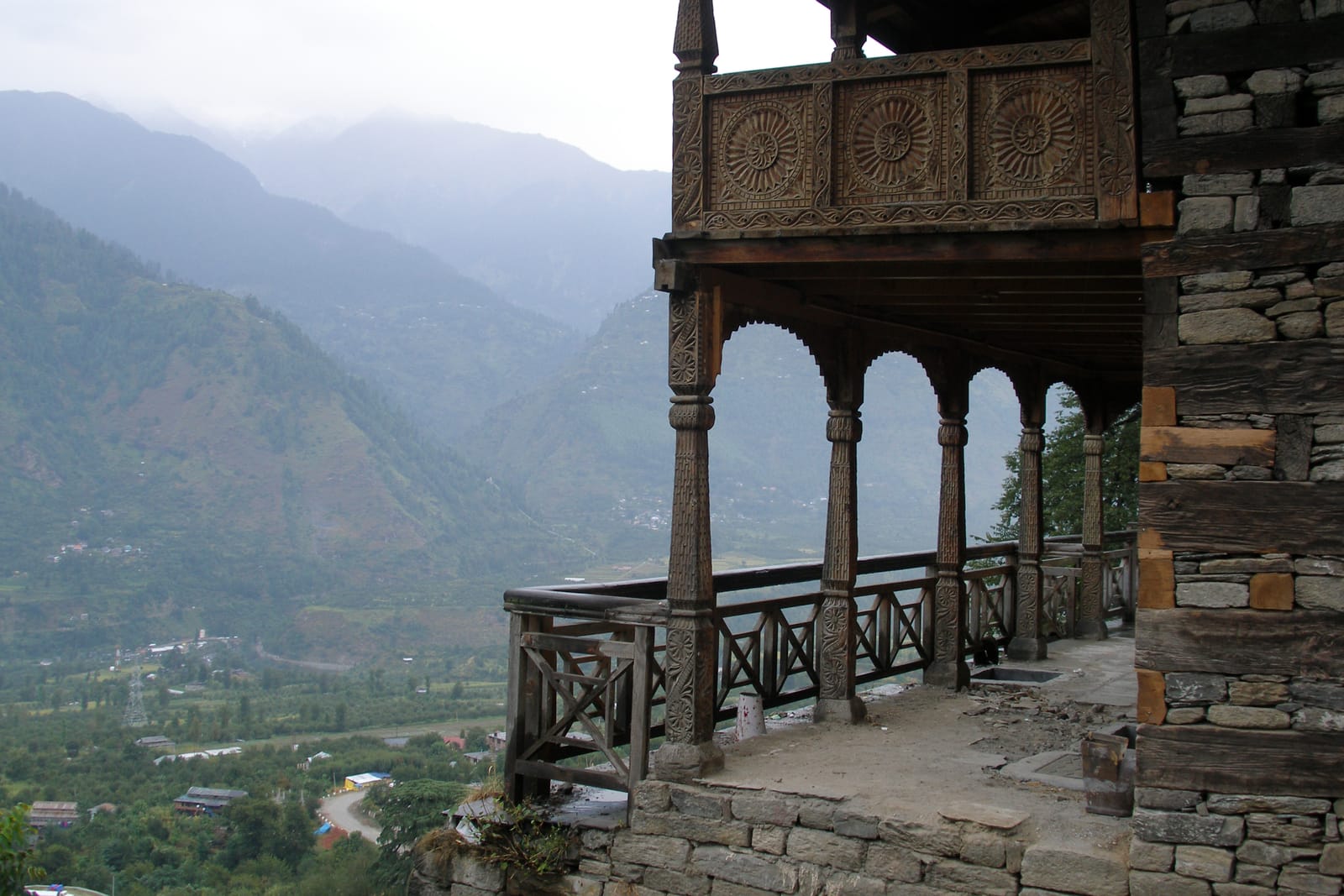
Naggar sits about 22 km south of Manali on the quieter left bank of the Beas, and it was the capital of the Kullu kingdom for centuries before the seat moved down the valley. Naggar Castle is its centrepiece, a fifteenth-century structure of stone and deodar built in the local earthquake-resistant style, wrapped around a courtyard with a gallery looking clean across the valley; it later served as a British-era courthouse and is now run as a heritage property, with a small museum and the Jagti Patt temple inside.
Late morning: the Nicholas Roerich estate
A short climb above the village is the Nicholas Roerich Art Gallery, the estate where the Russian painter, writer, and explorer lived from 1928 until his death in 1947. The house holds his Himalayan canvases, his study, and family belongings, and the grounds hold his memorial and the Urusvati Himalayan Research Institute he founded. It is a genuinely good small museum and the setting is lovely. It closes on Mondays and keeps different summer and winter hours, and published timings vary, so confirm the current ones before making the drive.
Afternoon: the Jana waterfall
Above Naggar, the Jana waterfall makes an easy add-on, and the standard pairing is a Himachali meal at one of the village dhabas. The dhabas around Jana commonly serve dishes such as siddu and rajma-chawal, with trout available at some establishments. The old temples in Naggar village itself are worth a short wander on the way back down.
Prefer adventure or a longer drive? Three alternatives
If the castle-and-gallery day is not your thing, any of these can take Day 3's place:
- Rafting on the Beas: the commercial stretch runs below Kullu, launching around Pirdi and Babeli and finishing near Jhiri, with grade II and III water that suits beginners and families. It runs when flows and weather allow and is generally suspended in the high monsoon and deep winter, so confirm operating status and use an operator who provides proper life jackets, helmets, and a trained guide. Half a day, easily combined with a stop in Kullu.
- Jogini Falls: if you would rather walk than drive, the trail from Vashisht climbs through orchards and pine to a two-stage waterfall with valley views, roughly an hour each way at an easy pace. Fitter walkers with an early start and a guide sometimes push on towards the meadows above Gulaba on the Bhrigu Lake trail, though the lake itself is properly a multi-day trek.
- Kasol and Manikaran: the Parvati valley runs east from Bhuntar, about 80 km away. Manikaran is known for its hot springs and the Manikaran Sahib gurudwara, where the springs are hot enough to cook the langar food, and the site is sacred to both Sikhs and Hindus; Kasol, a few kilometres before it, is the valley's traveller hub of cafes and guesthouses. Choose this only if you are staying in Manali on the third night or departing the following morning - it is a full day on the road and not a sensible add-on before an afternoon bus or flight connection.
Where to stay in Manali
Manali's neighbourhoods have distinct characters, and the right one depends on whether you want cafes, convenience, or quiet:
| Area | Vibe | Best for |
|---|---|---|
| Old Manali | Cafes, riverside guesthouses, orchards, walkable evenings | Younger travellers, backpackers, longer stays |
| Mall Road and Model Town | Central, busy, close to shops, taxis, and buses | First-timers who want everything within reach |
| Vashisht | Village character, hot springs, valley views, a short drive out | Travellers who want quiet with the town still close |
| Prini and Aleo | Quieter roadside stays with mountain views | Families and drivers, easy access to the Naggar road |
| Naggar road | Orchards, boutique stays, wide valley outlooks | Couples and slower trips with a car |
| Solang side | Resorts near the slopes and the ropeway | Snow and adventure-focused trips |
Getting around Manali
- On foot: the town core, Mall Road, Old Manali, and the walk up to Hadimba are all walkable, though the gradients are real and Old Manali is a steady climb.
- Autos and taxis: fine for short hops to Vashisht, Old Manali, and Hadimba. Local taxi unions run on fixed point-to-point rates rather than meters, so ask the rate before you get in.
- Car with driver: the sensible choice for Days 2 and 3. Hire by the day, agree the route and price up front, and confirm the driver waits at each stop. For a Rohtang day, confirm the vehicle is covered by the permit you hold.
- Rented two-wheelers: available in town and popular, but only for confident riders - the roads are steep, narrow, and busy, and mountain weather changes fast. Carry a licence and wear a helmet.
- Buses: HRTC and private buses connect Manali with Kullu, Bhuntar, and Delhi, and local buses run up the valley cheaply if you are travelling on a budget.
- Distances to plan for: Vashisht is about 3 km, Solang around 14 km, Naggar about 22 km, Kullu roughly 40 km, Rohtang about 51 km, and Manikaran around 80 km. Journey times in the hills depend far more on traffic and road conditions than on distance, so add a generous buffer in peak season.
What a 3-day, 2-night Manali trip roughly costs
The estimates below assume three days and two nights for two people travelling together and sharing a car with driver on Days 2 and 3 - the single biggest line item in a Manali trip, and the one most itineraries quietly leave out. Manali runs from backpacker hostels in Old Manali to riverside luxury resorts, so treat these as rough orientation figures rather than a quote. Prices spike hard over May and June and the Christmas-to-New-Year window, so confirm close to your dates.
| Style | Two nights, per person | Food | Shared car, per person | Admissions and one activity | Approximate total |
|---|---|---|---|---|---|
| Budget (hostel or basic guesthouse) | ₹1,000-3,000 | ₹1,200-2,500 | ₹3,000-4,500 | ₹1,000-2,500 | ₹6,500-13,000 |
| Mid-range (3-star hotel or homestay) | ₹3,000-7,000 | ₹2,000-4,000 | ₹3,500-5,000 | ₹2,500-5,000 | ₹11,000-21,000 |
| Premium (resort or luxury hotel) | ₹9,000+ | ₹5,000+ | ₹5,000+ | ₹4,000+ | ₹23,000+ |
A few things these figures hide:
- A Rohtang day costs considerably more than an Atal Tunnel and Sissu day - expect a meaningful step up on the car column if the pass is your Day 2.
- Rohtang permit and congestion charges are levied per vehicle, not per traveller, as is the environmental fee for an out-of-state vehicle. The e-Aagman requirement is also vehicle-based, although it is a registration or entry-document requirement rather than an activity cost. Two travellers share the vehicle-related costs; a solo traveller does not.
- Solo travellers pay substantially more unless they join a shared taxi or a group day trip, because the car column stops being shared.
- The admissions allowance covers gallery admission and one modest paid activity. High-cost options such as the Solang ropeway, longer paragliding flights, rafting packages, multiple snow activities, or equipment rental can push the total above the stated range.
The stay column is per person for two adults sharing a room (a hostel bed for the budget row). Figures exclude the journey to Manali itself. Prices last reviewed: August 2026.
Frequently asked questions
How many days do you need in Manali?
Three days is the sweet spot: one for the town and Old Manali, one for Solang and either Rohtang or Sissu, and one for Naggar. Two days covers the town and one mountain day if you are pressed, but gives you no margin if a road closes. Four or five days lets you add the Parvati valley, a proper trek, or simply a slower pace.
Is a 3-day Manali itinerary enough to see snow?
January and February give you the best odds, but snow in Manali town is never guaranteed - it is weather-dependent and can melt away between systems. Solang and the accessible Lahaul side usually offer better chances of finding settled snow, though access there is not automatic either, since the tunnel and the villages beyond it close at times for weather or local observances. Outside those months, snow means going higher: Solang holds it later into spring, and Rohtang keeps snow into summer once it reopens. See our guide to the best time to visit Manali for the month-by-month detail.
Do you need a permit for Rohtang Pass?
Yes. Tourist vehicles going to Rohtang need a permit from the district administration, booked through the official portal, and daily numbers are capped under National Green Tribunal directions. The pass is shut entirely through winter. Temporary maintenance closures and route restrictions may also apply, so check the current portal notice rather than assuming a fixed weekly closure day. Fees, quotas, document requirements, and release timings all change, so check the portal directly and book as soon as the window opens for your dates.
Do you need a permit for the Atal Tunnel?
You do not need a Rohtang tourism permit to use the Atal Tunnel. However, vehicles entering Lahaul-Spiti through the tunnel currently need to register through the Himachal Pradesh e-Aagman system and obtain the relevant vehicle e-permit or e-ticket. Requirements can change, so check the official e-Aagman portal before leaving Manali. Access can also be restricted for snowfall, avalanche risk, congestion, security arrangements, or local observances.
What is the best time to visit Manali for this itinerary?
May to June usually offers the fullest version of it, with the widest range of accessible roads and activities, although the exact Rohtang opening date changes every year. April is excellent for Manali, Solang, and lower-valley sightseeing, but the pass may still be closed, so plan Day 2 around the tunnel. October is the quiet alternative, with clear skies and thin crowds. January and February offer the best odds of snow, but Rohtang remains closed, so Day 2 shifts to Solang and the accessible Lahaul side. July to mid-September is cheapest and greenest, but landslides and roadblocks make it a poor fit for a tight three-day plan.
Can you do this itinerary without hiring a car?
Partly. Day 1 works fine on foot and by auto. Day 3 to Naggar is manageable by local bus with patience. Day 2 is the sticking point - shared taxis and tour operators run day trips to Solang, Rohtang, and Sissu, and joining one is the practical answer if you would rather not hire a vehicle, but a private car with driver gives you the flexibility to change the plan when the road status changes.
The TravelNerdz take
Manali rewards a plan with a fallback built into it. Give Day 1 to the town and take it slowly, because you are gaining altitude and Hadimba, Old Manali, and Vashisht deserve a wander rather than a checklist. Day 2 needs a late route decision rather than a rigid plan made weeks ahead: a Rohtang day and a tunnel day are different days, so follow the relevant schedule rather than trying to combine them. Keep Day 3 for Naggar, where the castle and the Roerich estate make one of the valley's most rewarding cultural pairings and are generally less vulnerable to high-country closures. Start early, carry an extra warm layer even when the town forecast looks mild, sort your permits before setting off, and budget honestly for the car - do that, and three days is genuinely enough.
Image credits
- Kullu valley near Manali (hero) by UnpetitproleX, via Wikimedia Commons, CC BY-SA 4.0
- Hidimba Devi Temple, Dhungri by Ganesh Mohan T, via Wikimedia Commons, CC BY-SA 4.0
- Paragliding at Solang Valley by Vyacheslav Argenberg, via Wikimedia Commons, CC BY 4.0
- Naggar Castle, Kullu valley by Vyacheslav Argenberg, via Wikimedia Commons, CC BY 4.0