3-Day Rishikesh Itinerary: Rafting, Aarti, Ashrams and Kunjapuri
Published 5 August 2026Rishikesh is one town with two distinct identities - spiritual retreat and adventure base - and this Rishikesh itinerary is built to give you both without blurring them together. Day 1 is the ghats and the ashrams, from the Old Town to the largely car-free township at Swarg Ashram, finishing at the evening Ganga Aarti. Day 2 is the river, with a licensed rafting run and an optional afternoon at the bungee platform upstream. Day 3 climbs out of the valley for a Himalayan sunrise at Kunjapuri, with full-day alternatives if a pre-dawn start is not happening. It comes with realistic timings, where to base yourself, and the operator and river checks that matter more here than in most Indian towns. For the weather and rafting-season side of your planning, pair it with our guide to the best time to visit Rishikesh, and for a wider view of the town see our Rishikesh city guide.
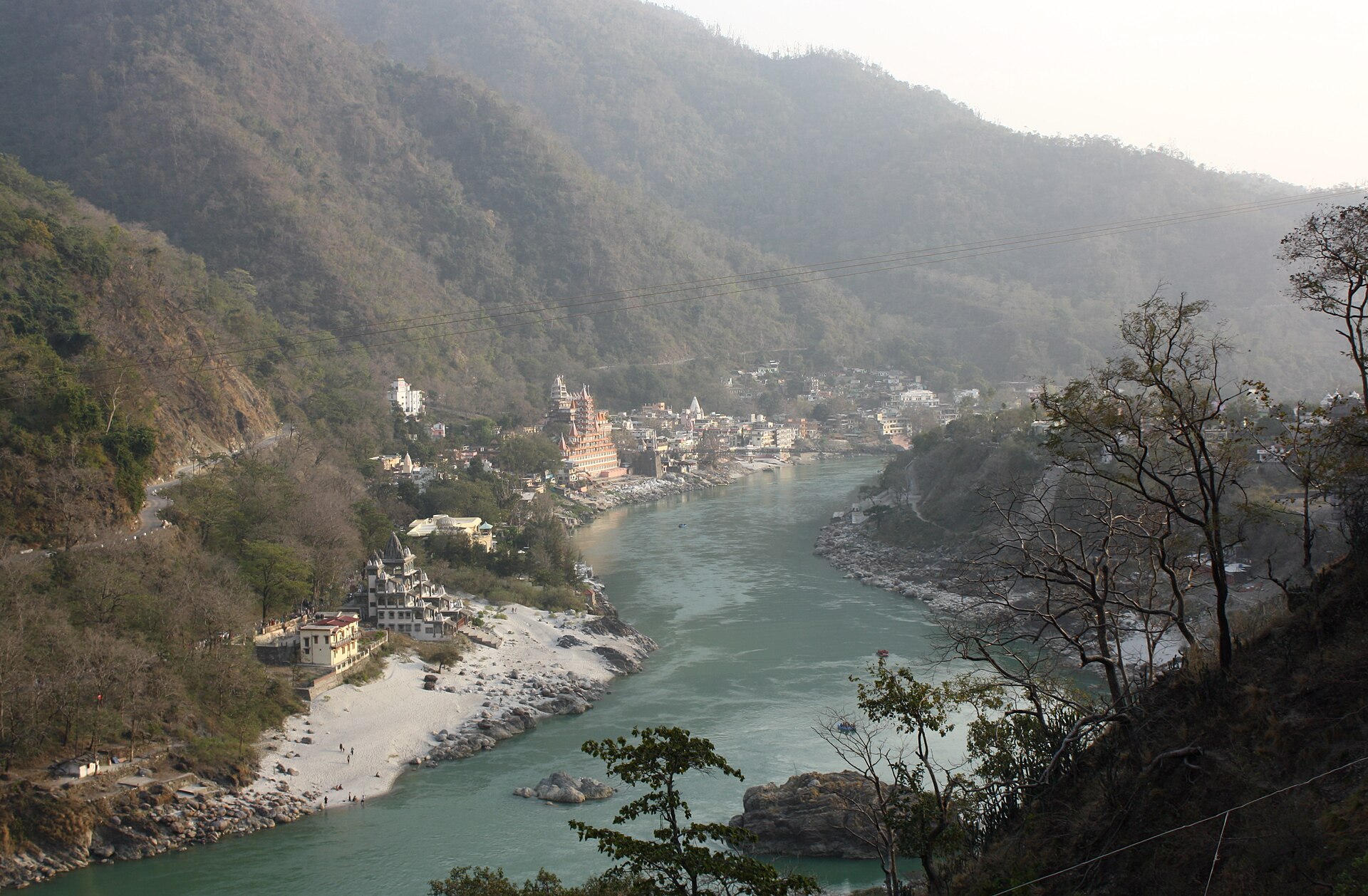
Rishikesh itinerary at a glance
- Day 1: The ghats and the ashrams - Triveni Ghat early, then one of two walking routes built around your chosen evening aarti
- Day 2: The river - a licensed rafting run, then bungee, a waterfall, or a slow afternoon in the Tapovan cafes
- Day 3: Out of the valley - a pre-dawn drive to Kunjapuri for the Himalayan sunrise, with a slow afternoon back in town
- Where to base yourself: Tapovan for cafes and yoga schools, Swarg Ashram for a quieter devotional stay, or Muni Ki Reti for comfortable mid-range hotels
- Best season: late September to April, with October to November and March to April the two standout windows
- Transport needed: Day 1 works on foot and by auto; Day 2's transport is commonly included or arranged by the activity operator, though you should confirm the pickup point and return drop before paying; Day 3 needs a shared taxi or a hired car
| Day | Morning | Afternoon | Evening |
|---|---|---|---|
| Day 1 | Triveni Ghat, then transfer north | Beatles Ashram plus the Tapovan and Swarg Ashram walking route | Your chosen Ganga Aarti at Parmarth Niketan or Triveni Ghat |
| Day 2 | Rafting the Shivpuri stretch | Bungee shuttle, Neer Garh waterfall, or nothing at all | Tapovan cafe strip and dinner |
| Day 3 | Kunjapuri sunrise, then breakfast back in town | Vashishta Gufa, a waterfall, a yoga class, or rest | Riverside dinner or a second aarti |
Full-day substitutes for Day 3: a Rajaji National Park safari, Devprayag, Haridwar, or a dedicated Neelkanth temple and trek day. Each of those replaces Kunjapuri rather than slotting in beside it.
This plan assumes three full sightseeing days. It fits into two hotel nights only if you arrive early on Day 1 - after an overnight bus, for example - and depart late on Day 3. Arriving in Rishikesh the evening before Day 1 and leaving after Day 3 needs three hotel nights. Add a fourth if you also want an unhurried departure the following morning.
Before you go: how to plan your days
Rishikesh spreads along about seven kilometres of riverbank, and it helps to think of it in three zones. The Old Town in the south, around Triveni Ghat, is the working Indian town of buses, bazaars, and the biggest public ghat. Swarg Ashram and Ram Jhula sit upstream on the eastern bank, a largely car-free township of ashrams that includes Parmarth Niketan and the Beatles Ashram. Tapovan, on the western bank at Lakshman Jhula, is the traveller quarter of rooftop cafes, hostels, and yoga schools. The adventure country runs upstream along the Badrinath highway, and the big views are in the hills above town.
- Best base for this itinerary: Tapovan is the most social, with river-view cafes, hostels, and the shortest hop to the adventure corridor. Swarg Ashram is quieter, more devotional, and largely car-free, and it is right where the aarti happens - but food shuts early and the atmosphere is ashram rather than holiday. Muni Ki Reti, between the two, has the mid-range hotels and easier road access.
- Know which bridges are open, because Day 1 depends on it. Historic Lakshman Jhula is closed to public crossing on structural-safety grounds, with no reopening date. Bajrang Setu, built alongside it, has glass pedestrian walkways and a central deck designed for two-wheelers. Its access rules, pedestrian timings, and a proposed fee system have kept changing through 2026, so verify the current arrangement locally rather than assuming. Ram Jhula downstream and Janki Setu are the other principal crossings, each with its own traffic restrictions.
- Book rafting through a licensed operator: rafting here is regulated by the Uttarakhand Tourism Development Board, and operator choice is one of the most important safety checks you will make on this trip. Before you pay, confirm the licence, that a safety kayak accompanies the raft, that there is a proper pre-trip briefing, and that helmets and jackets are sound and correctly sized. Walk away from anything that fails those checks, however cheap.
- Rafting runs roughly from mid or late September to the end of June and is suspended through the monsoon. Route names, distances, minimum ages, and approved put-in points all shift with water levels and government instructions, so confirm the exact stretch before you pay. See our guide to the best time to visit Rishikesh for the month-by-month picture.
- Dress modestly - stricter here than in most of India. Shoulders and knees covered for ashrams, temples, and the aarti. Swimwear is for the raft, not the ghat.
- Watch the monkeys and your bag: they are numerous on the bridges and around the temples, and they will take food, sunglasses, and phones out of your hand. Mobile signal can also weaken or drop past Lakshman Jhula and on the Neer Garh and Kunjapuri routes, so download offline maps and agree a meeting point with your driver rather than relying on a call.
- Check conditions before you commit: the IMD Dehradun bulletin for weather warnings, and Uttarakhand Tourism for rafting notifications and advisories. Monsoon rain disrupts the mountain roads north of town, which hits Days 2 and 3 harder than Day 1.
- Allow for the Char Dham season, roughly late April into the autumn. It rarely spoils a Rishikesh trip, but it adds traffic, fills rooms, and stretches transport, so book further ahead in those months.
Day 1: The ghats, the ashrams, and the Ganga Aarti
Day one is mostly a walking day, with an auto after Triveni Ghat and, if you choose its evening aarti, another transfer at the end. Both versions open at Triveni Ghat, but they diverge straight afterwards. Decide which aarti you want before you set off, because the crossing you use and the bank you finish on decide everything else - and getting it wrong means backtracking across the river at dusk.
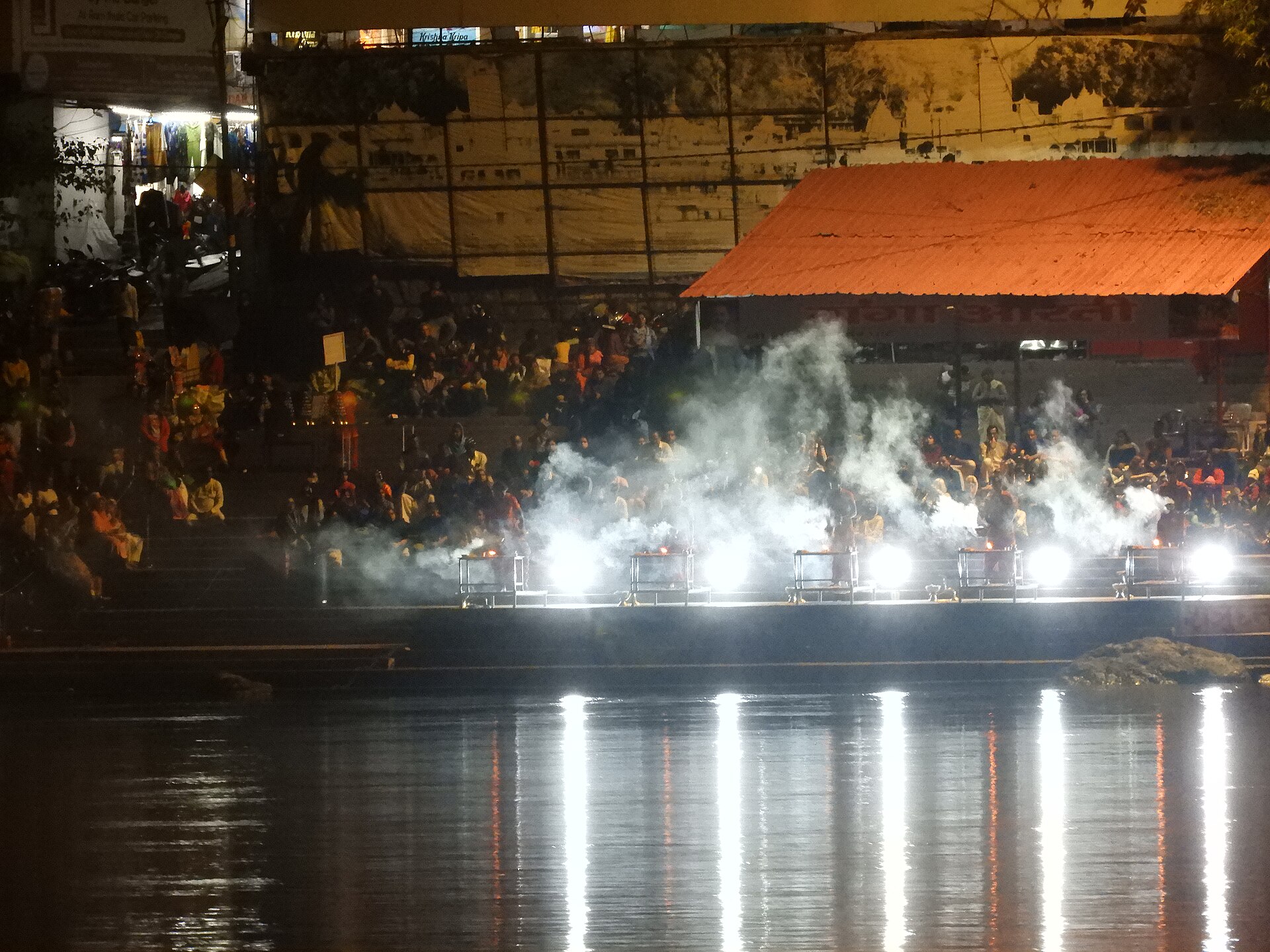
Early morning: Triveni Ghat
Start at Triveni Ghat in the Old Town, the largest public ghat in Rishikesh and the one that feels least like a tourist attraction. Local religious tradition associates it with the sacred meeting of the Ganga, Yamuna, and Saraswati, and it is where the town comes to bathe, make offerings, and feed the fish. Early is the good hour: soft light, thin crowds, and the ritual life of the place without the evening crush. Seeing it now also gives you something to compare tonight's ceremony against.
Option A: finishing at Triveni Ghat
The simpler route, and the one that works if you want the bigger, looser, more local ceremony.
- 6:30 am - Triveni Ghat while it is quiet
- 8:30 am - auto north to Muni Ki Reti, and Shivananda Ashram
- 10:00 am - cross Ram Jhula, then the Beatles Ashram
- 12:30 pm - lunch in Swarg Ashram
- 2:00 pm - walk north up the eastern bank through the ashram strip
- 3:30 pm - Trayambakeshwar Temple, then cross to Tapovan
- 4:30 pm - Tapovan cafes and the bazaar
- Leave Tapovan at least 60 to 90 minutes before the locally confirmed aarti time, and add more on a congested weekend
Option B: finishing at Parmarth Niketan
Cover similar ground in the opposite direction and you finish on the ashram bank with no river to recross. Choose this for the more choreographed ceremony. It trades Shivananda Ashram and Ram Jhula for a slower afternoon on the eastern bank.
- 6:30 am - Triveni Ghat while it is quiet
- 8:30 am - auto north to Tapovan, breakfast with a river view
- 10:00 am - the Lakshman Jhula area on the Tapovan side, then cross to the eastern bank and visit Trayambakeshwar Temple
- 12:00 pm - walk south through the ashram township, lunch in Swarg Ashram
- 2:00 pm - Beatles Ashram
- 4:30 pm - the riverside ghats and shops around Parmarth Niketan
- Around sunset - aarti at Parmarth Niketan
Confirm the Lakshman Jhula-area crossing before starting either route. If it is unavailable, do not attempt the full loop as written. For Option A, cross at Ram Jhula and either skip the Lakshman Jhula and Tapovan extension or finish at Parmarth Niketan instead. For Option B, do Tapovan first, transfer by road to Ram Jhula, cross there, and continue through Swarg Ashram to the Beatles Ashram and Parmarth Niketan. Allow extra time for either fallback.
What you are actually seeing
The Beatles Ashram, properly Chaurasi Kutia, was Maharishi Mahesh Yogi's International Academy of Meditation, where the Beatles stayed in early 1968 and wrote many songs later recorded for the White Album. Abandoned for decades inside protected forest, it reopened in 2015 and is now a strange and rather wonderful ruin of overgrown meditation huts, a domed lecture hall, and walls covered in fan murals. Allow an hour and a half to two hours, keep your ticket for the exit, and confirm the current entry rate at the gate - fees differ for Indian and foreign visitors and change periodically.
Shivananda Ashram at Muni Ki Reti, the Divine Life Society headquarters founded in 1936, is one of the oldest and least commercial ashrams on the river - a working institution rather than a course-selling operation. Trayambakeshwar Temple, the thirteen-storey building in most Rishikesh postcards, is more striking outside than in, so treat it as a photo stop and a rooftop view. In Tapovan, pick a cafe on the terrace and the view rather than the branding, and buy rudraksha and silver only from established shops that give you a receipt.
On the aarti itself
The two ceremonies are genuinely different. Parmarth Niketan is the choreographed one, with resident students chanting on a riverside amphitheatre. Triveni Ghat is bigger, looser, and more local. Either way, arrive thirty minutes early for a riverside spot, keep bags zipped and phones in front pockets, and expect donation baskets at Parmarth Niketan - a polite no is fine. Timings move with the season, so confirm locally.
Day 2: Rafting the Ganga, and the adventure corridor
Day two is why a large share of visitors come. Rishikesh is India's white-water capital, and the standard trip is a half-day run finishing near town, which leaves the afternoon open. Book the day before, and book on the operator's licence rather than the price.
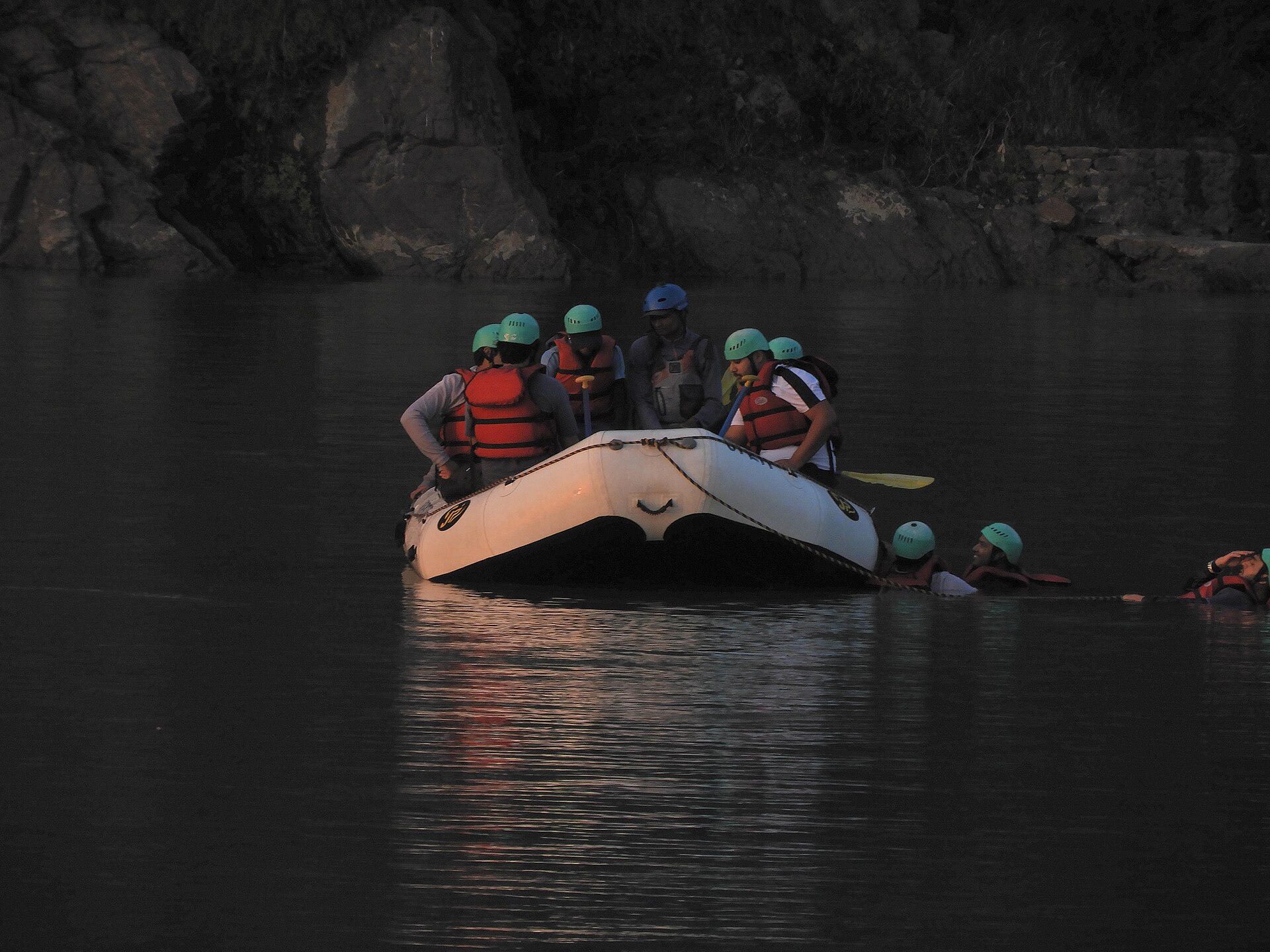
Morning: pick your rafting stretch
Four runs cover almost everyone, and they are emphatically not interchangeable. Longer means harder here, not gentler:
- Brahmpuri, roughly 9 km: the gentlest commonly offered run, Grade I to II. The right choice for cautious first-timers and families, subject to the operator's current age and river-level rules.
- Shivpuri, roughly 16 km: the standard first-timer adventure run and the pick for most people. Commonly rated Grade II to III or III+, with named rapids including Roller Coaster and Golf Course, and around two to two and a half hours on the water. Exciting without needing experience.
- Marine Drive, roughly 24 to 26 km: substantially longer and more demanding, with multiple Grade III and III+ rapids. It is not the default route for cautious beginners or families, despite occasionally being sold that way - it suits adults who want a longer, harder run and who meet the operator's current eligibility rules.
- Kaudiyala, roughly 35 km: the long technical run, Grade III to IV, including the river's biggest rapid. Experienced rafters only, and remote enough that rescue takes longer, so confirm your operator runs safety kayaks on this stretch specifically.
Route names, distances, minimum ages, and approved put-in points can change with water levels and government instructions, so confirm the exact stretch before paying. Wear quick-dry clothes, bring a dry bag for anything electronic, and expect to be collected in town and driven upstream.
Afternoon, option A: bungee at Mohanchatti
The cliff complex at Mohanchatti, around 25 km out, has an 83-metre jump platform - the operator describes it as India's first fixed-platform bungee facility - along with a giant swing and a long zipline. The operator currently lists an age range of 12 to 55 and a weight range of 40 to 110 kg, checked against ID on site, with a jump price of ₹4,500 including video - confirm current eligibility and rates before you travel out, because these change.
The important thing is that it runs on fixed shuttle departures from the Tapovan office, currently 9:00 am, 11:00 am, 1:00 pm, and 2:30 pm. You cannot simply turn up mid-afternoon. It is roughly 45 minutes each way, plus a 15 to 20 minute uphill walk from the recovery point after the jump, so allow most of the afternoon - four hours or more, not two. Pairing it with morning rafting works only if your rafting operator has you back in time for the 1:00 pm or 2:30 pm shuttle, so check that when you book both.
Afternoon, option B: Neer Garh waterfall
A gentler afternoon. The trail starts near Lakshman Jhula and climbs about three kilometres through forest to a two-tier waterfall with pools you can get into. There is a small entry fee, and the walk is straightforward but uphill and uneven in places - wear shoes with grip rather than sandals. It gets packed from late morning in the April to June peak, so go early if this is your main plan. Patna Waterfall, through Rajaji-adjacent forest, offers a steeper and generally quieter alternative.
Do not enter the pools during or immediately after heavy rain. Flash runoff, slippery rock, and sudden rises in flow turn an easy trail unsafe quickly, and this is exactly when the falls look most impressive.
Afternoon, option C: nothing in particular
Entirely defensible. Rafting in the morning and a long afternoon on a Tapovan terrace watching the river is how a lot of people spend their best day here.
Suggested timings for a Shivpuri morning:
- 8:30 am - pick-up in town and drive upstream to the put-in
- 9:30 am to noon - on the river
- 12:30 pm - back in town, dry off and eat
- 1:00 or 2:30 pm - the bungee shuttle, if that is the plan
- Otherwise from 2:00 pm - Neer Garh waterfall or the cafe strip
- Evening - dinner in Tapovan
If rafting is closed
Through the monsoon, roughly July to mid-September, the river is shut for safety and Day 2 changes shape. Take the waterfalls with the caution above, a drop-in yoga class, or bring Day 3 forward, and accept that the mountain roads north of town are the least reliable part of any monsoon trip.
Day 3: Kunjapuri sunrise and the hills above town
Day three gets you out of the valley and starts unreasonably early for a very good reason. This is the part of a Rishikesh trip most people skip and the one they remember.
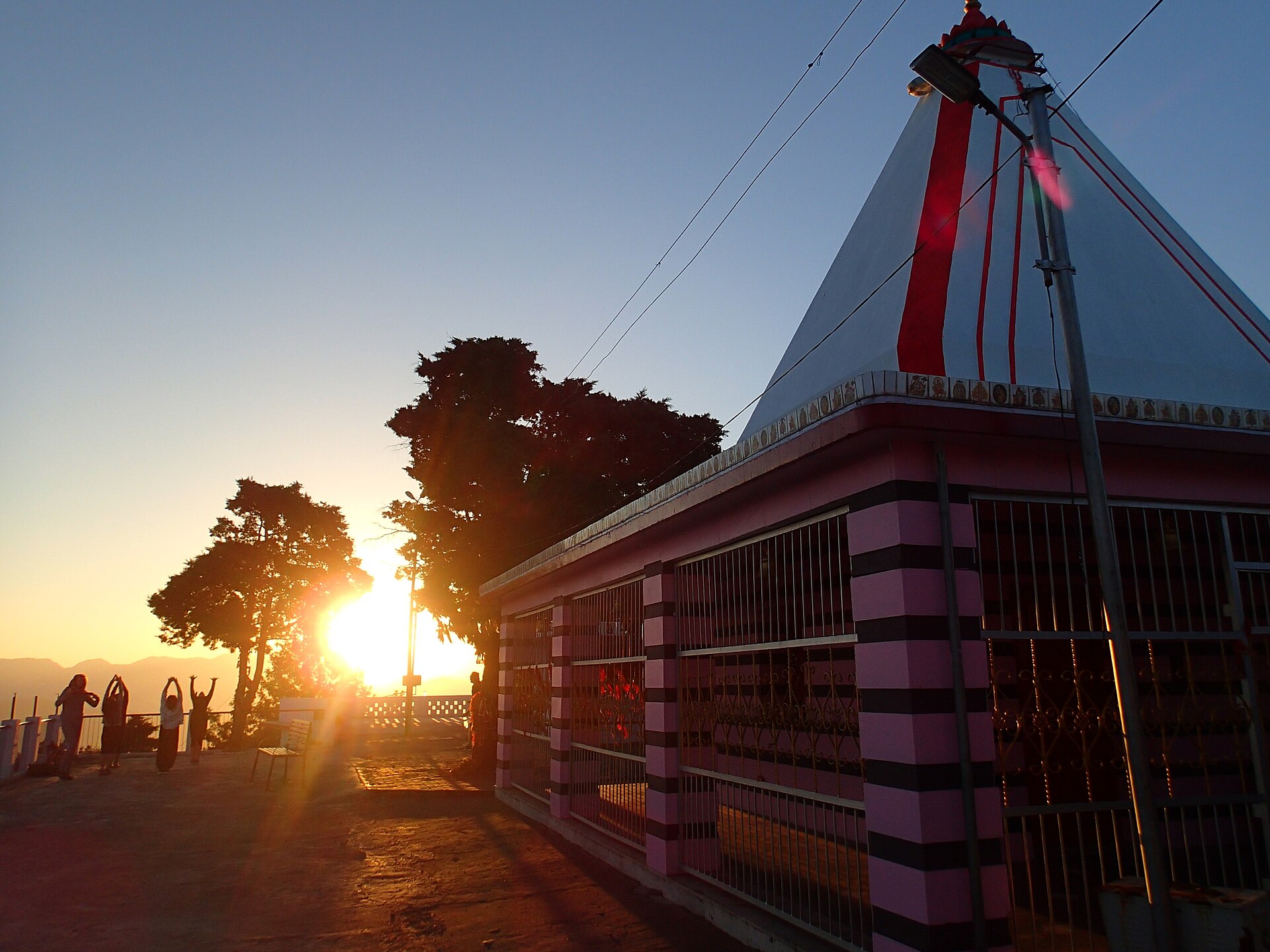
Pre-dawn: Kunjapuri Devi Temple
Kunjapuri sits on a ridge at roughly 1,676 metres, around 25 to 30 km from town by road. It is one of the thirteen recognised Shakti Peethas of the Shivalik range, forming a sacred triangle within Tehri district with Surkanda Devi and Chandrabadni. On a clear morning the view north takes in a genuine Himalayan panorama - peaks such as Chaukhamba and Bandarpunch on the horizon, the valley filling with mist below - and the final approach is a steep paved staircase from the parking area. The exact climb depends on where your vehicle drops you, but allow 10 to 20 minutes and treat it as a real ascent rather than a stroll - particularly with young children, older relatives, or anyone with limited mobility. Book a shared sunrise taxi the night before, because they fill up in season, and aim to be on the ridge half an hour before sunrise. Carry a warm layer whatever the month; you will be standing still and it is much colder up there.
The rest of the day: go slowly
Most people are back in town by mid-morning with the whole day ahead and an early start behind them. Breakfast in Tapovan, sleep for an hour, then pick one:
- Vashishta Gufa: an ancient meditation cave roughly 20 to 25 km upstream on the Badrinath road, associated with the sage Vashishta and still an active retreat. It is genuinely quiet, which is the point. The site is just the cave, a small ashram, and the river.
- Neer Garh or Patna waterfall, if you did the bungee yesterday.
- A drop-in yoga or meditation session at an established ashram.
- Nothing. You were up at four.
Full-day substitutes for Day 3
If a pre-dawn alarm is not your idea of a holiday, any of these replaces the whole day. None of them works as an afternoon add-on after Kunjapuri:
- Neelkanth Mahadev Temple, about 32 km by road: a forest-set Shiva temple marking the spot where, in the Samudra Manthan legend, Shiva swallowed the poison that turned his throat blue. The forest trek up from Ram Jhula is 12 to 14 km each way and four to five hours up, so if you want the temple rather than the hike, drive.
- Devprayag, about 75 km each way: the confluence where the greenish Alaknanda meets the blue Bhagirathi to form the Ganga proper, the last and most sacred of the Panch Prayag. The colour contrast between the two currents is more striking in person than in photographs. Shared buses from the Rishikesh bus stand are cheap; a private cab is faster and much dearer.
- Rajaji National Park, Chilla zone, about 20 km: the park's most-visited safari sector, with resident elephants and a chance of leopard or tiger. The season runs roughly mid-November to mid-June, with fixed morning and afternoon slots that sell out, so book a day or two ahead. Treat it as a forest drive with good odds on elephants, not a tiger guarantee.
- Haridwar, about 25 km: the Har Ki Pauri aarti is larger and far more crowded than either of Rishikesh's, and worth seeing once for the contrast. Go on a weekday, and avoid it entirely during the Kanwar pilgrimage in the monsoon months.
If you have a fourth day
Rishikesh absorbs a fourth day easily. The obvious additions are a second rafting run on a different stretch, a proper yoga session, or whichever full-day substitute above you did not take.
On yoga: short drop-in classes at an established ashram are cheap and need no research. Full 200-hour teacher-training courses are a different proposition - many "top yoga school" listings online are paid placements rather than reviews. Verify a school's registration directly with Yoga Alliance rather than on the school's own website.
Where to stay in Rishikesh
The areas here have sharply different characters, and picking the wrong one is the most common way to end up with the wrong trip:
| Area | Vibe | Best for |
|---|---|---|
| Tapovan and Lakshman Jhula | Rooftop cafes, hostels, yoga schools, social and loud | Backpackers, solo travellers, adventure-focused trips |
| Swarg Ashram and Ram Jhula | Car-free ashram township, devotional, early nights | Ashram stays, meditation, anyone here for the aarti |
| Muni Ki Reti | Mid-range hotels and resorts on the highway, easy road access | Families, comfort-first travellers, short trips |
| Old Town and Triveni Ghat | The working town, bazaars, the main public ghat | Budget stays and travellers who want the least touristy base |
| Shivpuri and upstream | Riverside camps and resorts near the rafting put-ins | Rafting-centred trips, groups |
One warning on riverside beach camps: unlicensed camps on the Ganga sandbanks have been the subject of National Green Tribunal restrictions and periodic enforcement over waste disposal. Compliant camps do operate - ask to see the clearance before booking, and never book a beach camp during the monsoon regardless of paperwork, because flash floods on this stretch are a real risk.
Getting around Rishikesh
- On foot: the Swarg Ashram to Lakshman Jhula riverfront is best explored on foot. Crossing rules vary between Ram Jhula, Janki Setu, and Bajrang Setu, so check current pedestrian and two-wheeler access locally. Expect steps, slopes, and monkeys.
- Autos and shared vikrams: shared vehicles run fixed routes between the Old Town, Muni Ki Reti, and the jhulas for very little. Agree the fare on a private auto first - meters are not a thing here.
- Car with driver: the sensible answer for Day 3 and the full-day substitutes. Hire by the day, agree route and price up front, and confirm the driver waits.
- Activity transport: rafting and bungee operators commonly include or arrange transport, but confirm the pickup point, departure time, and return drop before paying.
- Scooters and bikes: available and popular, but highway traffic is heavy and the hill roads are narrow. Carry a licence and wear a helmet.
- Distances to plan for: Ram Jhula to Lakshman Jhula is about 2 km on foot, Neer Garh roughly 3 km of walking from the road, Shivpuri around 16 km, Rajaji's Chilla gate about 20 km, the bungee site roughly 25 km, Haridwar about 25 km, Kunjapuri around 25 to 30 km, Neelkanth about 32 km by road, and Devprayag about 75 km.
What three days in Rishikesh roughly costs
Every column below is an on-the-ground total per person, so the rows add up. The estimates assume two people travelling together and two to three nights, and they exclude travel to and from Rishikesh. Accommodation and vegetarian meals here can be inexpensive; activities usually account for the largest share of the budget. Treat these as orientation rather than a quote, and confirm close to your dates - prices firm up over the March to April and October to November peaks.
| Style | Accommodation | Food | Local transport | Activities and admissions | Approximate total |
|---|---|---|---|---|---|
| Budget (hostel bed or ashram room) | ₹800-3,000 | ₹1,200-2,100 | ₹400-1,000 | ₹1,000-2,500 | ₹3,400-8,600 |
| Mid-range (3-star hotel or riverside guesthouse) | ₹1,500-4,500 | ₹2,100-3,600 | ₹1,500-3,000 | ₹2,500-5,500 | ₹7,600-16,600 |
| Premium (resort or wellness retreat) | ₹4,500+ | ₹5,400+ | ₹3,500+ | ₹5,000+ | ₹18,400+ |
Three things these figures hide:
- The bungee jump sits outside the activities allowance and currently adds roughly ₹4,500 per person. A second rafting run or a Rajaji safari can also push the trip above the table's activity range, depending on the route, vehicle sharing, and current rates.
- Foreign visitors pay significantly more than Indian nationals at several sites, most notably the Beatles Ashram and Rajaji National Park.
- Ashram rooms are the cheapest beds in town and often include meals, but they come with early curfews, no alcohol or smoking, and modest-dress rules. Read them before booking.
The accommodation column assumes two adults sharing a room, or a hostel bed on the budget row, across two to three nights - take the lower end for two nights and the upper for three. Totals exclude the journey to Rishikesh itself. Prices last reviewed: August 2026.
Frequently asked questions
How many days do you need in Rishikesh?
Three full days is the sweet spot: one for the ghats and ashrams, one for the river, and one for the hills above town. Two covers the town and a rafting run if you are pressed. Four lets you add Devprayag, a Rajaji safari, or proper yoga sessions without rushing. Anyone doing a course or retreat should be thinking in weeks.
Is a 3-day Rishikesh itinerary enough for both rafting and the spiritual side?
Yes - that is exactly what this plan is built for. Day 1 is entirely ghats, ashrams, and the aarti; Day 2 is entirely the river. They barely overlap, which is why splitting them by day beats mixing both into each day.
Which rafting stretch should a beginner book?
Brahmpuri, roughly 9 km of Grade I to II water, for cautious first-timers and families. Shivpuri, roughly 16 km, for most people who want an adventure without needing experience. Do not let anyone sell you Marine Drive as the default beginner option - at 24 to 26 km with multiple Grade III and III+ rapids, it is a considerably harder run, better suited to adults stepping up.
When is rafting open in Rishikesh?
Roughly mid or late September to the end of June, suspended through the monsoon when the Ganga runs high and fast. Exact dates and available stretches are set year to year, so confirm with a licensed operator before booking flights around it.
Can you follow this itinerary without doing any adventure sports?
Comfortably. Replace Day 2's rafting with the waterfalls, a drop-in yoga class, and a slow afternoon in Tapovan, or bring a Day 3 substitute forward. Rishikesh works just as well as a walking, temple, and river-watching trip.
Do you need a car in Rishikesh?
Not for Day 1, which is all on foot, autos, and shared vikrams. Rafting and bungee operators commonly include or arrange Day 2's transport, but confirm the pickup point, departure time, and return drop before paying. Day 3 is the one that needs wheels - a shared sunrise taxi for Kunjapuri, or a hired car for the full-day substitutes.
Is alcohol or meat available in Rishikesh?
Rishikesh's municipal area prohibits the sale of meat, fish, and eggs, and alcohol is heavily restricted across the pilgrimage zone. Rules and licensed availability can differ in adjoining areas outside the municipal boundary, but treat central Rishikesh, the ashram districts, and the cafe strips as vegetarian and effectively dry. The food is good and varied within that, but plan for it.
What is the best time of year for this itinerary?
Late September to April, with October to November and March to April the standouts: comfortable weather, an open rafting season, and mornings clear enough for the Kunjapuri view. May and June can bring stronger snowmelt flows for rafting but punishing midday heat. July and August are the months to think twice about.
The TravelNerdz take
Rishikesh is easy to do badly and easy to do well, and the difference is whether you keep its two halves apart. Give Day 1 entirely to the river's spiritual side, walk it rather than driving it, and pick your aarti before you plan anything else, because the bridges decide the rest. Give Day 2 to the water, and spend your energy choosing the operator and the right stretch rather than haggling the price - that is the decision that actually matters here, and Marine Drive is the longer step up rather than the easy option its sales pitch sometimes suggests. Then get up in the dark once for Kunjapuri. Book rafting and sunrise taxis the day before, check which crossings are open on the morning you need them, and accept that the town is dry and vegetarian rather than fighting it. Do that, and three days is genuinely enough.
Image credits
- Lakshman Jhula, Rishikesh (hero) by Dan Searle, via Wikimedia Commons, CC BY-SA 2.0
- Ganga Aarti at Shatrughan Ghat, near Ram Jhula by Goutam1962, via Wikimedia Commons, CC BY-SA 4.0
- River rafting on the Ganga near Ram Jhula by Goutam1962, via Wikimedia Commons, CC BY-SA 4.0
- Kunjapuri Temple, Rishikesh by Travel & Shit from Brighton, UK, via Wikimedia Commons, CC BY-SA 2.0