Jaipur Itinerary: 2 Days Plus the Best Day Trips
Published 27 July 2026Jaipur packs more into a short visit than almost any city in India. This Jaipur itinerary gives first-timers two well-paced days for the essentials - the hilltop grandeur of Amer Fort, the City Palace and Jantar Mantar, the honeycomb facade of the Hawa Mahal, a ridge-top sunset at Nahargarh, and the pink-walled bazaars of the old city - plus an optional third day for the best day trips in the region, from the giant Chand Baori stepwell to the holy town of Pushkar. It comes with realistic timings, where to base yourself, and how to get around. For the weather side of your planning, pair it with our guide to the best time to visit Jaipur, and for a wider view of the city see our Jaipur city guide.
The short answer
- Day 1: Photograph the Hawa Mahal facade at dawn, then Amer Fort, a Jal Mahal photo stop, and the Panna Meena ka Kund stepwell; the walled city in the afternoon - Jantar Mantar and the City Palace - and an evening in the bazaars
- Day 2: Nahargarh Fort for city views (morning or sunset), Albert Hall Museum and Birla Mandir, the photogenic Patrika Gate, then either a Rajasthani village dinner at Chokhi Dhani or a rooftop meal in town
- Day 3 (optional): A day trip - the Chand Baori stepwell at Abhaneri with the ruined fort at Bhangarh, or the holy town of Pushkar with Ajmer; a Ranthambore tiger safari is possible but works far better as an overnight
- Where to base yourself: the walled Pink City for atmosphere, or MI Road and the C-Scheme and Bani Park areas just outside it for more hotel choice
- Best way to get around: autos and app cabs for city hops, and a hired car with driver for Amer, Nahargarh, and any day trip
- Ideal season: November to February for dry, comfortable sightseeing weather
| Day | Morning | Afternoon | Evening |
|---|---|---|---|
| Day 1 | Hawa Mahal facade at dawn, then Amer Fort | Panna Meena stepwell and Jal Mahal, then Jantar Mantar and the City Palace | The old-city bazaars and a rooftop dinner |
| Day 2 | Nahargarh Fort (or save it for sunset) | Albert Hall Museum, Birla Mandir, Patrika Gate | Chokhi Dhani village dinner, or Nahargarh sunset and a rooftop meal |
| Day 3 (optional) | Leave early for Abhaneri and Bhangarh, or Pushkar and Ajmer | Full-day excursion (a Ranthambore safari is better as an overnight) | Return to Jaipur |
Before you go: how to plan your days
Jaipur's sights split into two clusters. The showpiece forts - Amer, Jaigarh, and Nahargarh - sit in the Aravalli hills a short drive north and west of the centre, while the City Palace, Jantar Mantar, Hawa Mahal, and the bazaars are packed tightly inside the old walled city. The most efficient plan groups the northern forts and the walled-city core into their own half-days so you are not criss-crossing town. A few calls to make before you arrive:
- Best base for this itinerary: for atmosphere, stay inside or beside the walled Pink City, close to the City Palace, Hawa Mahal, and the bazaars. For more hotel choice and easier transport, the MI Road, C-Scheme, and Bani Park areas just outside the walls are all central and well connected. Book early in the November-to-February peak, when the best heritage and old-city stays fill first.
- How to get around: autos and app cabs handle the in-town hops cheaply. For Amer, Jaigarh, and Nahargarh - and essential for any Day 3 excursion - hire a car with driver by the day, agree the route and price up front, and confirm the driver waits at each stop.
- Tickets and monument packages: Rajasthan's official booking portal (OBMS) currently lists a two-day "Jaipur Package" covering several participating government attractions, such as Amer Fort, Jantar Mantar, Hawa Mahal, Nahargarh, and Albert Hall. A separate, broader Rajasthan composite ticket may also be available. Inclusions, eligibility categories, and prices change - monument entry prices were revised in early 2026 - so check the official OBMS portal before buying. The City Palace is privately managed and needs a separate ticket. Carry cash as backup.
- Amer Fort elephant rides: elephants are still offered for the ride up to Amer, but the practice draws serious animal-welfare concerns. You can just as easily walk up the ramp or take a jeep, which we would encourage instead.
- Dress and etiquette: temples such as Birla Mandir and Galtaji expect modest dress and shoes removed. The forts are exposed and sunny, so carry water, a hat, and sunscreen even in winter.
- Timing the light: the Hawa Mahal's famous facade faces east and glows in the early morning; Nahargarh and the ridge forts are the classic late-afternoon and sunset spots. Plan your two days around that if photography matters to you.
Day 1: The Hawa Mahal at dawn, Amer Fort, and the walled city
Day one covers the sights Jaipur is most famous for - the Hawa Mahal facade in the best light of the day, the great hill fort north of town, then the observatory, the palace, and the pink bazaars inside the old city.
Early morning: the Hawa Mahal facade
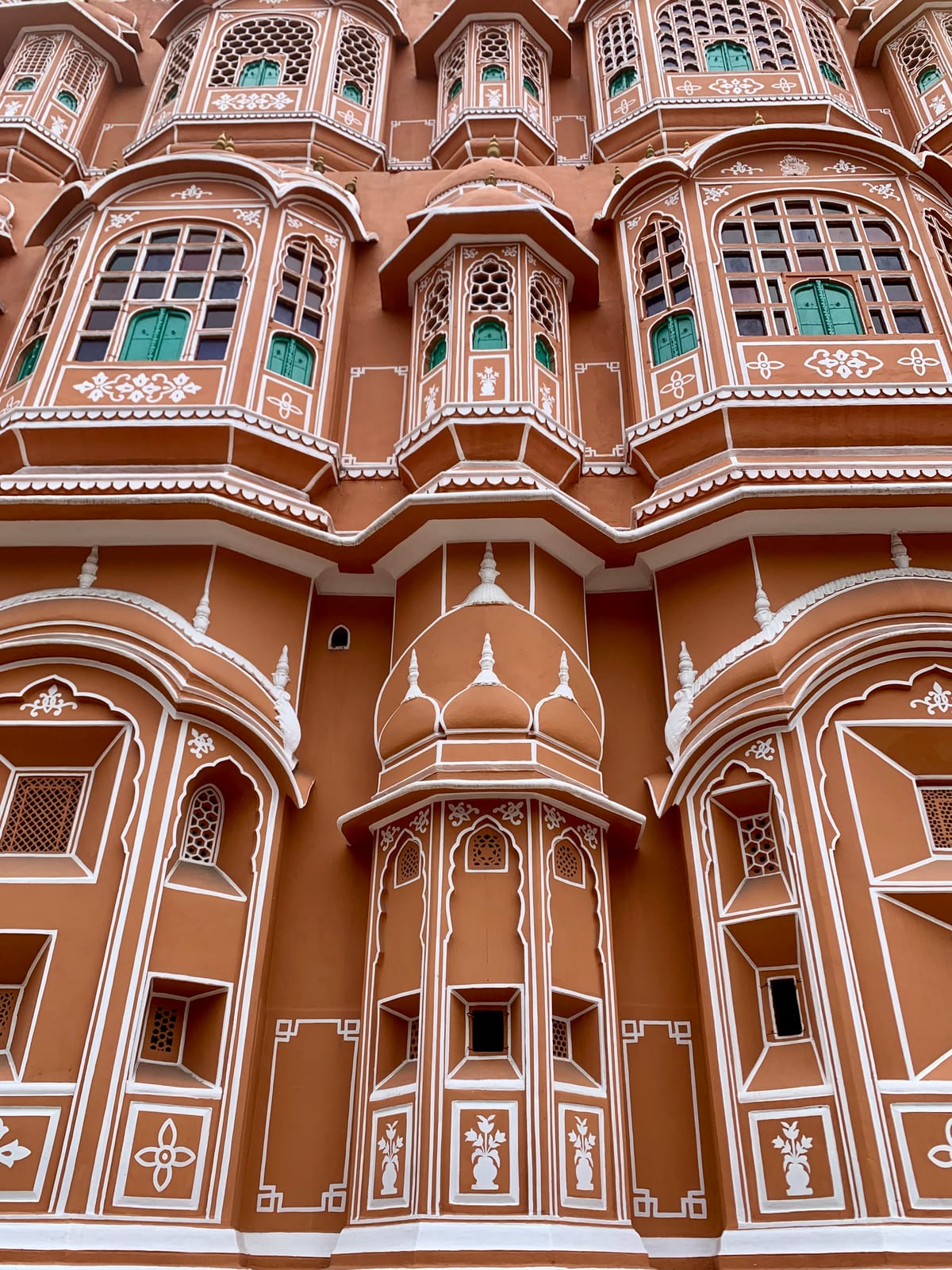
Begin at first light at the Hawa Mahal, the "Palace of Winds" - the five-storey pink sandstone facade of latticed windows built in 1799 so royal women could watch the street below unseen. The facade faces east, so the early-morning sun lights it up, and the classic photograph is from a rooftop cafe across the road, several of which open early for exactly this. This is a facade stop, not a tour: the interior (a quick climb for old-city views) opens later in the morning, so unless you want to wait for it, capture the facade and move on to Amer while the day is cool.
Morning: Amer Fort
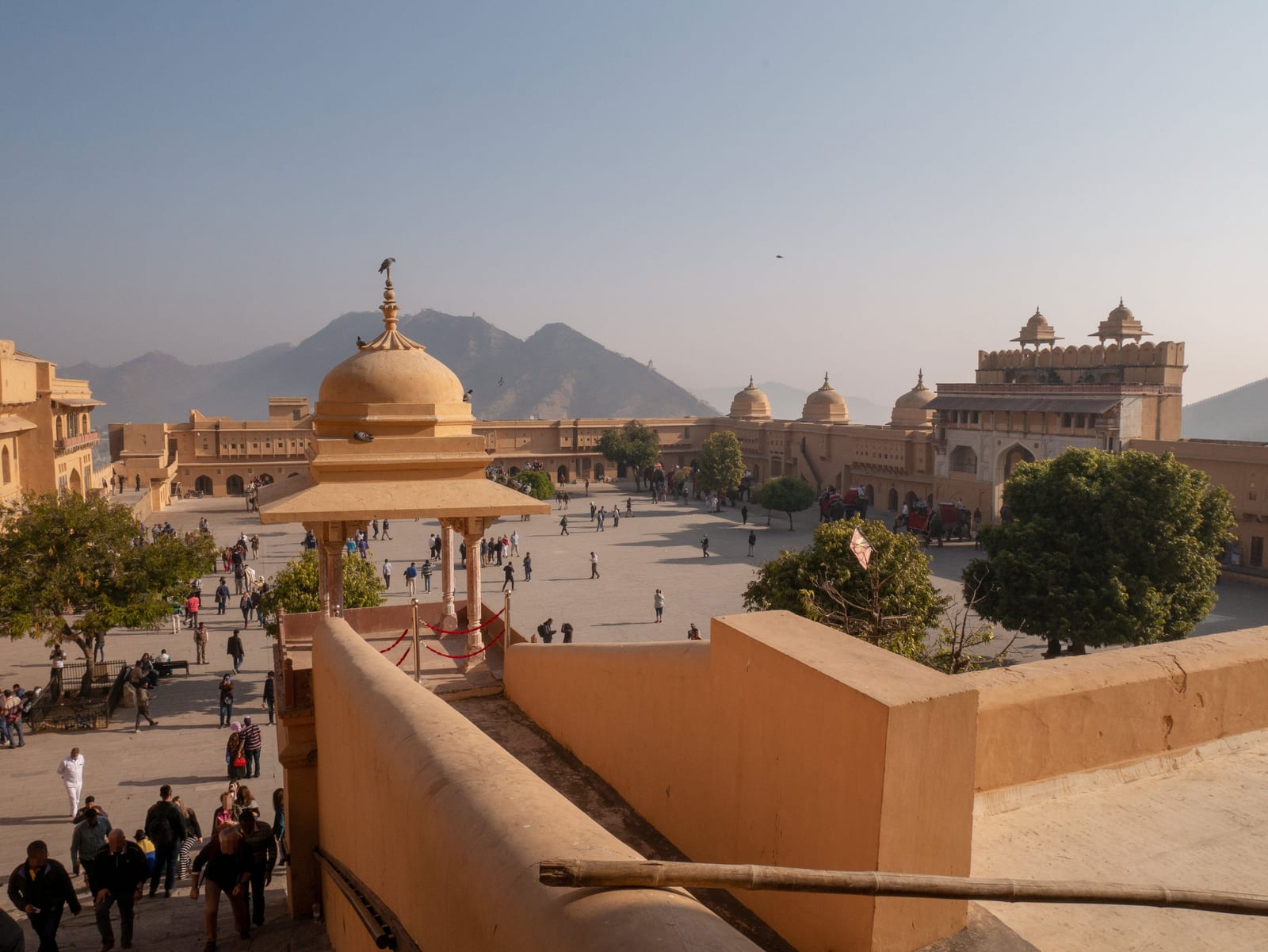
Drive out to Amer (Amber) Fort, the magnificent hilltop palace-fort about 11 km north of the city and the single biggest sight in Jaipur. Built from pale yellow and pink sandstone and white marble, it is a series of courtyards, gardens, and richly decorated halls - the mirror-work Sheesh Mahal is the showstopper. It typically opens around 8:00 am; arrive near opening to beat the tour buses and the midday heat, and give it two to three hours.
If you want to add the sterner Jaigarh Fort on the ridge directly above - home to the enormous Jaivana, often described as one of the world's largest historic cannons on wheels - it is linked to Amer by a walkable passage. Treat it as an alternative rather than a casual add-on: allow another 60 to 90 minutes, and be ready to drop either the Hawa Mahal interior or one of the afternoon palace stops to make room.
Midday: Jal Mahal and Panna Meena ka Kund
On the way back to town, stop for photographs at Jal Mahal, the romantic "water palace" that appears to float in the middle of Man Sagar Lake - it is a roadside photo stop rather than a place you enter. Nearby, close to Amer, the Panna Meena ka Kund stepwell is a striking symmetrical crisscross of stairs and a quieter, very photogenic detour. Break for lunch either near Amer or back in town.
Afternoon: Jantar Mantar and the City Palace
In the afternoon, head into the walled city for Jantar Mantar, the UNESCO-listed 18th-century astronomical observatory built by Maharaja Sawai Jai Singh II, whose giant masonry instruments include the world's largest stone sundial - a guide here brings the instruments to life. Right next door is the City Palace, a grand complex that is still partly the royal residence, with courtyards, the Mubarak Mahal, textile and armoury museums, and the seven-storey Chandra Mahal behind. The palace museum's last tickets are sold well before closing (currently early evening), so doing it after Jantar Mantar leaves a comfortable buffer.
Evening: the old-city bazaars
Finish among the bazaars around the walled city: Johari Bazaar for jewellery, Bapu Bazaar for textiles and juttis, and Tripolia Bazaar for lac bangles. Tripolia Bazaar is generally closed on Sundays, while Johari Bazaar and parts of Bapu Bazaar usually keep trading - individual shops set their own hours, so check ahead if you are after something specific. Cap the day with a rooftop dinner overlooking the pink streets.
Suggested timings (confirm current opening hours):
- 7:15 am - Hawa Mahal facade from a cafe opposite
- 8:00 am - Amer Fort at opening
- 10:45 am - Panna Meena ka Kund
- 11:30 am - Jal Mahal photo stop
- 12:15 pm - lunch
- 1:45 pm - Jantar Mantar
- 3:00 pm - City Palace
- 5:00 pm onward - bazaars and a rooftop dinner
Day 2: A ridge fort, museums, and a Rajasthani evening
Day two mixes the best viewpoint in the city, a couple of Jaipur's finest buildings, and your choice of evening. The one decision to make up front is when to do Nahargarh, because it drives how the day flows.
First, choose your evening
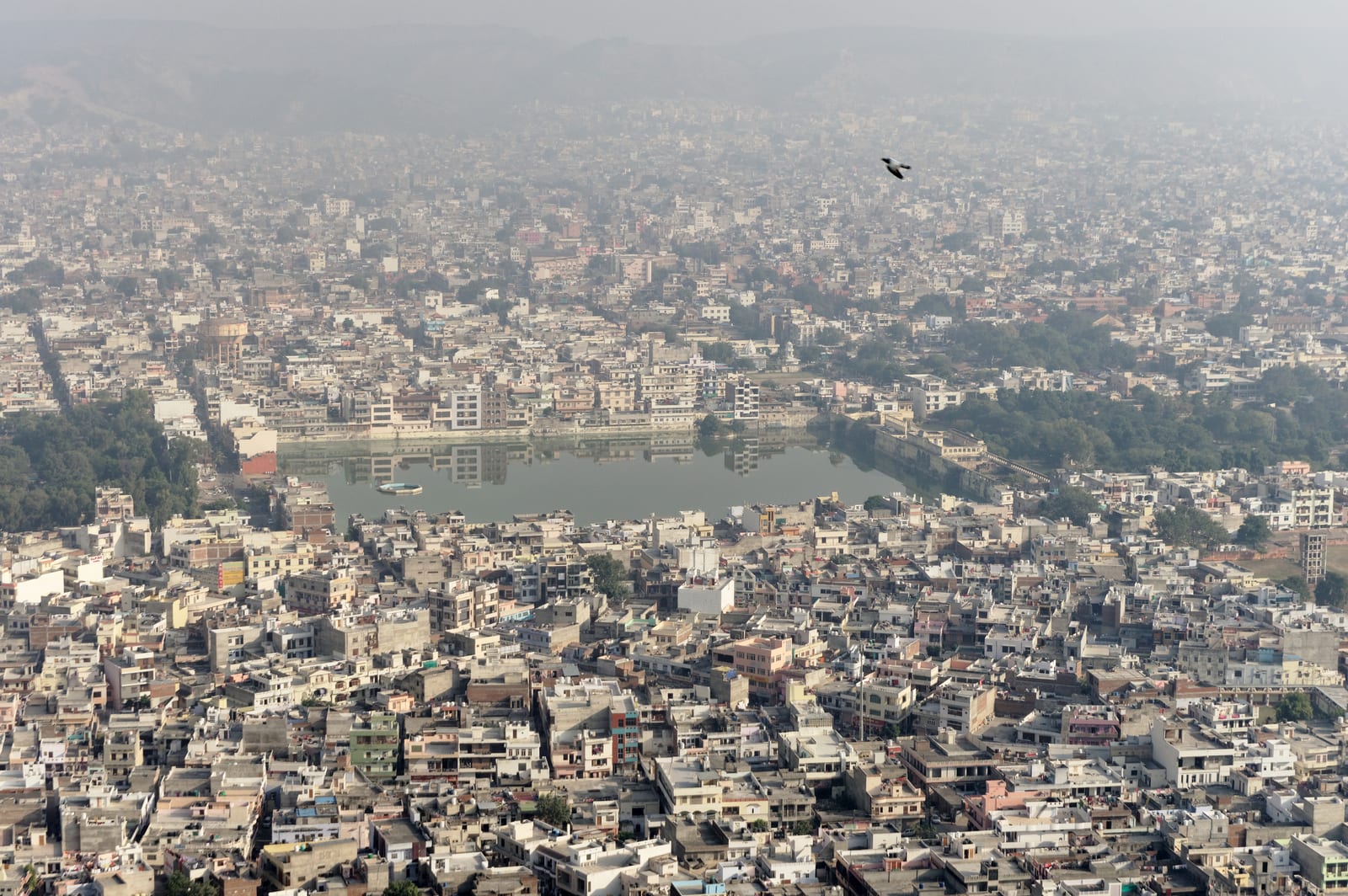
Nahargarh, on the northern ridge, is superb both first thing in the morning (clear and quiet) and at sunset (its famous golden hour). Chokhi Dhani sits on the southern edge of town. Doing a Nahargarh sunset and Chokhi Dhani on the same night means a long cross-city dash, so pick one plan:
- Plan A (views and photography): Nahargarh at sunset, then a rooftop dinner in the centre. Do the museums and Patrika Gate through the day.
- Plan B (Chokhi Dhani evening): Nahargarh first thing in the morning, the museums and Patrika Gate through the day, then out to Chokhi Dhani for the evening.
Nahargarh Fort
Whichever plan you choose, Nahargarh Fort is the highlight - perched on the Aravalli ridge overlooking the entire city. Built as a defensive retreat, it has honeycombed royal apartments (the Madhavendra Bhawan), ramparts to wander, and the best panorama in Jaipur, with the pink grid of the old city laid out below. The connecting hilltop road links Nahargarh with Jaigarh and Amer if you did not reach Jaigarh yesterday.
Albert Hall Museum and Birla Mandir
Down in the city, visit the Albert Hall Museum, the oldest museum in Rajasthan - a magnificent Indo-Saracenic building in Ram Niwas Garden, housing sculptures, miniatures, textiles, and an Egyptian mummy. It is beautifully floodlit at night, too. A short hop away, the white-marble Birla Mandir (Lakshmi Narayan Temple) at the foot of Moti Dungri is a serene, modern temple with fine carving - remove your shoes and dress modestly.
Patrika Gate and one more stop
Stop at Patrika Gate at Jawahar Circle, a riot of hand-painted arches in every colour and Jaipur's most photographed modern landmark - it is quietest early. If you have time for one more, choose Galtaji, the "Monkey Temple" set in a rocky gorge east of the city, with sacred water tanks and troops of macaques; the Jaipur Wax Museum and its separate, glass-decorated Sheesh Mahal attraction up at Nahargarh (not to be confused with Amer's mirror palace); or simply more time in the bazaars for block-printed textiles and blue pottery.
The evening
For Plan B, many first-timers head out to Chokhi Dhani, a large Rajasthani cultural village resort on the city's southern edge with folk dance, puppet shows, craft stalls, and an all-you-can-eat traditional thali - touristy but a genuinely fun, all-in-one introduction to Rajasthani culture. For Plan A, cap a Nahargarh sunset with a rooftop restaurant in the old city, looking out over the illuminated palaces - the easier, calmer close to the day.
Suggested timings, Plan A (Nahargarh sunset):
- 9:00 am - Patrika Gate
- 10:30 am - Albert Hall Museum
- 12:00 pm - Birla Mandir
- 1:00 pm - lunch
- 2:30 pm - Galtaji or the bazaars
- 5:00 pm - Nahargarh Fort for sunset
- 8:00 pm - rooftop dinner in the centre
Suggested timings, Plan B (Chokhi Dhani evening):
- 8:30 am - Nahargarh Fort for morning views
- 11:00 am - Albert Hall Museum
- 12:15 pm - Birla Mandir
- 1:00 pm - lunch
- 2:30 pm - Patrika Gate, then Galtaji or the bazaars
- 7:00 pm - Chokhi Dhani for the evening
Day 3 (optional): The best day trips from Jaipur
If you have a third day, spend it beyond the city. These are full-day outings, so start early and hire a car with driver.
Option A: Chand Baori (Abhaneri) and Bhangarh Fort
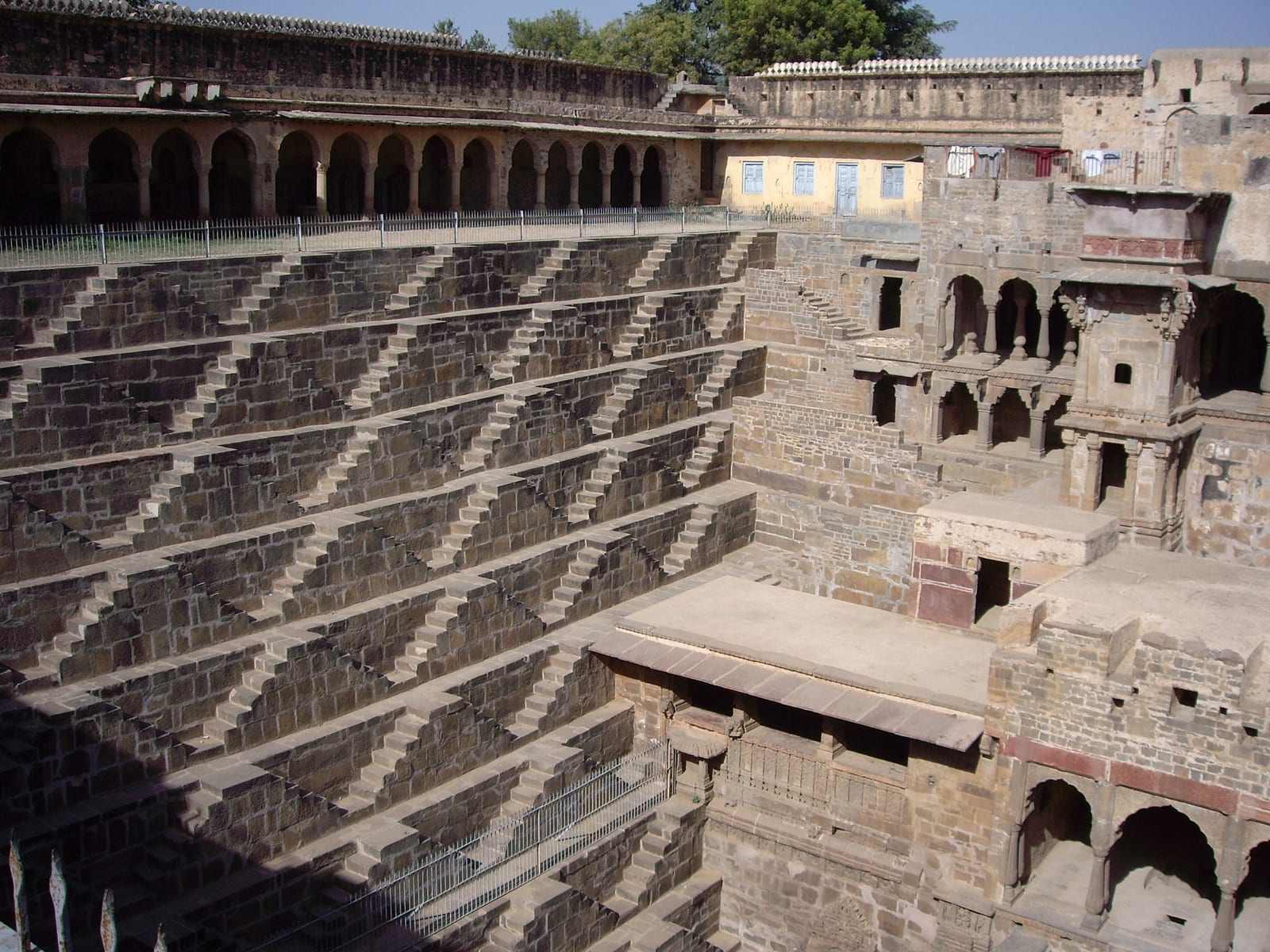
The standout day trip pairs two very different sights east of the city. Chand Baori at Abhaneri, about 90 km away, is one of the deepest and largest stepwells in India - a dizzying inverted pyramid of thousands of symmetrical steps descending many storeys, with the Harshat Mata temple beside it. Bhangarh Fort, roughly an hour on, is a sprawling ruined 17th-century town famous as India's most storied "haunted" fort; note that entry is officially prohibited between sunset and sunrise, so this is strictly a daytime visit. A sample sequence:
- 7:30 am - leave Jaipur
- 9:30 am - Chand Baori at Abhaneri
- 11:00 am - depart for Bhangarh
- 12:00 pm - Bhangarh Fort and lunch nearby
- 3:00 pm - begin the return journey
- 5:30-6:00 pm - reach Jaipur
Option B: Pushkar and Ajmer
About two and a half to three hours west, the holy town of Pushkar is one of India's most atmospheric pilgrimage spots - a sacred lake ringed by bathing ghats and temples, including one of the country's very few temples to Lord Brahma, and a lively bazaar. It is world-famous for its autumn camel fair. Nearby Ajmer holds the revered Ajmer Sharif Dargah, the Sufi shrine of Khwaja Moinuddin Chishti, which draws pilgrims of all faiths. Both expect modest dress and covered heads at the shrines; leave early and treat it as a full day.
Option C: Ranthambore National Park
For wildlife, Ranthambore, about three and a half hours southeast, is one of India's best-known tiger reserves, where big cats are sometimes seen against the backdrop of a crumbling hilltop fort. This is not a spontaneous hired-car excursion: safaris run in fixed morning and afternoon slots, seats and zones sell out, and you need to book a safari well in advance. Even then, it is a long way for a single day - the drive each way plus one safari makes for a very early start and a late return, and sightings are never guaranteed. If tigers are a priority, an overnight in Ranthambore with a morning and evening safari is far more rewarding than squeezing it into a day trip. For a gentler, closer alternative, the heritage village of Samode with its ornate palace is under an hour from Jaipur.
Where to stay in Jaipur
For a first trip, choose between the atmosphere of the walled city and the convenience of the central neighbourhoods just outside it. Here is a quick orientation:
| Area | Vibe | Best for |
|---|---|---|
| Walled / Old City (Pink City) | Atmospheric, busy, steps from the sights and bazaars | Travellers who want to be in the thick of it, on foot |
| MI Road | Central, commercial, well connected | Easy transport, restaurants, and mid-range hotels |
| C-Scheme | Leafy, upmarket, residential | Calmer, stylish stays close to the centre |
| Bani Park | Quiet, good-value guesthouses and heritage havelis | Budget and mid-range travellers who want a restful base |
| Amer / Heritage palace hotels | Grand, iconic, out of the centre | Splurge and special-occasion stays |
Getting around Jaipur
- Autos and app cabs: the easiest and cheapest way around the city. Agree the auto fare before setting off, or use an app cab where available.
- Car with driver: the sensible choice for Amer, Jaigarh, and Nahargarh, and essential for any Day 3 day trip. Hire by the day, agree the route and price up front, and confirm the driver waits at each stop.
- On foot: the walled city's core - City Palace, Jantar Mantar, Hawa Mahal, and the bazaars - is compact and best explored on foot, though the lanes are crowded and busy with traffic.
- Distances to plan for: Amer is about 30 minutes out, Nahargarh a winding drive up the ridge, and the Day 3 excursions each one and a half to three and a half hours one way, so treat the third day as a full-day commitment.
What a Jaipur trip roughly costs
Jaipur spans backpacker guesthouses to some of India's grandest palace hotels, so treat these as rough orientation figures rather than a quote. Prices spike over Christmas, New Year, the Literature Festival, and the wedding season, so confirm close to your dates.
| Style | Two nights, per person | Food and city transport | Tickets and activities | Approximate total |
|---|---|---|---|---|
| Budget (hostel or basic guesthouse) | ₹1,000-3,200 | ₹2,000-3,500 | ₹1,000-2,000 | ₹4,000-8,500 |
| Mid-range (3-star or heritage haveli) | ₹2,500-6,000 | ₹3,000-6,000 | ₹1,500-4,000 | ₹7,000-16,000 |
| Premium (heritage or palace hotel) | ₹9,000+ | ₹7,000+ | ₹4,000+ | ₹20,000+ |
The stay column is per person for two adults sharing a room (a hostel bed for the budget row), so solo travellers usually pay more. Food and city transport covers three days of meals and local getting-around; tickets and activities covers monument entries. A private Day 3 excursion, premium City Palace access, or a Ranthambore safari can push these totals up substantially, and figures exclude flights or trains to Jaipur. Prices last reviewed: July 2026.
Frequently asked questions
How many days do you need in Jaipur?
Two days is enough to cover Jaipur's essentials - Amer Fort, the City Palace and Jantar Mantar, the Hawa Mahal, a Nahargarh viewpoint, the main museums, and the old-city bazaars. Add a third day if you want to get out of the city to the Chand Baori stepwell and Bhangarh Fort, the holy town of Pushkar and Ajmer, or a tiger safari at Ranthambore, each of which deserves a full day of its own.
What is the best area to stay in Jaipur?
For atmosphere, stay inside or beside the walled Pink City, close to the City Palace, Hawa Mahal, and the bazaars. For more hotel choice and easier transport, the central MI Road, C-Scheme, and Bani Park areas just outside the walls are all well connected, while the heritage and palace hotels around Amer are the splurge option. Book early in the November-to-February peak, when the best stays fill first.
Is Amer Fort worth visiting?
Yes - Amer (Amber) Fort is the single biggest sight in Jaipur and the highlight of most first trips, a magnificent hilltop palace of courtyards, gardens, and the mirror-work Sheesh Mahal. Arrive near its morning opening to beat the crowds and the heat. Skip the elephant ride up over animal-welfare concerns; walking or taking a jeep gets you there just as well.
What are the best day trips from Jaipur?
The most popular pairs the vast Chand Baori stepwell at Abhaneri with the ruined "haunted" fort at Bhangarh, both east of the city. The holy town of Pushkar with its sacred lake and Brahma temple, alongside the Ajmer Sharif shrine, makes another full day to the west, and Ranthambore offers tiger safaris to the southeast - though Ranthambore is really better as an overnight. All are best done by car with a driver and an early start.
What is the best time to visit Jaipur?
November to February brings dry, comfortable weather that suits Jaipur's long sightseeing days and open-air forts best. October and March are pleasant shoulder months, the July-to-September monsoon is greener and far cheaper, and April to June is very hot. See our full guide to the best time to visit Jaipur for a month-by-month breakdown.
The TravelNerdz take
Jaipur rewards a plan that respects its geography and its light. Catch the Hawa Mahal facade at dawn, get to Amer Fort at opening before the buses arrive, then work the walled city - Jantar Mantar and the City Palace - into the afternoon so you finish among the pink bazaars at dusk. On Day 2, decide up front when you want Nahargarh - it is the city's best view either at sunrise or sunset - then either save it for golden hour and dine on a central rooftop, or do it first thing and give your last evening to the folk-village fun of Chokhi Dhani. Just do not try to pair a Nahargarh sunset with Chokhi Dhani on the same night. If you have a third day, get out early for Chand Baori and Bhangarh, the pairing that best shows off the Rajasthan beyond the city. Time your trip for November to February if you can, book an old-city or heritage stay early, and start each day at first light - Jaipur's forts are far kinder, and far emptier, before the sun and the crowds are high.
Image credits
- Hawa Mahal east facade (hero) by Dudva, via Wikimedia Commons, CC0 1.0
- Amer Fort by FLASHPACKER TRAVELGUIDE, via Wikimedia Commons, CC BY-SA 2.0
- View from Nahargarh Fort by Jakub Hałun, via Wikimedia Commons, CC BY-SA 4.0
- Chand Baori stepwell by Pablo Nicolás Taibi Cicare, via Wikimedia Commons, CC BY 2.0