JAIPUR
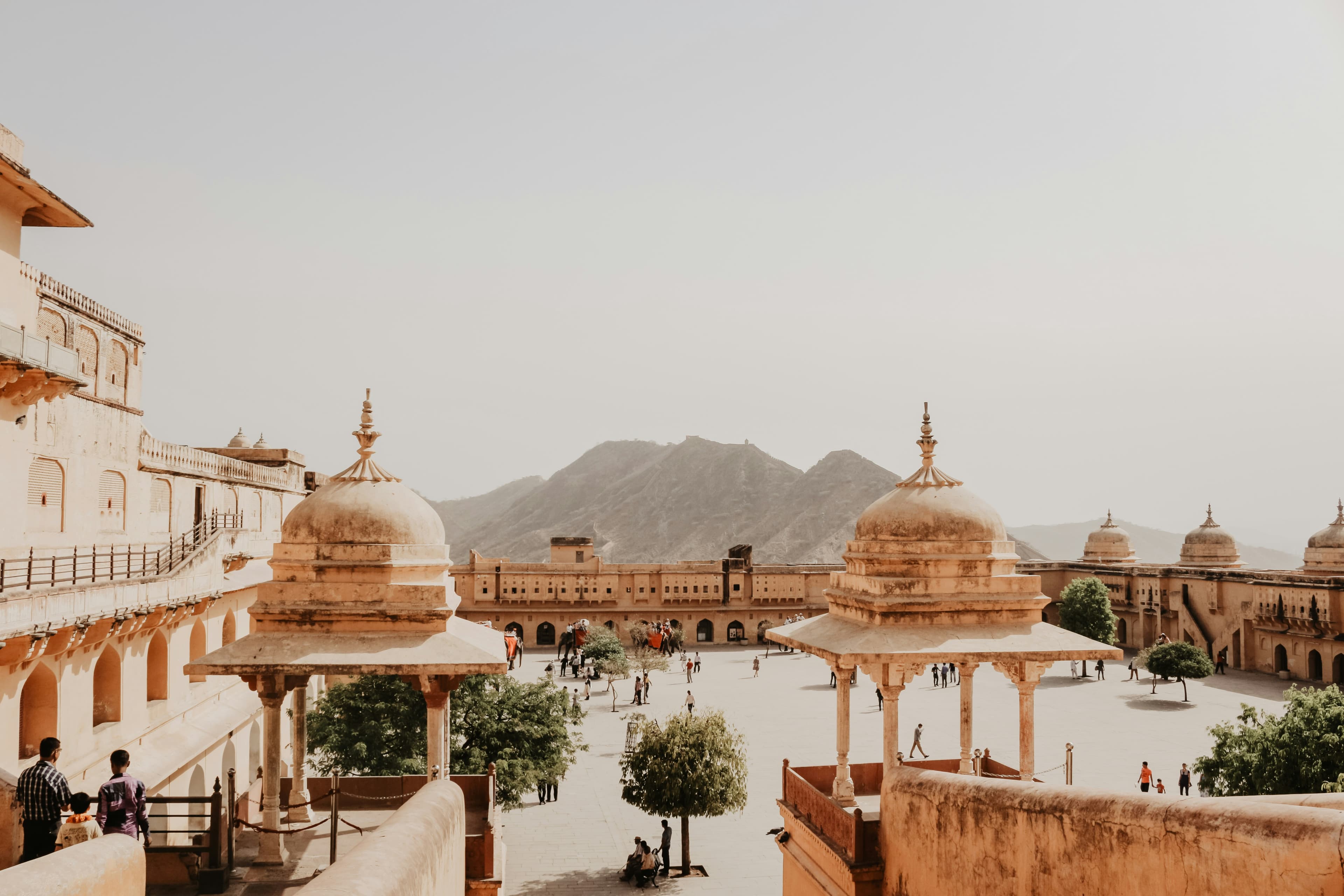
Royal cenotaphs of Jaipur's maharajas, marble carving rivaling City Palace but almost empty of tourists — one of the best quiet, uncrowded photo stops in the city, oddly skipped by most itineraries.
Chosen by Sawai Jai Singh II as the royal cremation ground for the Kachhwaha dynasty, Gaitor has served this function since 1733, with every Jaipur maharaja since cremated here and commemorated with an ornate marble or sandstone chhatri (cenotaph) marking the site. The sole exception is Maharaja Ishwari Singh, who died by suicide after a 1750 siege and was, by some accounts, denied cremation here, being commemorated instead within the City Palace complex. Architecturally the cenotaphs blend Mughal domed-canopy forms with Hindu temple motifs, and Jai Singh II's own chhatri, built by his son, is the largest and most elaborately carved in the complex.