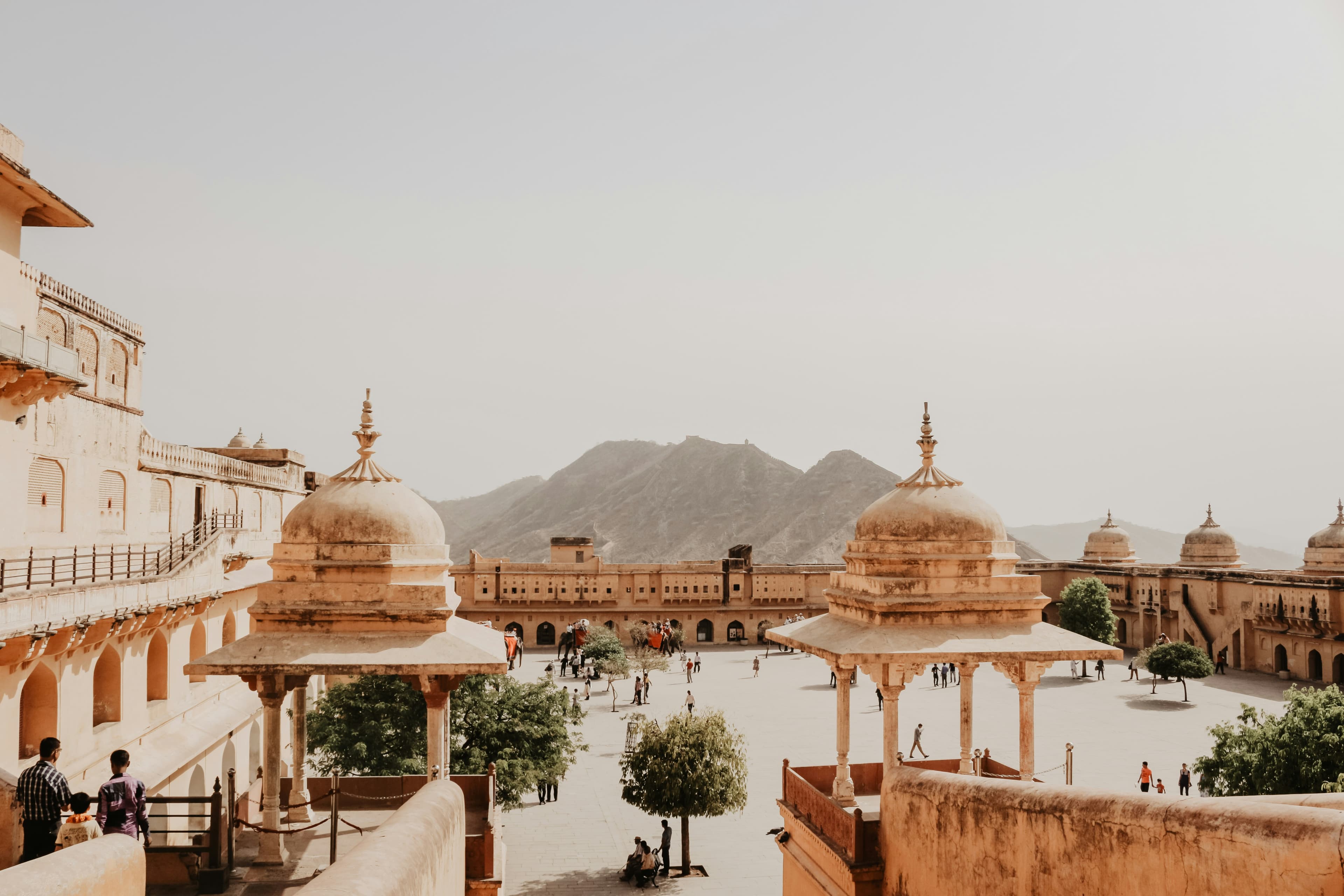
JAIPUR
The building itself (Indo-Saracenic, lit up gold at night) is the real draw — the Egyptian mummy in the basement gets more attention than the actual textile and miniature-painting collections, which are the museum's real strength.
Its foundation stone was laid on 6 February 1876 during a visit by the Prince of Wales (later King Edward VII, Albert Edward), giving the building its name, and it opened as a public museum in 1887. Designed by British engineer Samuel Swinton Jacob in the Indo-Saracenic style with assistance from Indian architect Mir Tujumool Hoosein, it was intended by Maharaja Ram Singh II as a town hall but repurposed as a museum by his successor Madho Singh II. Set within Ram Niwas Garden, it is Rajasthan's oldest museum, holding a collection begun by Dr. Thomas Holbein Hendley of roughly 19,000 objects spanning sculpture, miniature paintings, metalwork, and an Egyptian mummy.